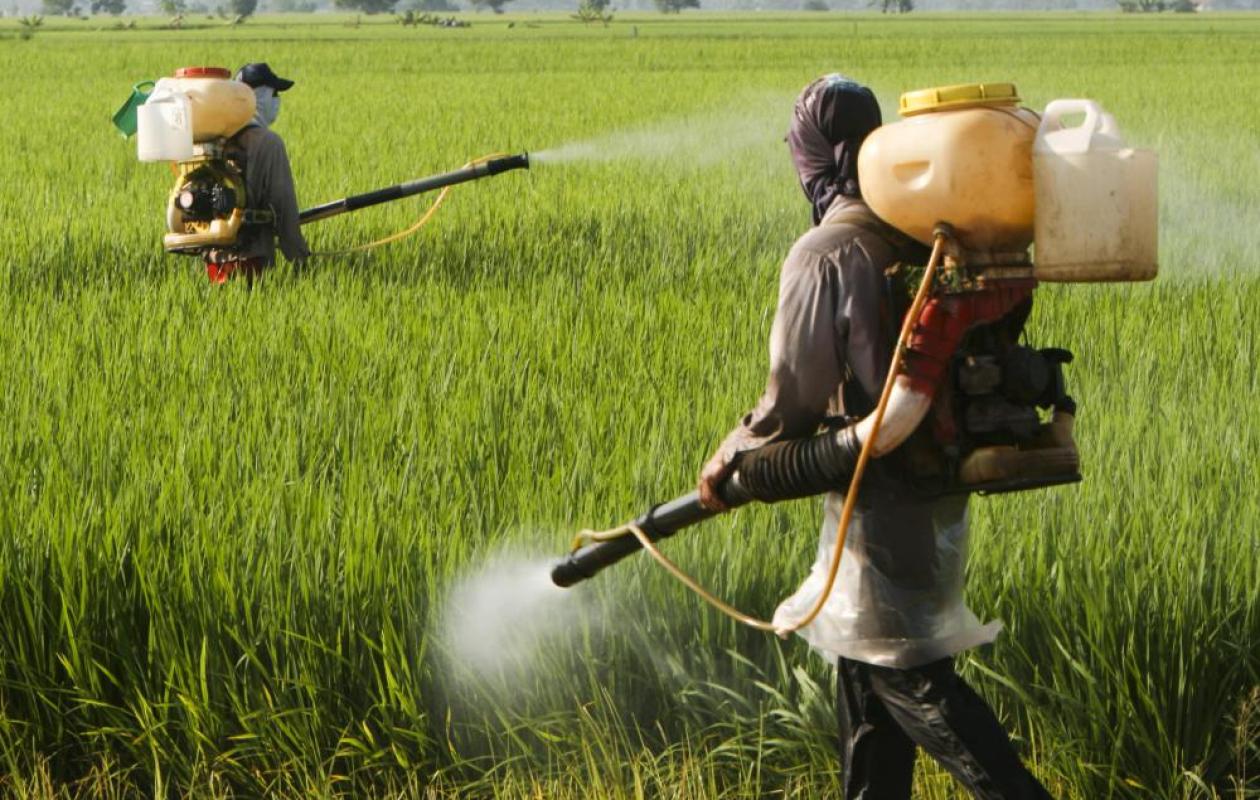
Pesticides, eaux usées et métaux lourds: Le cri d’alarme du Dr Oumar Bâ sur les risques sanitaires liés à certaines pratiques agricoles
The uncontrolled use of pesticides, the irrigation of crops with potentially contaminated water, and the presence of heavy metals in some agricultural soils pose serious threats to public health. Dr. Oumar Bâ, a lecturer and researcher in the Department of Plant Biology at Cheikh Anta Diop University in Dakar and a specialist in plant biotechnology, calls for strengthened control, monitoring, and training mechanisms in the Senegalese agricultural sector.
Food sovereignty and health security are increasingly prominent in public debate. At the same time, certain practices observed in agricultural production areas continue to raise serious concerns within the scientific community. When questioned about this issue on the sidelines of a workshop for media professionals on biotechnology, Dr. Oumar asserted that the problem lies not only in the use of pesticides, but more in the shortcomings observed in the control and regulation of their use. The meeting was organized on Monday by the National Biosafety Authority.
The researcher draws particular attention to the market gardening areas of the Niayes, Senegal's main horticultural region, which accounts for a significant portion of the country's fruit and vegetable production. "The main concern is controlling pesticide use in the field. On some farms, we observe practices characterized by excessive use of these products, with dosages sometimes far exceeding recommendations and without respecting basic usage guidelines," he explains. Among the most frequent violations is the failure to respect the residual period, that is, the mandatory waiting period between pesticide application and crop harvest. This requirement is essential to limit the presence of chemical residues in products intended for human consumption.
Invisible residues with potentially serious consequences
According to the expert, the health effects linked to chronic exposure to pesticide residues remain largely underestimated by the public. When these substances are used inappropriately or in excessive doses, residues persist on food and can be ingested by consumers. In the long term, their accumulation in the body can lead to serious consequences.
“These residues can contribute to the development of various chronic diseases, including certain cancers and other illnesses whose symptoms sometimes appear after several years of exposure,” he emphasizes. The researcher points out that several scientific studies have already highlighted the presence of toxic substances in certain foods consumed daily. Although this research receives little media attention, it sometimes reveals alarming concentrations of chemical compounds that could have lasting effects on human health. In his view, strengthening health controls and regular testing of agricultural products is an absolute necessity.
The circulation of products banned in certain countries
Dr. Oumar also recounts an experience he had during research on oil palm seed germination. To combat fungi attacking the seeds, his team needed to use a specific pesticide. However, investigations conducted at the time revealed that this substance was banned in several European countries due to the risks it poses to human health and the environment. "By continuing our research, we discovered that this product was nevertheless being used by some farmers in Senegal," he reports.
While he does not comment on its legal status under national regulations, the researcher believes this situation warrants particular attention. According to him, the existence of products banned in some jurisdictions but still accessible locally raises questions about the effectiveness of agricultural input control and monitoring systems. He also emphasizes the need to better inform producers, who are sometimes unaware of the potential dangers associated with the products they use.
The training gap for agricultural producers
Beyond the issue of the substances themselves, the specialist highlights another major challenge: the lack of training and technical support for farmers. The use of pesticides is subject to precise rules regarding dosages, application methods, personal protective equipment, and pre-harvest intervals. "The risks depend not only on the nature of the product used, but also on the conditions under which it is applied. However, many producers do not always have the necessary knowledge to use it in accordance with the recommendations," he observes. For the researcher, the development of awareness and continuing education programs appears essential to promote safer agricultural practices that are more respectful of public health.
Wastewater irrigation: an often overlooked danger
The use of pesticides is not the only source of concern. Dr. Oumar also draws attention to another practice observed in some peri-urban areas: the irrigation of crops with wastewater or insufficiently treated water. In areas particularly around Mbeubeuss, farmers are using water from basins or canals that receive runoff, which can carry various contaminants.
“This water can contain harmful substances that end up being absorbed by plants and then entering the food chain,” he explains. This situation is all the more worrying because the vegetables produced often have a pleasing appearance, thus masking the invisible risks to which consumers may be exposed.
Worrying concentrations of heavy metals
The researcher cites, in particular, the work conducted by a doctoral student on the use of certain organic amendments from septic tanks to fertilize agricultural soils. Preliminary results of this research highlight the presence of particularly high concentrations of heavy metals in some cultivated soils. These toxic elements, such as lead, cadmium, and mercury, are known for their harmful effects on human health when they accumulate in the body.
“The levels observed are sometimes extremely high. Yet, these are substances whose toxicity is widely documented in the scientific literature,” the specialist warns. Prolonged exposure to these contaminants can contribute to the development of neurological disorders, kidney disease, developmental delays in children, and even certain types of cancer.
An urgent strengthening of control mechanisms
In light of all these observations, Dr. Oumar believes that public authorities must pay closer attention to monitoring agricultural practices and the sanitary quality of produce. According to him, the agencies responsible for oversight do not always have the necessary human, material, and financial resources to effectively carry out their mission across the country. "There are clearly shortcomings that need to be addressed. The stakes are considerable, as they directly impact public health," he asserts.
For the researcher, the pursuit of food self-sufficiency cannot be separated from the imperatives of food safety. While increasing production is certainly a legitimate objective, the quality of food placed on the market must remain a fundamental requirement. Otherwise, he warns, gains in agricultural production could be jeopardized by the emergence of health risks whose consequences, often silent, only become apparent in the long term.




















Commentaires (3)
Participer à la Discussion
Règles de la communauté
💡 Astuce : Utilisez des emojis depuis votre téléphone ou le module emoji ci-dessous. Cliquez sur GIF pour ajouter un GIF animé. Collez un lien X/Twitter, TikTok ou Instagram pour l'afficher automatiquement.
Se connecter
Commentez avec votre profil, votre photo, et soyez averti des réponses.