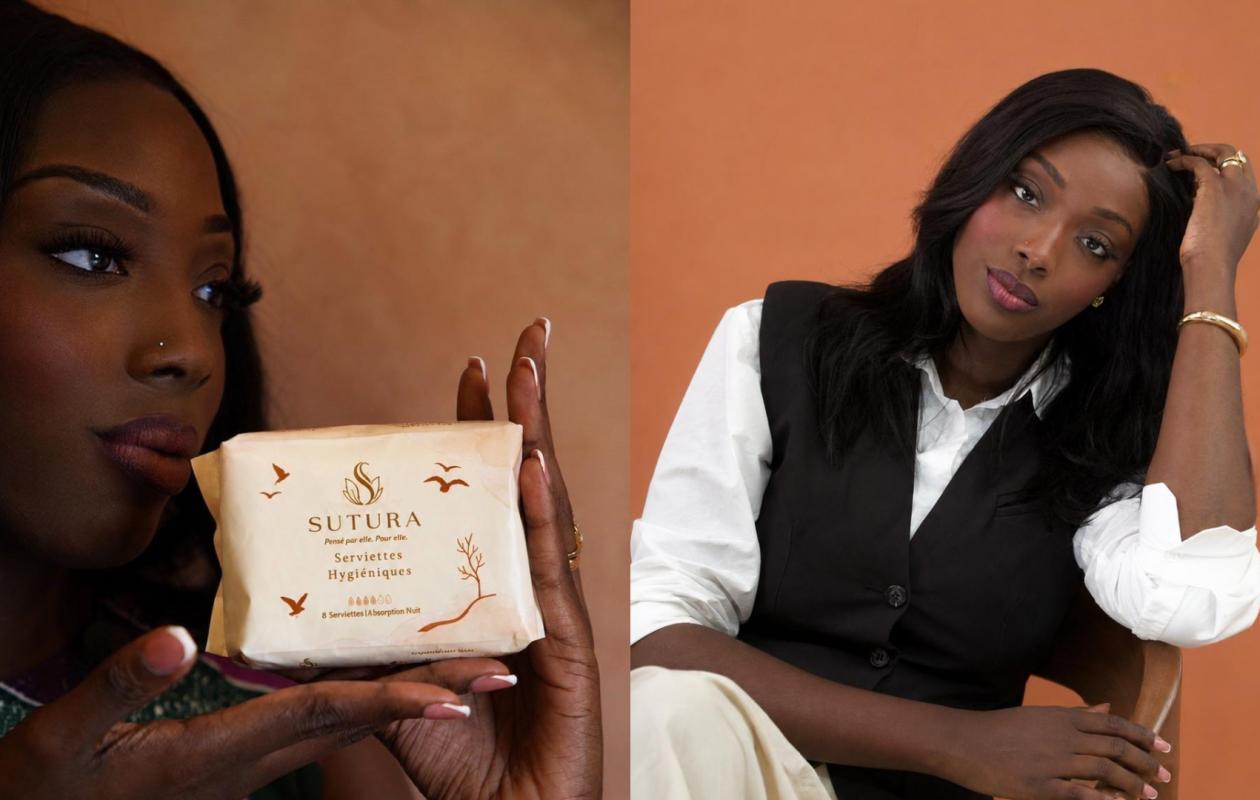
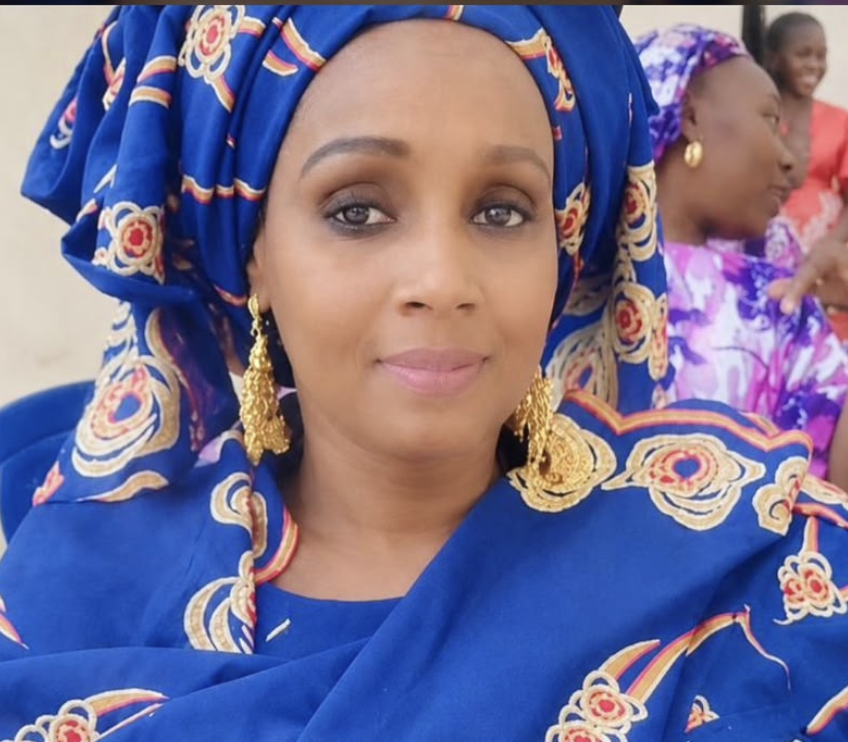
Santé intime féminine : Comment Madina Tall veut révolutionner le quotidien des femmes
Why did you decide to focus on manufacturing sanitary napkins?
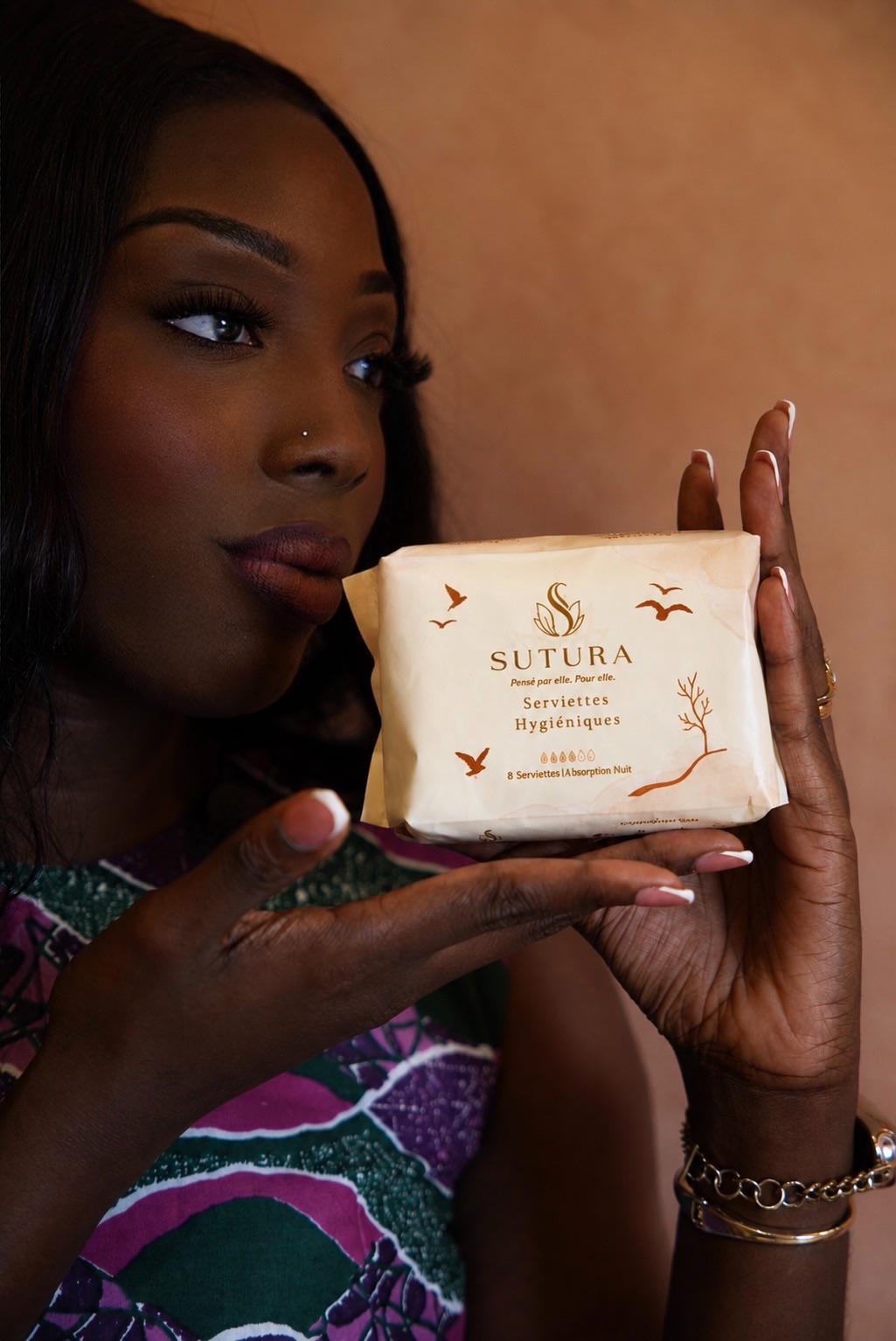
We use sanitary pads every month, and many women have questions about the quality of these products that come into direct contact with their intimate areas. That's why I created Sutura, not to sell just another brand of sanitary pads, but to meet the demands for quality and comfort surrounding women's intimate care.
In your opinion, do Senegalese women not have access to intimate care adapted to their needs?
I wouldn't say they don't have access to it, since many products already exist in Senegal. However, a teenager, a woman with a heavy flow, and a woman who has just given birth don't have the same menstrual needs. Sutura expands women's choices to better manage their intimate care.
What do you think bothers women?
There is purchasing power, accessibility, access to information and socio-cultural pressures that would have women discreetly manage their periods.
Why was production established in the United States? Don't the necessary human and material resources for such manufacturing exist in Senegal?
I wouldn't say that Senegal lacks skills or resources, but it's true that everything from design to production was done in the United States. It was more a matter of meeting the industrial requirements related to the production capacity we needed for this first series. However, if we can develop our value chain here in Senegal or on the African continent, that would be even better.
You decided to launch your Sutura product in Senegal. Were you afraid of not having your target clientele in the United States, of facing tough competition, or was it purely out of patriotism?
No, it wasn't at all out of fear of the American market. I'm Senegalese, and this emotional connection meant that, from my very first thoughts on the design of Sutura, I was thinking specifically of Senegalese and African women. But I would like to make it available to all women around the world in the long term.
Indeed , you encountered significant difficulties with the freight forwarder in getting this product to Senegal. Please explain what caused the problem.
We had entrusted our goods to a freight forwarder and the plane ticket had already been paid for, but the transit was taking much longer than expected. Then, we were repeatedly asked for additional fees.
Was it a scam or had you failed to fulfill an obligation?
In view of the delay and the additional sums that were regularly demanded from us, yes, we believe that we have been confronted with fraudulent practices.
You even considered filing a complaint with the FBI. What did you ultimately do?
Yes, at one point the situation became very serious, and I began exploring all possible legal avenues with the relevant US authorities. Ultimately, my top priority was recovering my products. I resigned myself to incurring additional costs and making difficult decisions to retrieve the merchandise and continue the project.
Was this an isolated case or do you believe that the Senegalese government should make efforts to balance the scales regarding the accessibility of products to be imported into Senegal?
I would not want to use this experience to criticize Senegalese public policies, since the service provider in question was a private company. However, anything that can improve understanding for entrepreneurs regarding transit, the anticipation of additional costs—if indeed they are justified—and the streamlining of import procedures will be welcome.
How did you experience this ordeal?
It was difficult. I thought about the months of work, the savings I'd invested in this project, the sleepless nights spent working on the product, on top of preparing for the upcoming launch… At one point, I wondered if it was all going to end there. And then I told myself no. I'd already come too far to give up. That's also part of being an entrepreneur: people consume the finished product, but you're the one who bears the brunt of the difficulties that almost prevented it from ever existing.
But once in Senegal, did you encounter any difficulties with customs clearance?
There were indeed duties, taxes, and fees related to importing and customs clearance that had to be factored into the product cost. Unfortunately, the young entrepreneur bears all these costs even before selling the first item, while trying to offer a price that remains affordable for customers.
How many items are in a box of Sutura and what is the price?
We offer two flagship products: a pack of eight (8) overnight sanitary pads for 1,500 FCFA, and a pack of eight (8) disposable menstrual panties for 3,500 FCFA. However, I plan to increase the number of items in each pack for future production runs.
Why this innovation with menstrual panties, and particularly nighttime models?
Because there are times when a standard sanitary pad doesn't necessarily provide the level of protection or comfort needed. I'm thinking in particular of women with heavy flow, those needing protection overnight, those traveling long distances, or those in the postpartum period. We deliberately started with larger sizes so as not to exclude women whose body shapes are underrepresented in the available options.
What could guarantee the quality of your products, given that there have recently been doubts about the quality of sanitary napkins from a very large local brand?
For such an intimate product, trust cannot rely solely on marketing. We worked with precise specifications and defined the characteristics we wanted for our products. Sutura will have a policy of transparency. I prefer never to claim a test, certification, or characteristic that we cannot document. Consumers have the right to ask questions about the product they use, and a reputable brand must be able to answer them.
What persuasion techniques do you plan to adopt in case of skepticism from potential Sutura clients?
I don't want to talk about persuasion. A woman has every right to be skeptical of a new brand, especially when it comes to such an intimate product. Our responsibility is to do good marketing, and feedback from our first customers will be crucial going forward. Trust isn't demanded; it's built.
What do you think of the customs clearance system in Senegal?
I believe there's a real need for transparency and predictability for entrepreneurs. For a batch of goods I purchased for around 350,000 FCFA, upon arrival in Senegal, I paid 200,000 FCFA in duties, taxes, and customs clearance fees. I don't question the principle of paying the duties and taxes owed, but an entrepreneur should be able to clearly understand how these amounts are calculated and anticipate them before importing their product.
You 're using your voice and image to launch this product, but seeing and hearing you, you seem to have several strings to your bow…
Indeed. I studied communication and media, then went on to complete an MBA. I also built my professional experience in customer relations and management, particularly in the technology sector.
Do you believe that sexuality, and women's intimate care in particular, remains a taboo subject in Senegal?
Yes. I think there are still some taboos surrounding the female body, menstruation, sexuality, and intimacy, even if things are changing compared to before. The goal isn't to pervert, but to normalize conversations about women's health and daily lives.
Whose fault is it? The mothers'?
No, we can't blame them, since they themselves were raised in a society marked by certain silences. It's more a question of cultural transmission, education, and social norms.
What do you suggest in the face of this blockage?
Our generation has the opportunity to preserve what is precious in this transmission while also evolving the way we communicate. We need more education, to create spaces for discussion among women and with healthcare professionals, and also to encourage communication within families. Girls must be able to understand their bodies and their periods so they can care for them without shame, with information tailored to each age group. Brands like Sutura must contribute to this evolution.
Interview conducted by Fatoumata Kidiera

















Commentaires (3)
Participer à la Discussion
Règles de la communauté
💡 Astuce : Utilisez des emojis depuis votre téléphone ou le module emoji ci-dessous. Cliquez sur GIF pour ajouter un GIF animé. Collez un lien X/Twitter, TikTok ou Instagram pour l'afficher automatiquement.
Se connecter
Commentez avec votre profil, votre photo, et soyez averti des réponses.