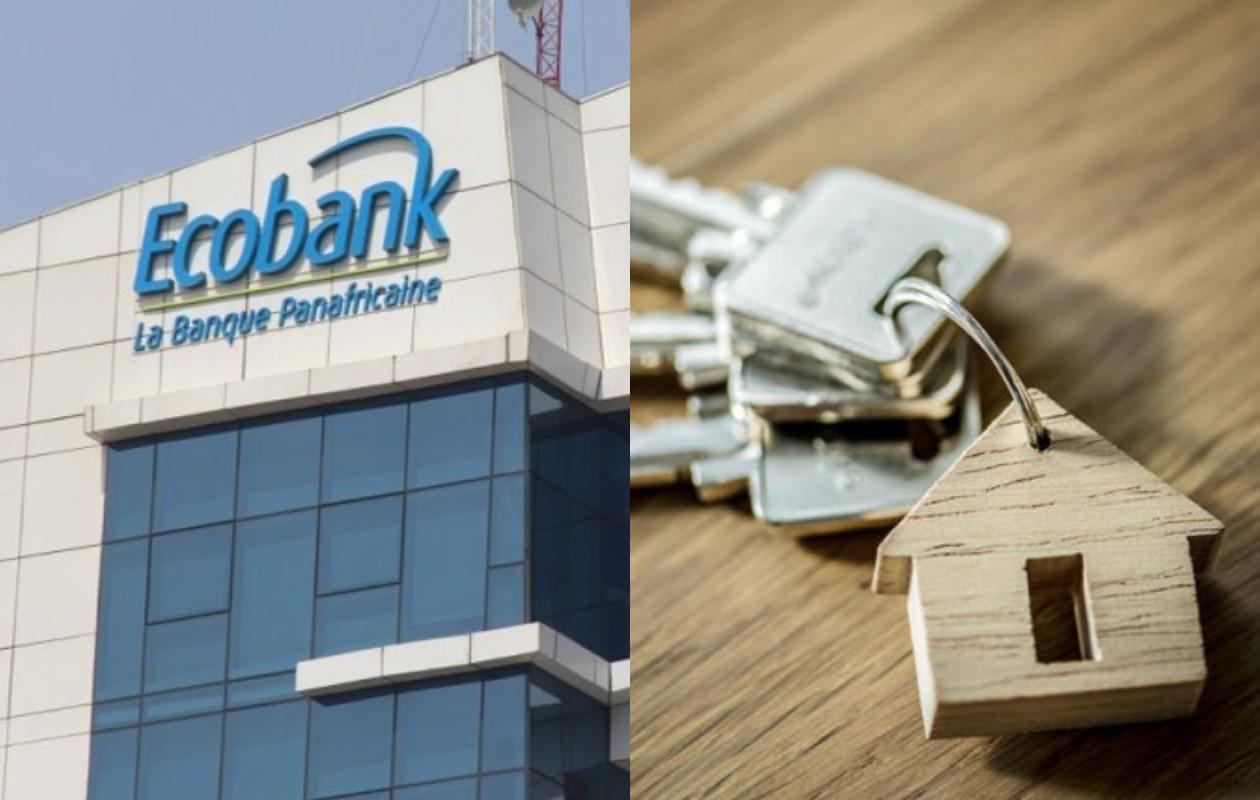
Accès au logement au Sénégal : Ecobank accompagne les ménages dans le financement de leur projet immobilier
Senegal faces a housing shortage of approximately 500,000 units, while mortgage lending still represents only about 6% of outstanding bank loans. In a country where self-build construction remains the primary means of homeownership, the banking sector is challenged to adapt financing solutions to the financial circumstances and capabilities of households. Ecobank Senegal is focusing in particular on longer loan terms, smaller down payments, and a variety of financing options.
In Senegal, the need for housing remains considerable. The government currently estimates the deficit at approximately 500,000 units. According to data published by the CRRH-UEMOA, now known as AFINHAB, the annual demand for new housing already exceeded 20,000 units.
The equation, however, is not solely about real estate. It also involves banking. Mortgage loans still represent only about 6% of outstanding bank loans in Senegal, according to the CRRH-UEMOA, now known as AFINHAB. Considerable demand exists, but a portion of it still struggles to become creditworthy under the conditions of the formal financial system.
In this context, several banking institutions are seeking to develop solutions better suited to the different paths to homeownership. Ecobank Senegal is among the players that intend to expand the financing options offered to households.
“Housing is one of the major projects we support our clients with. Our role is to offer them financing solutions that take into account their situation, their financial capacity and the nature of their project, whether it is an acquisition or a construction. The objective is to enable more households to realize their real estate project under suitable conditions ,” explains Saër Diop, Director of Commercial and Retail Banking at Ecobank Senegal.
Self-build construction, the dominant model
The market structure explains part of the challenge. According to the latest census by the National Agency for Statistics and Demography (ANSD), 61.8% of Senegalese households acquired their homes through self-construction. Barely 0.6% went through a property developer and 1.7% through a housing cooperative.
Loans intended to finance the purchase of an apartment or a completed house therefore only represent a small part of the path to homeownership.
“For a construction project, we can release the financing gradually, depending on the progress of the work. We also finance the acquisition of completed or off-plan housing ,” explains Saër Diop .
Installment financing allows disbursements to be adjusted to the pace of the construction project. The bank also offers refinancing of mortgage loans taken out with other institutions. This solution can, depending on the client's situation, allow them to restructure the loan term or the monthly payments.
Duration and contribution, two central barriers
For households, access to credit also depends on the duration of the loan and the savings that must be mobilized before even borrowing.
“For employees, we can offer financing for up to twenty years, with rates starting at 7% and a down payment starting at 10%. For certain profiles, particularly within the framework of agreements or cooperatives, solutions without an initial down payment can also be considered ,” explains Saër Diop .
Beyond simply offering financing, Ecobank Senegal has set itself the ambition of actively contributing to improving access to housing for as many Senegalese as possible. Whether they are public or private sector employees, business owners, independent professionals, entrepreneurs, cooperative members, or Senegalese living abroad, the bank intends to support each customer segment with solutions tailored to their specific needs. This ambition is based on attractive financing conditions, flexible mechanisms adapted to different paths to homeownership, and an optimized processing system that allows for some of the most competitive response and implementation times on the market.
But easing these constraints is not enough. Bank financing has historically remained easier to obtain for an employee with a regular income than for a trader, entrepreneur, or self-employed professional.
“The challenge is to be able to support individuals with very different situations. An employee, an entrepreneur, a trader, or a Senegalese person in the diaspora does not necessarily have the same background or the same income. We must therefore adapt our analysis and financing methods to these realities, in order to offer solutions consistent with each client’s repayment capacity and project ,” emphasizes Saër Diop .
For Senegalese living abroad, real estate investment in Senegal often represents a significant wealth-building project. Ecobank Senegal also intends to support this clientele by tailoring its financing analysis to income earned abroad and the nature of the project planned in Senegal through its Diaspora Desk.

















Commentaires (0)
Participer à la Discussion
Règles de la communauté
💡 Astuce : Utilisez des emojis depuis votre téléphone ou le module emoji ci-dessous. Cliquez sur GIF pour ajouter un GIF animé. Collez un lien X/Twitter, TikTok ou Instagram pour l'afficher automatiquement.
Se connecter
Commentez avec votre profil, votre photo, et soyez averti des réponses.