Casamance : l’anacarde, richesse promise mais mal exploitée, le cri de détresse des producteurs de Djibonker
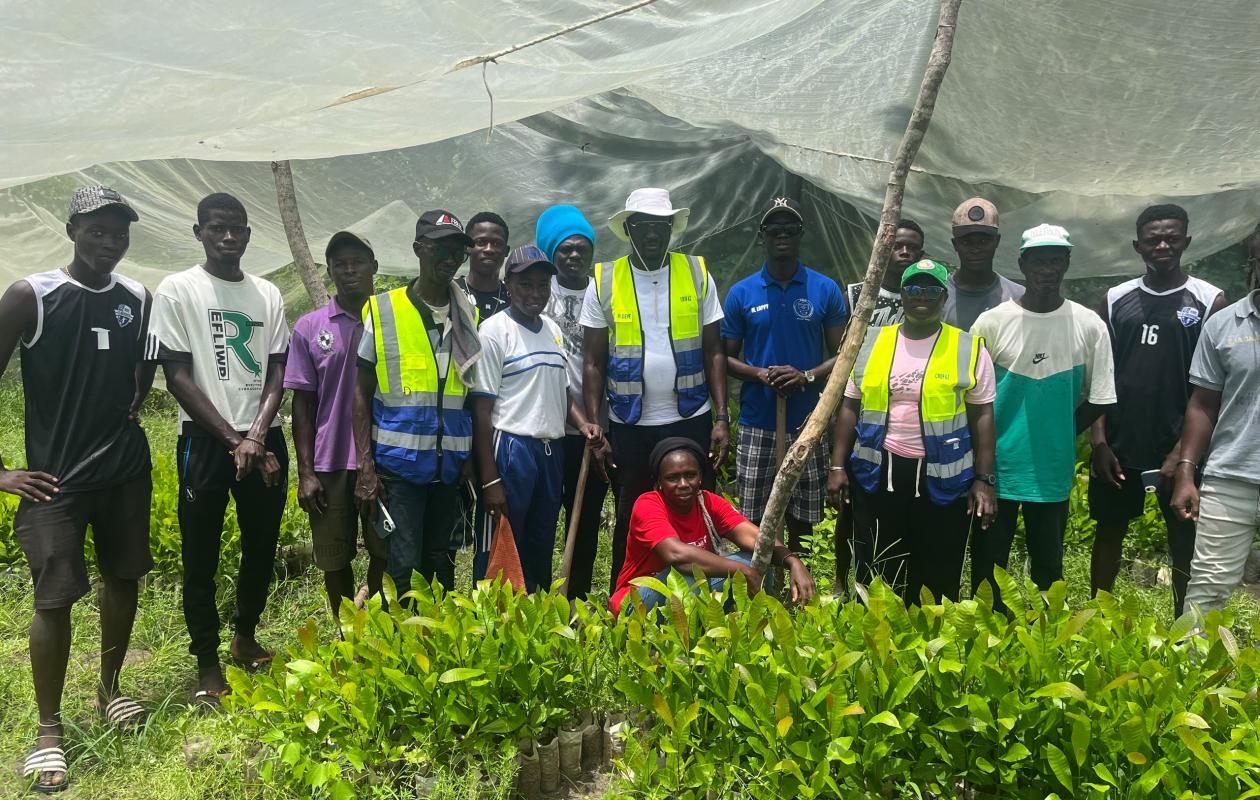
In Djibonker, cashew producers are expressing their dismay. Caught between the hopes raised by the Ziguinchor Regional Consultation Framework for Operators (CROFAZ) program and the realities of a field marked by low yields, unsuitable agricultural practices, and a lack of institutional support, their heartfelt plea reveals a sector in need of structure. Cashews, despite their promise of wealth, remain poorly managed, leaving farmers in uncertainty and young people facing unemployment.
The testimonies gathered in Djibonker reveal a dual reality: cashew nuts hold promise for the future, but their cultivation remains fragile. Demba Diémé, president of the Ziguinchor Regional Coordination Framework for Cashew Sector Operators (CROFAZ), reiterates the stated ambition: to boost national production through a massive planting program, train agricultural extension workers to support farmers, and diversify crops on integrated farms to strengthen economic resilience. "This year, we have already planted 80,000 seedlings. In five years, we aim for production self-sufficiency and to cover 99% of national needs," he affirms.
However, producers complain of yields that are too low, fluctuating between 300 and 400 kilos per hectare. The causes are well-known: overly dense planting, lack of modern techniques, stray animals, and insufficient support. Diémé himself acknowledges that "without solid production, processing will remain a pipe dream."
In Djibonker, Rigobert Sagna expressed his astonishment at the new methods introduced: "We were shown that with proper spacing, it's possible to cultivate other crops between the cashew trees. It's a revolution for us." For him, this approach paves the way for more integrated agriculture, where the cashew becomes a pillar around which other food crops revolve.
Léonie Biagui, the village's deputy chief, emphasizes the impact of these training sessions: "We realized there was a difference between our old practices and what you showed us. The new method allows the fruit to grow larger and makes the farm more productive." She sees this as an opportunity for job creation for young people and women, particularly in processing, and welcomes the reliability of the partnership with CROFAZ.
Marc Lopy, president of the Djibonker youth association, emphasizes the social dimension of the project. For him, cashew farming is a solution to youth unemployment: "The land never lies. This project is an opportunity for Djibonker and for all of Casamance." He calls on young people to cultivate the available land and to change their mindset: agriculture is not synonymous with poverty, but rather a path to dignity and prosperity.
But behind these words of hope, the distress is palpable. Producers lack the resources to sustainably implement new techniques. The government, often absent, has yet to establish a robust framework to support local processing. Collection and processing infrastructure remains inadequate, and the sector remains vulnerable to fluctuations in the international market.
The producers' plea is clear: strengthen technical support, invest in local processing units, facilitate young people's access to uncultivated land, and establish a coherent national policy for cashew nuts. Because beyond production, it is the economic and social future of Casamance that is at stake. Cashew nuts represent a promising resource, but one still hampered by traditional practices and a lack of structure. Developing its potential could transform the region into a true hub of shared prosperity.




















Commentaires (2)
Participer à la Discussion
Règles de la communauté
💡 Astuce : Utilisez des emojis depuis votre téléphone ou le module emoji ci-dessous. Cliquez sur GIF pour ajouter un GIF animé. Collez un lien X/Twitter, TikTok ou Instagram pour l'afficher automatiquement.
Se connecter
Commentez avec votre profil, votre photo, et soyez averti des réponses.