CSS : 50 000 t de sucre invendues, les syndicats tirent la sonnette d’alarme
The labor unions at the Senegalese Sugar Company (CSS) are concerned about the company's financial situation, which is facing significant unsold sugar stocks. At a press conference held this Wednesday in Richard-Toll, they denounced import regulations and warned of the risks to employment. They are demanding urgent measures to protect local production and preserve social benefits.
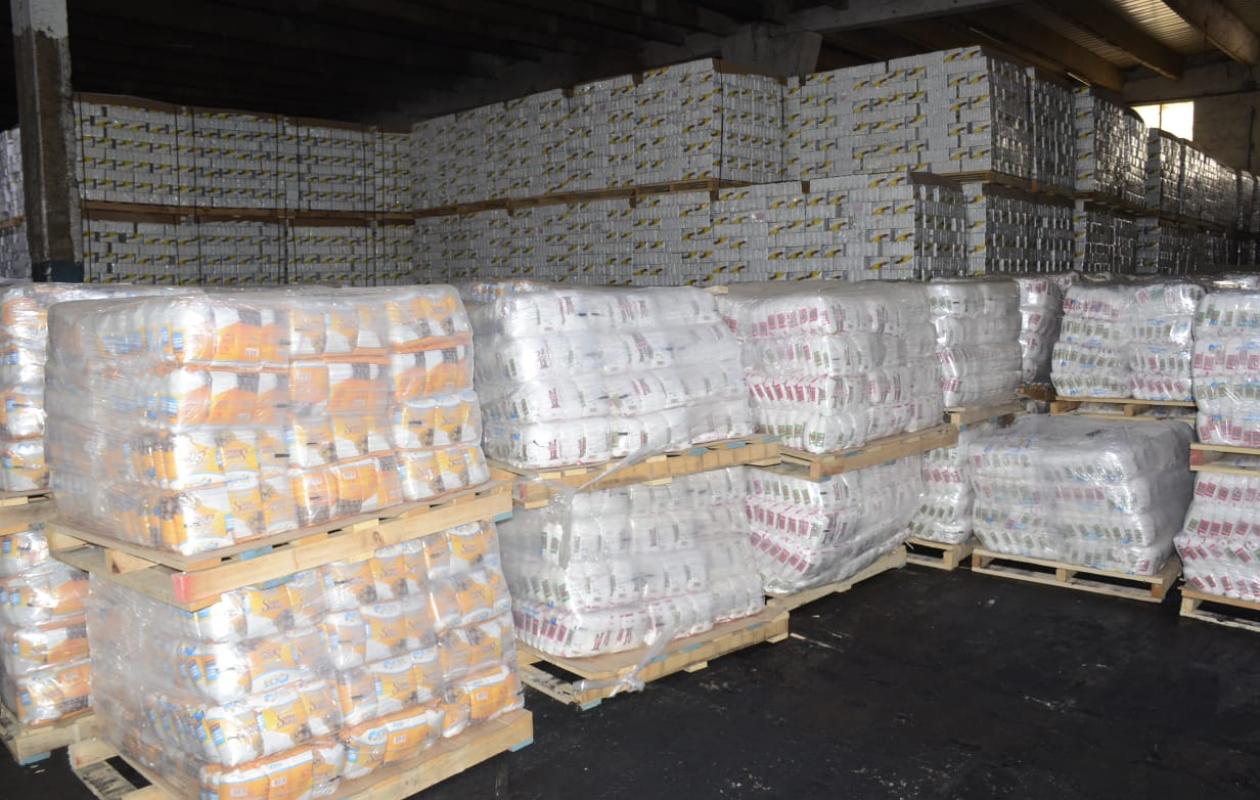
The situation is becoming critical at the Senegalese Sugar Company (CSS). With the 2026-2027 sugar campaign approaching, the company is facing cash flow problems that are impacting its operations and jeopardizing jobs. At the heart of the concerns of the coalition of labor unions is the unsold stockpile of some 50,000 tons of sugar, located in Dakar and Richard-Toll.
For the workers' representatives, this stockpile poses a serious threat to the company's financial stability, especially with the next production campaign on the horizon. Without measures to sell off the available quantities, the current stockpiles risk being added to the new production, further exacerbating CSS's commercial and financial difficulties.
“We cannot stand by and watch our company die a natural death,” warned Amary Diouf, general secretary of the CNTS/FC CSS section. According to him, the difficulties are worsening year after year, and their consequences are already being felt in the social climate.
Sugar imports in the crosshairs of the unions
For the trade unions, the main cause of this situation lies in insufficient regulation of the sugar market, particularly through DIPAS import authorizations. They denounce excessive import volumes and authorizations granted at inappropriate times, especially when CSS is in full production.
Union representatives believe this competition directly harms the sale of locally produced sugar and weakens an industry that is strategic for the national economy. They question, in particular, the difference in treatment between the sugar sector and other agricultural sectors, such as onions and potatoes, for which imports are regulated based on the availability of local production. "You cannot import sugar while the country's only sugar factory is operating at full capacity," Amary Diouf emphasized.
The group is not calling for a complete halt to imports, but rather for better planning of volumes and supply periods. It demands that imported quantities correspond to actual market needs and that industry stakeholders be involved in the decision-making process.
Seasonal jobs are under threat.
Beyond the financial difficulties, the unions fear a further deterioration of the social situation within the company. They point out that the distribution problems encountered during the previous campaign already affected seasonal workers.
According to Amary Diouf, some were not rehired, while others only regained their positions a few months before the end of the campaign, even though their contracts were supposed to cover a longer period.
Union representatives fear this scenario could repeat itself during the 2026-2027 campaign if stocks are not sold and the company's cash flow does not improve. They also warn that the difficulties could eventually affect permanent jobs and limit recruitment opportunities.
“All our activities now boil down to saving jobs,” laments the union representative. This situation, he argues, prevents organizations from fully focusing on improving working conditions, wage demands, and defending employees’ purchasing power.
A development plan for more than 1,000 jobs has been put on hold.
The consequences of this situation extend beyond the issue of existing jobs. According to union representatives, a CSS development plan, which could have created over 1,000 jobs, is currently on hold due to cash flow problems.
For the group, the company's difficulties therefore represent a major economic and industrial challenge. The unions emphasize CSS's role in national sugar production and job creation, arguing that its preservation must be aligned with Senegal's objectives of economic sovereignty and industrial development.
They are therefore calling on the authorities to take concrete measures to promote the sale of domestic production before authorizing new imports, in proportions adapted to market needs.
In response to these concerns, the coalition of trade union organizations has undertaken a series of initiatives in Dakar. Its representatives report having met with leaders of major trade union federations, the Minister of Industry and Trade, Serigne Guèye Diop, and the Minister of Public Service, Labor, and Public Sector Reform. They also met with the President of the Social Dialogue Council.
Following their meeting with the Minister of Industry and Trade, the union representatives said they noted a convergence of views on several points: the need to better regulate the sugar market, to limit imports to strictly necessary quantities and to take into account the production periods of CSS.
They also welcomed the willingness of the authorities they met with and hope that the discussions will quickly lead to concrete decisions. The group intends, however, to remain vigilant to ensure that the commitments made are translated into effective measures.
While prioritizing dialogue, the unions warn that their approach will not end with this press conference. They announce the continuation of their action plan until the issue of imports and the difficulties in distributing sugar are satisfactorily resolved.
For Amary Diouf and his colleagues, the challenge is to preserve both the company's financial viability and the workers' interests. They are calling for social dialogue that reconciles the economic imperatives of CSS, job preservation, and the need to improve the staff's living conditions.
In Richard-Toll, the unions' message is clear: they expect the authorities to implement more effective import regulations to allow local production to find its place in the market. With the new sugar campaign approaching, they believe that swift decisions are essential to prevent current difficulties from further jeopardizing the future of the company and its workers.






















Commentaires (17)
je veux tout simplement camper la situation de la CSS. ça fait combien d'année ma CSS a le monopole du sucre, est ce que vous la CSS est compétitive, comment pouvez vous expliquer que le prix du KG produit sur le territoire sénégalais soit plus cher que le kg importé. ça suffit si vous n'êtes plus rentable allez y faire autre chose, c'est la loi du marché. des syndicalistes qui s'occupent maintenant des invendus, allez y travailler
Depuis quand des Syndicalistes s’occupent t’ils des INVENDUS d’une societé ???
Un produit totalement fabriqué en local doit être accessible pour encourager la préférence nationale et le consommer local.
Ceci se voit aussi dans les autres produits agricoles comme les mangues, pastèque et légumes cultivés ici et vendus à des prix qui font fuir les clients
Quant à la SONACOS ET LA POSTE, les dissoudre payer toutes indemnités de licenciement et repartir sur de nouvelles bases coûterai moins cher à l'État.
Participer à la Discussion
Règles de la communauté
💡 Astuce : Utilisez des emojis depuis votre téléphone ou le module emoji ci-dessous. Cliquez sur GIF pour ajouter un GIF animé. Collez un lien X/Twitter, TikTok ou Instagram pour l'afficher automatiquement.
Se connecter
Commentez avec votre profil, votre photo, et soyez averti des réponses.