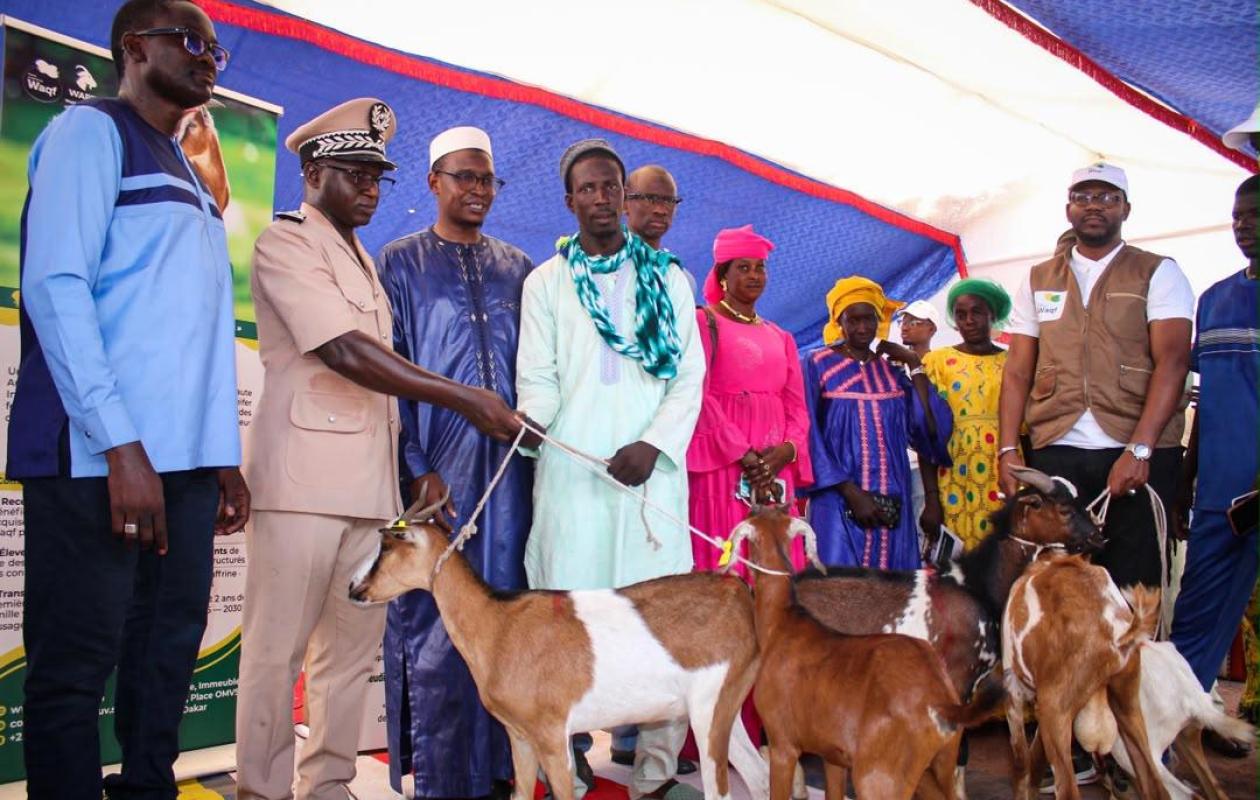
Élevage caprin : après Aéré Lao, la Haute Autorité du Waqf et l'ONG Heifer remettent à Missira Wadène les premières chèvres du WAPEC dans le département de Koungheul
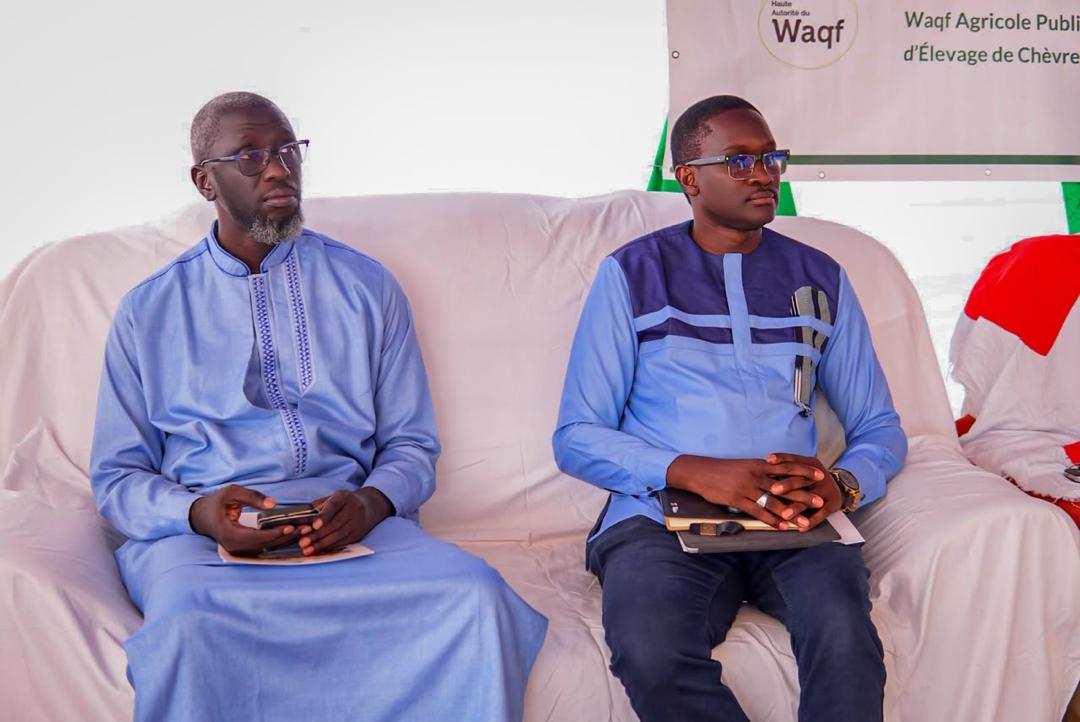
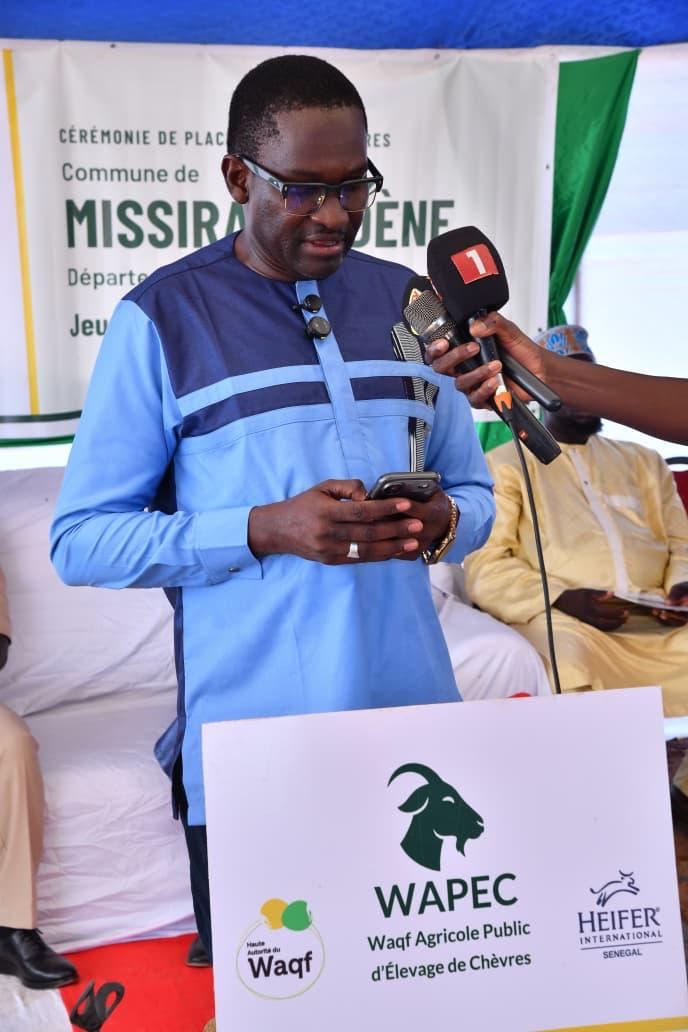
The High Authority of Waqf (HAW) and Heifer International Senegal carried out, this Thursday, October 22, 2026 in Missira Wadène, the ceremony for placing the goats of the Public Agricultural Waqf for Goat Breeding (WAPEC) in the department of Koungheul, two days after Aéré Lao (Podor). Chaired by Mr. Moustapha Seck, Deputy Sub-Prefect of the district of Missira Wadène, the ceremony was held in the presence of Dr. Abdou Karim Diaw, General Administrator of the Islamic Microfinance Development Fund (FDMI), representing the Minister of Microfinance and Social and Solidarity Economy, the Director General of HAW, Dr. Ahmed Lamine Athie, the National Director of Heifer International Senegal, Dr. Daouda Ndao, Mr. Cheikhou Oumar Sall, representing Al Rahma Microfinance, Mr. Abdoulaye Ndiaye, 2nd Deputy Mayor of Missira Wadène, representatives of CNAAS, as well as technical services and local and religious authorities.
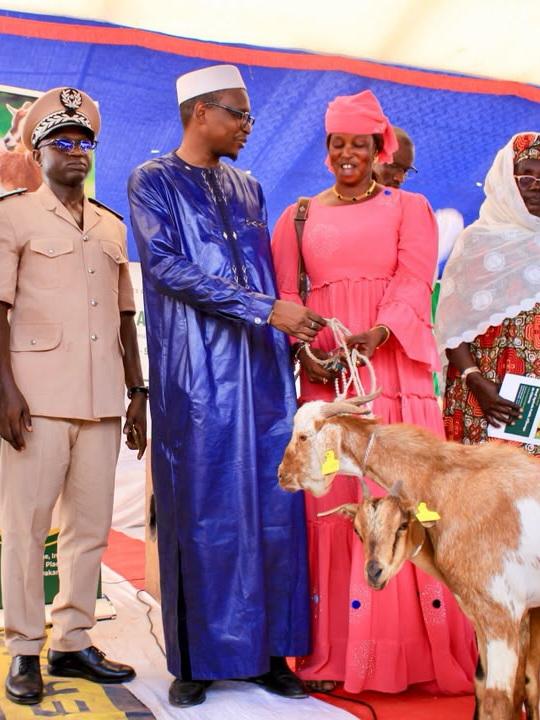
The first public agricultural waqf dedicated to goat farming, WAPEC, plans the gradual distribution of 1,000 goats and 100 bucks to 2,000 women and young people organized into 100 groups in ten communes across the departments of Podor and Koungheul. In Missira Wadène, the batch distributed today includes 100 goats and 10 bucks; in the department of Koungheul, 500 goats and 50 bucks will be distributed in five communes. The animals were acquired using HAW's own funds, and Heifer International Senegal is responsible for the technical implementation.
The transition from donation to service of the waqf
The project links the waqf to the passing of the gift: each beneficiary family passes on to another the same number of animals received, as well as the knowledge acquired.
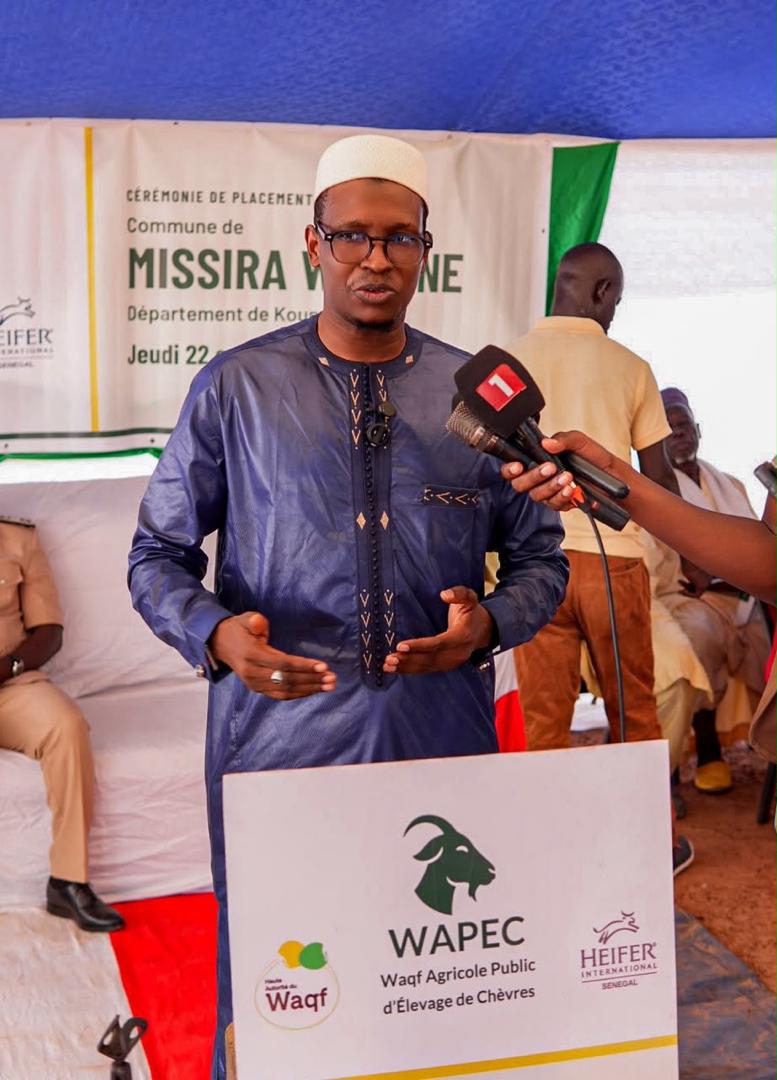
For the Director General of HAW, Dr. Ahmed Lamine Athie, the project aims to "make the waqf a concrete tool for combating poverty, ensuring food security, and providing sustainable income for women and young people." "The waqf is an asset given in perpetuity, so that its fruits benefit the community. We give once, and the asset continues to serve us long after we are gone," he reminded everyone, before commending Heifer International Senegal for their expertise in providing technical and operational support for the project.
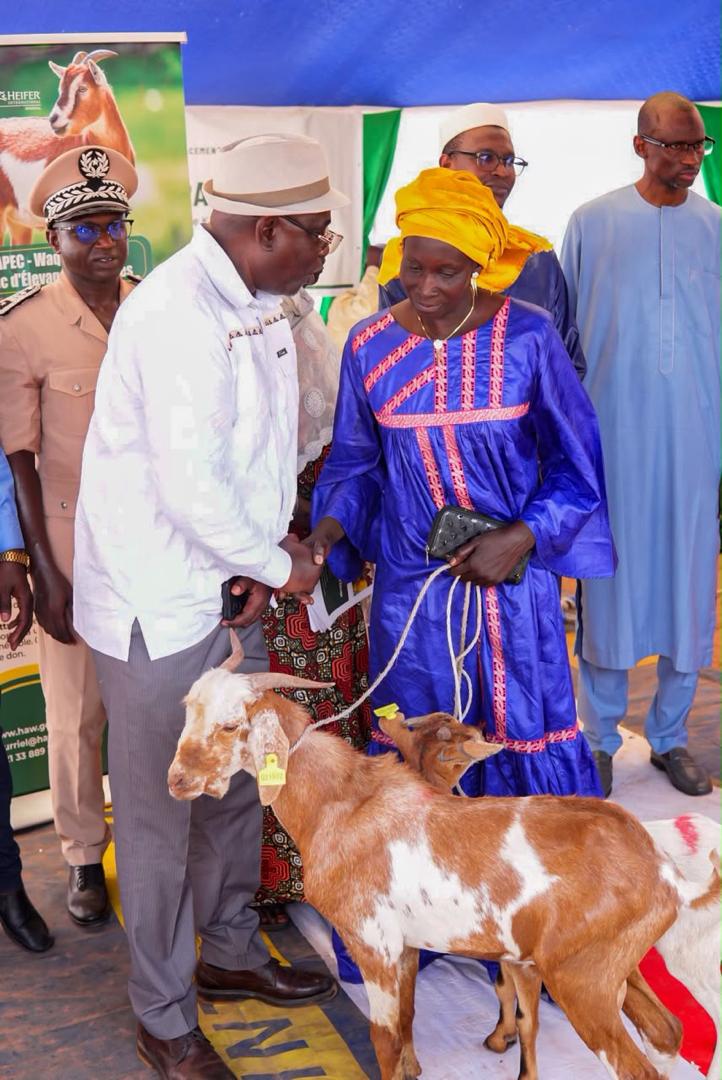
Addressing the families, the HAW Director General invited them to take care of the herd "like a storehouse, a dënkaane": "This herd is yours, but it also belongs to the family waiting for you."
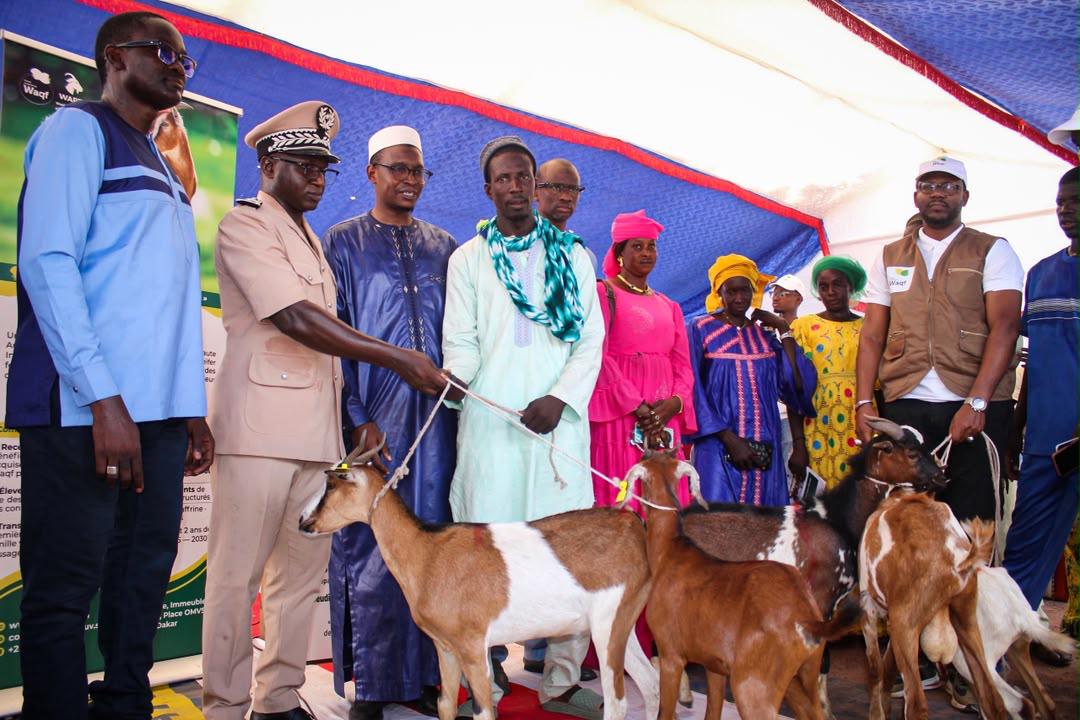
For Dr. Daouda Ndao, Country Director of Heifer International Senegal, the placement "will only truly make sense when the animals are well cared for, when the groups manage their resources rigorously, and when the gains gradually benefit other families." The concept of giving, which evokes sharing, "jokkolante" (a Senegalese expression meaning "to give back"), and teranga (hospitality), is the driving force: "Receiving allows you to start; passing on knowledge allows others to progress in turn." Recalling that Heifer has supported more than 231,000 families in Senegal since 2007, he emphasized the combination of organizational support, technical assistance, insurance, and training, "and not just the number of animals distributed."
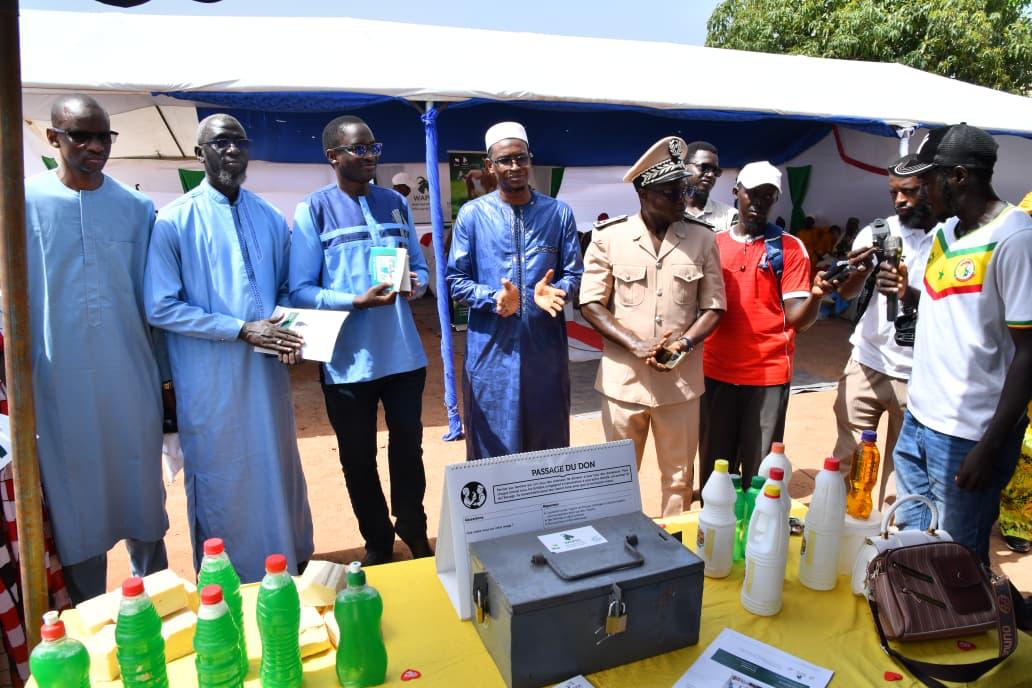
On behalf of the Managing Director of Al Rahma Islamic Microfinance, Mr. El Hadji Birane Diop, Mr. Cheikhou Oumar Sall presented an institution that aims to finance, interest-free and based on real activities, "the entire chain": inputs, goat farming and cattle fattening, then processing and marketing. "A single goat is just an animal. A well-fed, well-cared-for goat, whose milk is processed and the product sold at a fair price, is a business," he explained, before assuring everyone: "From the herd to the market, Al Rahma will be by your side."
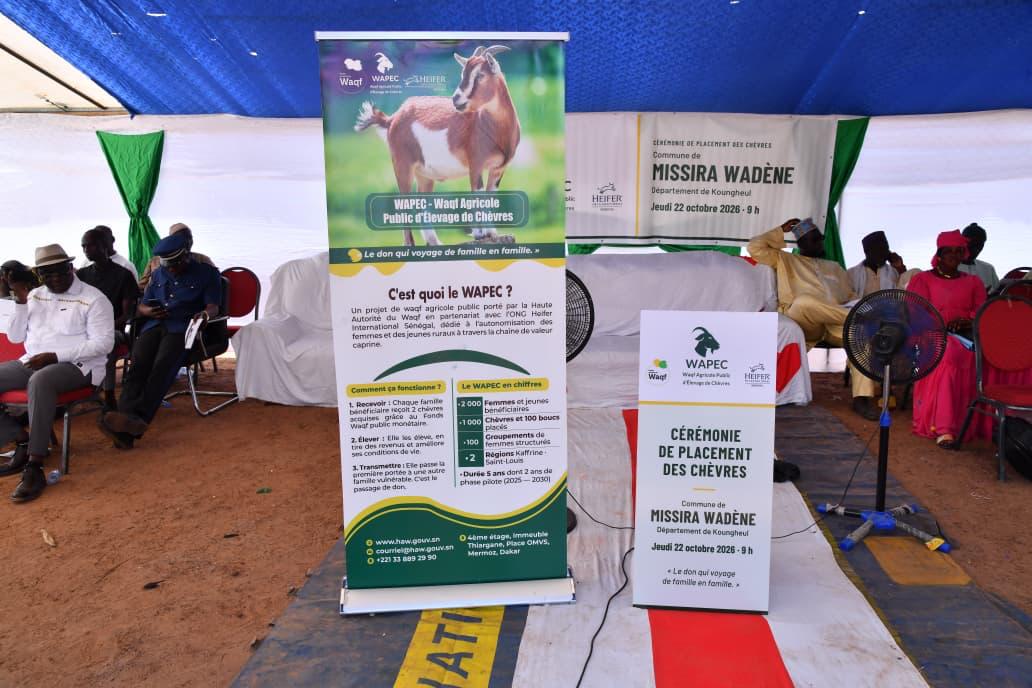
On behalf of the mayor, Mr. Abdoulaye Ndiaye, 2nd deputy mayor of Missira Wadène, stressed the importance of the project for women's groups and livestock farmers in the municipality, as well as its contribution to local development and household resilience.
Representing Dr. Alioune Dione, Minister of Microfinance and the Social and Solidarity Economy, Dr. Abdou Karim Diaw congratulated HAW and Heifer for an initiative that demonstrates how waqf can "constitute powerful levers for economic and social development." By making productive assets available to women and young people, the project, he said, contributes "to transforming assistance into sustainable economic empowerment." He expressed his hope that this experience would be "consolidated and extended to other regions of Senegal."
Presiding over the ceremony, the Deputy Sub-Prefect of the district of Missira Wadène, Mr. Moustapha Seck, recalled the objectives of the project: the sustainable reduction of poverty, the strengthening of household resilience and the strengthening of the capacities of pastoral communities.
Groups prepared in advance
The handover of the animals is the culmination of several months of preparation. In the Koungheul department, 50 village assemblies brought together 520 people, including 351 women. The groups received training in leadership, gender equality, governance, and best practices in livestock farming, and established their own savings and credit systems. The representative of the departmental livestock service commended this training and the ongoing health monitoring of the animals. On behalf of the groups, Ms. Yacine Seck thanked the authorities and partners, emphasized the tangible impact of the project on the daily lives of families, and advocated for its continuation and expansion.
Animals identified and insured
Each animal wears a unique identification tag, fitted by the National Agricultural Insurance Company of Senegal (CNAAS) as part of its collaboration with Heifer International Senegal. This ensures traceability and coverage through livestock insurance.
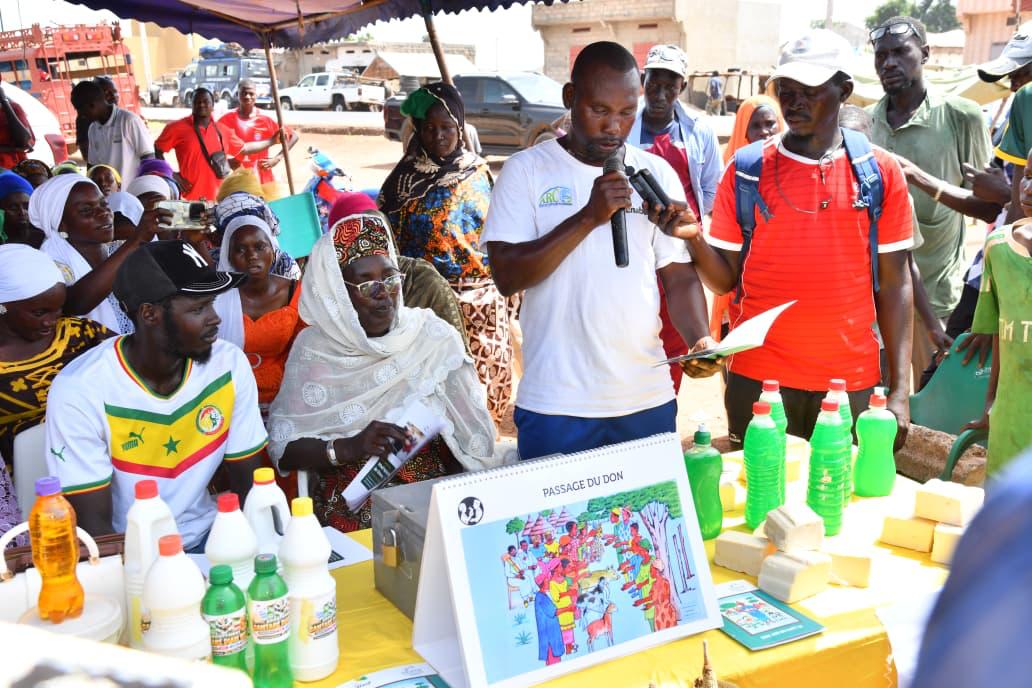
The animals are covered for one year: in the event of a claim, the farmer receives 80% of the insured value, and the government subsidy reduces the premium from 8% to 4%. Mr. Hamidou Pam, head of the CNAAS regional agency, presented the insurance as a tool for protecting farmers, noting that the collaboration with Heifer has already enabled thousands of animals to be insured and beneficiaries to be compensated.
A contribution to the Senegal 2050 vision
WAPEC is part of the Senegal 2050 National Transformation Agenda and the territorialization of public policies. It contributes to food sovereignty and the structuring of agricultural value chains, with, according to the Director General of HAW, "women who raise livestock, save, process and sell, link by link".
The project also responds to the call from the Head of State, who has declared 2026 the Year of the Social and Solidarity Economy. According to the Minister's representative, the donation process "perfectly illustrates the values of solidarity, sharing, and collective responsibility that underpin the social and solidarity economy."
Next step
Placements will continue in the four other communes of Koungheul and in those of Podor, according to the operational schedule.
About WAPEC
Cost: 148,455,697 FCFA. Beneficiaries: 2,000 women and young people, organized into 100 groups.
Target communes in the Podor department: Aéré Lao, Doumga Lao, Gamadji Saré, Guédé Village and Madina Ndiathbè
. Target municipalities in the Koungheul department: Missira Wadène, Maka Yop, Ngainthe Pathé, Lour Escale and Ribot Escale









Commentaires (7)
Les moines de leur mousseu avait déjà maîtrisé les techniques.
L'initiative est à louée mais il appartient aux éleveurs de travailler.
Participer à la Discussion
Règles de la communauté
💡 Astuce : Utilisez des emojis depuis votre téléphone ou le module emoji ci-dessous. Cliquez sur GIF pour ajouter un GIF animé. Collez un lien X/Twitter, TikTok ou Instagram pour l'afficher automatiquement.
Se connecter
Commentez avec votre profil, votre photo, et soyez averti des réponses.