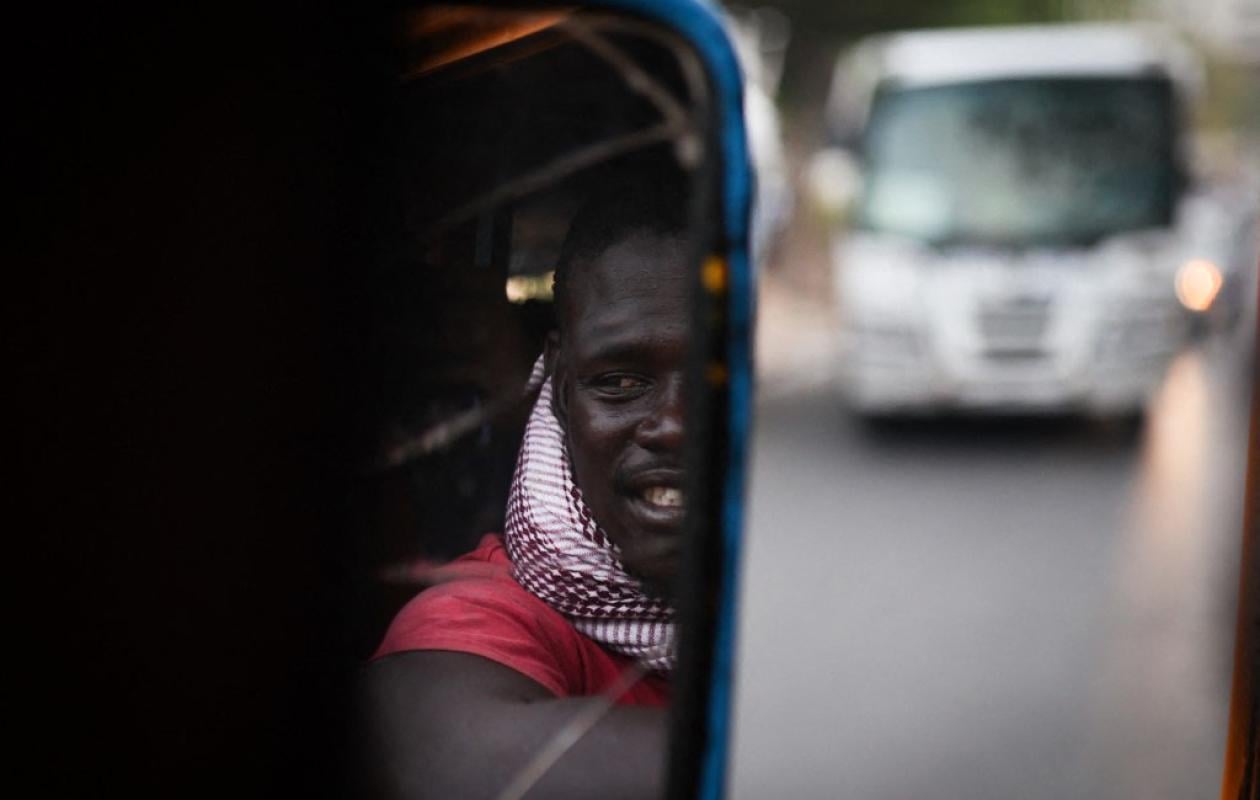
Insalubrité, bagarres et nuits dans les garages : Plongée dans la vie de galère des chauffeurs de « Ndiaga Ndiaye »
The "Ndiaga Ndiaye," those iconic white Mercedes minibuses emblematic of the Dakar region, remain extremely popular with commuters from working-class neighborhoods. Yet, those who work in them—drivers and apprentices—operate under extremely harsh conditions. Mostly hailing from the interior of the country, they have made Dakar's garages their workplace and their living quarters.
An illustration from the Keur Massar bus garage, in the pouring rain. A heated argument erupts between the apprentice of a bus about to depart and the driver of another, a "Ndiaga Ndiaye," who is blocking his path. After several minutes of uninterrupted tension, the blocked driver decides to ram the obstructing vehicle to clear a way through. Not content to let it go, the second driver waits for the opportunity to yield the right of way before returning the favor by ramming the bus in turn. Around them, stagnant rainwater, blackened by garbage, prevents any passengers from disembarking without having to wade through it. This unsanitary environment and these violent clashes are the daily reality for these bus drivers.
Parental abdication and state failure: the passengers' diagnosis
For many witnesses to the scene, the responsibility of both the families and the public authorities is fully engaged. "It's always the same scenario in every garage, and it's due to the lack of education among the drivers and apprentices who, for the most part, are uneducated and some of whom grew up without their parents, who gave up. Nevertheless, it's better that they're unemployed, at the risk of turning to aggression or banditry," confides a passenger.
Despite this precarious situation, these buses connect the suburbs daily to the strategic hubs of the capital: École normale, Colobane, Mairie de Dakar, Ngor, Petersen or Patte d'Oie.
At the door of a bus leaving for teacher training college, under a blazing sun, Ali, in his twenties, his satchel strapped to his waist and his hair beginning to form dreadlocks, tirelessly chants the stops: "Castor, Bourguiba, Teacher Training College!" Originally from Nguékhokh, he only goes home for major holidays. He candidly describes his life on board: "We wash on the bus's running board early in the morning or in the evening, we eat on the bus, and we sleep on the bus too."
The interior of the vehicle confirms his words: leftover rice on the floor, dirty clothes abandoned on the seats, and remnants of mosquito coils. "The drivers can often switch roles, but we're here every day, sometimes even when we're sick," adds the apprentice.
One of his colleagues, speaking on condition of anonymity, added to this poor sanitary situation: "Often, we even relieve ourselves in the forest with just a bottle of water."
Among the drivers—experienced family men or young drivers—resignation prevails in order to preserve this "precious job." Aziz, a driver who runs the route to Ouakam, expresses this powerlessness: "We have no choice; we're forced to come to work early every morning and leave late at night to repeat the same routine for days on end, in extremely difficult conditions. Otherwise, we risk losing our livelihood."
The passenger dilemma and the urgent need for fleet renewal
While comfort leaves something to be desired—with jump seats added at the entrance during the height of the heatwave to cram in more passengers—customers continue to flock to the "Ndiaga Ndiaye." "The journey is faster and the cost of transport is cheaper; that's the only reason I take the 'Ndiaga Ndiaye'," explains Mamadou Diédhiou.
Another passenger highlighted the number of seats, which is greater than on Tata buses: "We are happy with this level of comfort compared to buses where you have to stand for the entire journey."
Faced with this chaotic situation, users and observers are calling on the State to take action. Their expectations revolve around the creation of training schools for drivers and conductors, the decentralization of regional companies to alleviate congestion in Dakar, and above all, the effective renewal of the vehicle fleet with modern, suitable, and safe vehicles.
















Commentaires (6)
Faîtes un reportage sur les accidents, sur l incompétent dg anaser atoumane sy
Avec ce type au CV falsifié, les agents payés à ne rien faire
Au lieu de pérorer sur le CDD à 4 ans, l'Etat a du pain sur la planche avec le secteur informel, gisement potentiel de ressources mais qui nécessite un courage politique pour le renouvellement du parc, la prise en charge sociale des chauffeurs et de apprentis, la mise en place de parkings de stationnement adapté pour les transporteurs publics en général.
Un voeu pieux certainement
Participer à la Discussion
Règles de la communauté
💡 Astuce : Utilisez des emojis depuis votre téléphone ou le module emoji ci-dessous. Cliquez sur GIF pour ajouter un GIF animé. Collez un lien X/Twitter, TikTok ou Instagram pour l'afficher automatiquement.
Se connecter
Commentez avec votre profil, votre photo, et soyez averti des réponses.