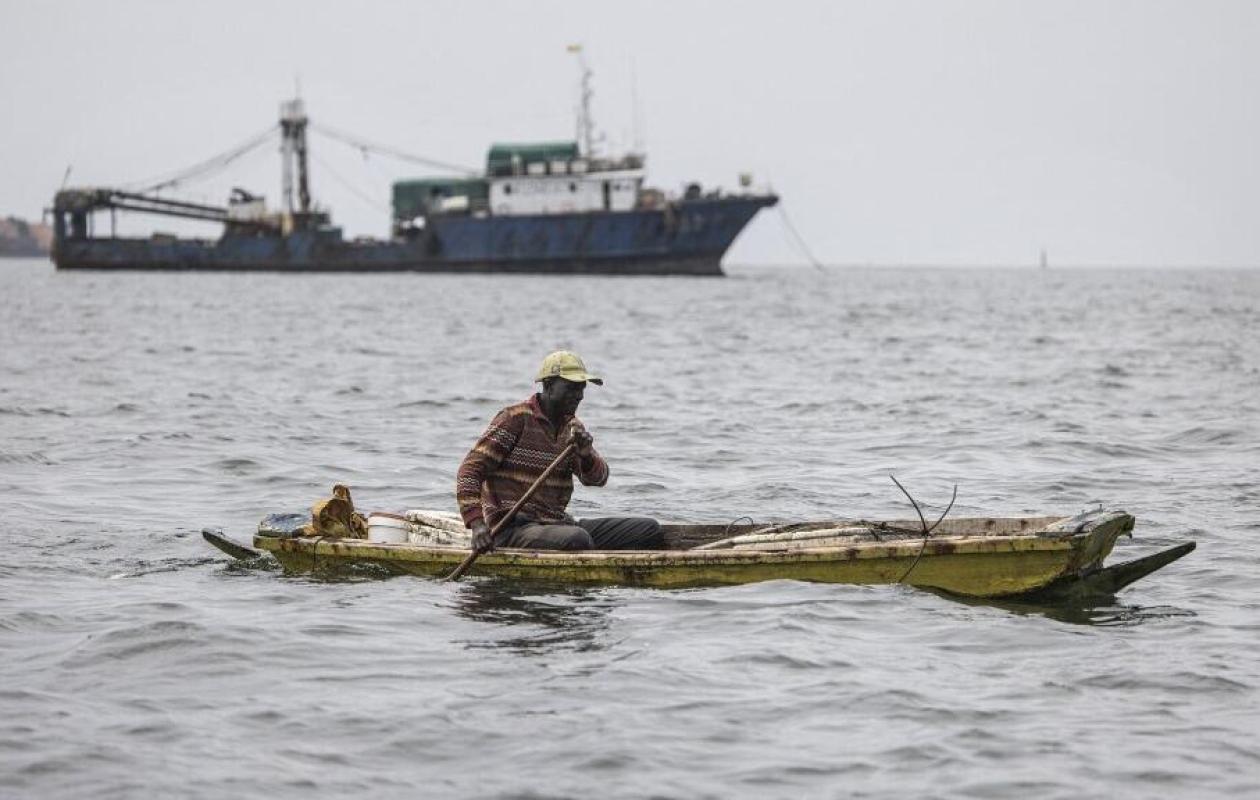
Menace d'effondrement sur la sardinelle : Les captures chutent de 83 %, le cri d'alarme des scientifiques et des pêcheurs
The sardinella, a vital resource for the food security and livelihoods of millions of people in West Africa, is in a critical situation. Faced with overfishing, overcapacity in the fishing industry, increasing pressure from fishmeal factories, and the effects of climate change, experts and stakeholders in the maritime sector are calling for a joint and urgent response from the countries sharing this resource.
The situation of the sardinella is causing serious concern. According to available data, overall catches have fallen by 58% over the last decade, while the stock of round sardinella is estimated to have collapsed dramatically by 83% in ten years. The 2024 assessments by the CECAF/FAO indicate a particularly low biomass, now insufficient to ensure normal biological reproduction.
For Dr. Ndiaga Gueye, former director of Fisheries in Senegal and former official of the Food and Agriculture Organization of the United Nations (FAO), the resource is under worrying pressure: "The sardinella, which is an emblematic resource shared by many countries in the sub-region, from Morocco to southern Guinea-Bissau, is in a very alarming exploitation situation," he warns.
The sardinella's unique characteristic lies in its migratory nature. Actively circulating between the Exclusive Economic Zones (EEZs) of Mauritania, Senegal, The Gambia, and Guinea-Bissau, it evades isolated regulations. "The sardinella knows no borders. Fish caught today in Mauritania can end up tomorrow in Senegal, The Gambia, or Guinea-Bissau," emphasizes Gaoussou Gueye, president of the African Confederation of Professional Artisanal Fisheries Organizations (CAOPA).
This reality requires abandoning exclusive national management in favor of concerted sub-regional governance: sharing of scientific data, harmonization of regulations, synchronization of biological rest periods and strengthening of monitoring, control and surveillance (MCS).
Dr. Ndiaga Gueye also points out that biological rest loses its effectiveness if it is not applied uniformly: "Biological rest on the scale of a single country cannot produce the desired effects."
On the controversial issue of industrial processing into fishmeal, the former Director of Fisheries calls for moving beyond simplistic solutions: "We must not simplify things," he warns, recalling that these factories also source their supplies from artisanal fishing landings.
Senegalese households on the front line
A depletion of sardinella stocks would trigger a major social and nutritional crisis. A popular and inexpensive fish, sardinella is a staple of the protein diet for Senegalese households. "If sardinella disappears, it is the households that will suffer the most," warns Dr. Ndiaga Gueye, emphasizing that these small pelagic fish are first and foremost a guarantee of food sovereignty before being export products.
Joint committees to guarantee transparency
To structure this cross-border governance, CAOPA recommends strengthening joint commissions that bring together stakeholders in the sector. However, their success depends on guaranteed access to key data: fishing agreements, licenses granted, lists of authorized vessels, actual catches, and the identity of the actual beneficiaries of joint ventures.
“Without this information, it is impossible to verify commitments, to measure the real pressure on the resource or to ensure fair sharing,” insists Gaoussou Gueye, who also calls for the systematic integration of fishermen, fishmongers and women processors into decision-making bodies.
Finally, professionals are calling on the media to play an educational role. "It is journalists who can, if they take ownership of the messages from scientists and managers, translate them into language accessible to the general public," concludes Dr. Ndiaga Gueye.
The survival of the sardinella now depends on coordinated sub-regional action, before a shared wealth turns into a global ecological and economic disaster.






















Commentaires (0)
Participer à la Discussion
Règles de la communauté
💡 Astuce : Utilisez des emojis depuis votre téléphone ou le module emoji ci-dessous. Cliquez sur GIF pour ajouter un GIF animé. Collez un lien X/Twitter, TikTok ou Instagram pour l'afficher automatiquement.
Se connecter
Commentez avec votre profil, votre photo, et soyez averti des réponses.