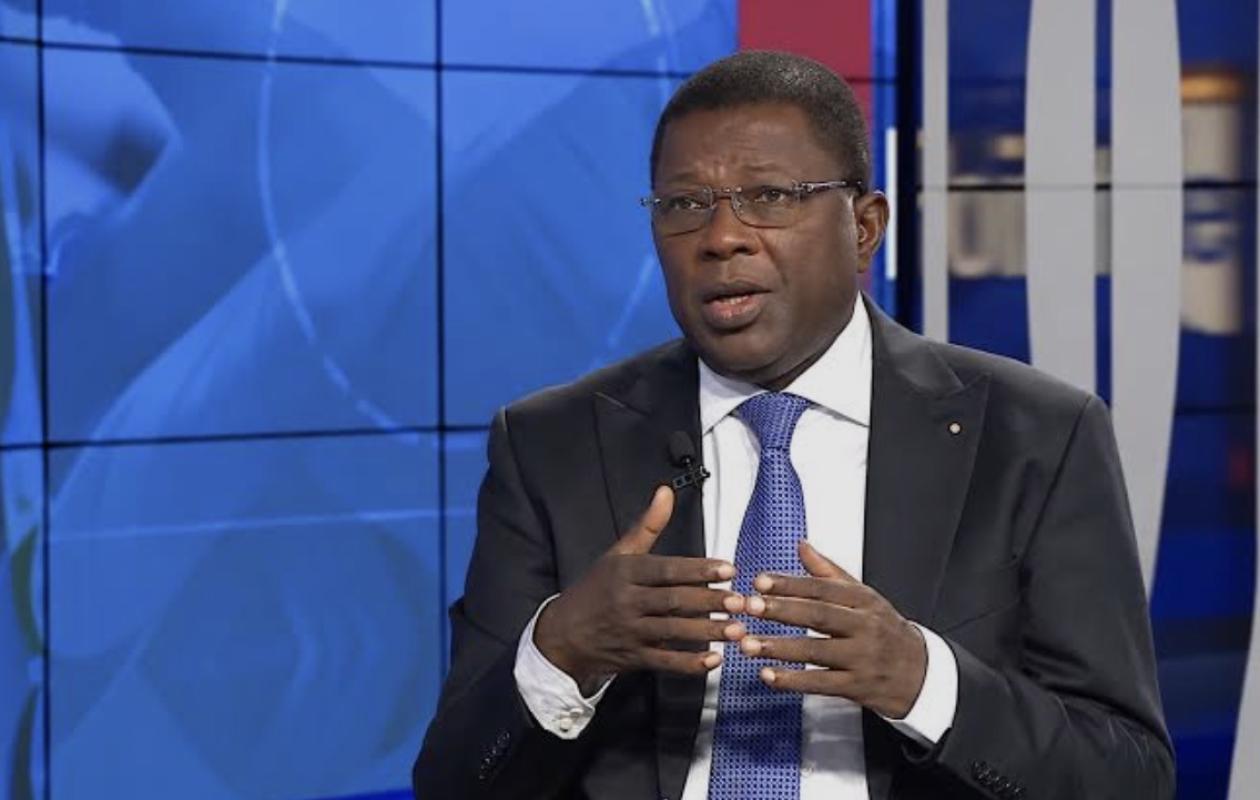
« On ne peut pas tout importer » : El Hadji Alioune Diouf trace la voie de la souveraineté financière et alimentaire
Invited to the program "Jury du Dimanche" (JDD) on iRadio, business and economic expert El Hadji Alioune Diouf presented an in-depth analysis of market regulation, economic sovereignty, and the protection of strategic sectors in Senegal. His analysis of the distribution sector shows that the arrival of Chinese traders has helped regulate the textile market by lowering prices that were previously artificially inflated by some local players. These local players imported low-cost goods and resold them at excessive markups. The arrival of these new players has made it easier for households to access affordable products, particularly for school uniforms. Furthermore, the establishment of retailers such as Auchan is in line with the international commitments made by Senegal in 1994 upon joining the World Trade Organization (WTO), opening the wholesale and retail distribution markets to foreign investors.
While foreign competition has helped to regulate certain markets, economic liberalization must not lead to a loss of sovereignty. Senegal has successfully protected crucial sectors such as higher education, which has been shielded from the establishment of foreign universities, and the healthcare sector, where ownership of pharmacies and clinics remains strictly reserved for Senegalese nationals. Conversely, regulatory gaps are evident in the hotel and tourism industry, particularly on the Petite-Côte and in Cap Skirring, where air and land transport problems, along with unsustainable development, are jeopardizing the local economic model.
The financial situation also requires urgent restructuring. While the civil service comprises between 185,000 and 200,000 employees, no national bank manages the majority of their salaries. The Moroccan bank Attijariwafa alone handles approximately 40% of these services. Establishing a national bank capable of managing at least 50% of civil servants' salaries appears to be an essential prerequisite for financial sovereignty.
The need for regulation is having a major impact on the agri-food sector. Senegal has remained a net importer of rice and vegetable oil since 1980, a critical vulnerability at a time when major powers are favoring friend-shoring and strategic relocation in the face of global tensions. However, levers for sovereignty do exist, such as local industrial processing involving the production of peanut oil combined with 40% palm oil, or the incorporation of local cereals to gradually replace imported wheat with cassava, sorghum, or maize in breadmaking. All of this must rely on the recognized expertise of Senegalese bakers to transform these local inputs and cope with rising global prices.
To preserve purchasing power across the country, the rigorous application of equalization mechanisms is essential to ensure that the prices of basic necessities are harmonized between Dakar, Pikine, and Kédougou. The role of regional development committees and the model of the Price Equalization and Stabilization Fund underscore that public regulation remains the guarantor of social and territorial equity.
















Commentaires (2)
Il d3vait commencer par cultiver son champ
Nous dire par exemple son action principale en conformité avec ses analyses.
Le propre du senegalais c’est de parler haut et fort
En attendant de critiquer ceux qui agissent
L'économie sénégalaises est fort dépendante de la pluviométrie. Et de la maîtrise de l’eau.
C’est par la qu’il faut commencer. Point barre.
Tout le reste est spéculation.
Le second et non moins essentiel levier est l’educayiô et la formation.
Tous les pays développés le sont par l'excellence du genie
Participer à la Discussion
Règles de la communauté
💡 Astuce : Utilisez des emojis depuis votre téléphone ou le module emoji ci-dessous. Cliquez sur GIF pour ajouter un GIF animé. Collez un lien X/Twitter, TikTok ou Instagram pour l'afficher automatiquement.
Se connecter
Commentez avec votre profil, votre photo, et soyez averti des réponses.