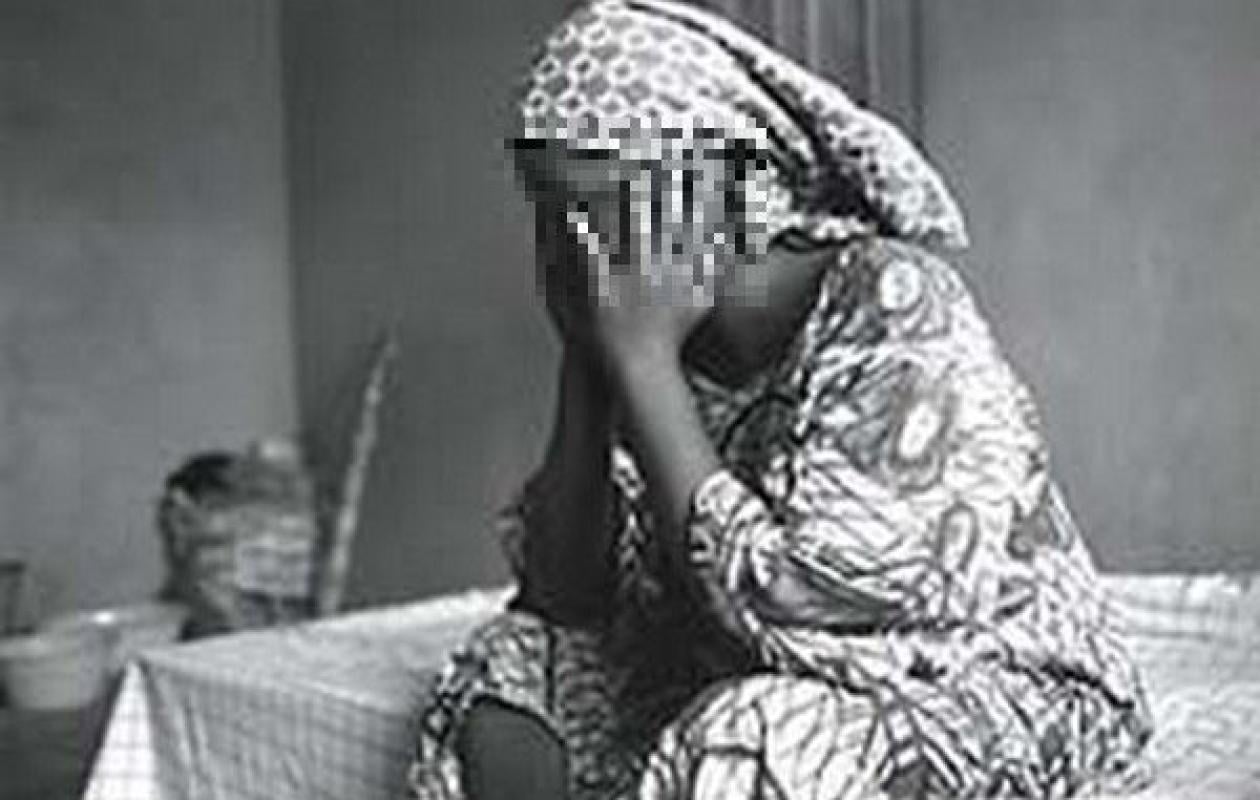
"Proies faciles", "épouses de second choix" : Les femmes divorcées face au poids des préjugés
In Senegalese society, marriage is often seen as the natural culmination of a woman's life. From a young age, girls grow up with the idea that their success depends on the stability of their home and the preservation of their marital union. In this context, divorce is generally considered a failure, especially when it involves a woman. Beyond the emotional breakup, she often has to face the judgmental looks of those around her, societal prejudices, and sometimes even rejection from her own family.
For many Senegalese women, divorce does not simply mean ending a marriage that has become unbearable. It also means entering a new life marked by judgment, suspicion, and a form of social marginalization that can prove as painful as the separation itself.
Divorce, a label that's hard to bear
In the collective imagination, divorced women are often perceived as those who failed to maintain their marriages. Regardless of the reasons for the breakup, she is frequently blamed.
"They want their divorced daughters to find husbands, but refuse to let their sons marry divorced women. Why?", asks one internet user in a post that has provoked many reactions on social media.
This contradiction illustrates the paradox of a society that sometimes sympathizes with divorced women while continuing to view them as second-rate wives. Some are labeled "cursed," others are viewed with suspicion as if their divorce necessarily revealed a flaw in their character.
For Astou, this way of seeing things is deeply unfair.
"A divorced woman is not necessarily a bad woman. Some have suffered for years in their homes before making the decision to leave. Many are victims of irresponsible men who have never fulfilled their duties as husbands," she says.
When the family becomes a second court
While returning to the family home should represent a refuge, many women report experiencing another kind of ordeal once they return to their parents' home.
Some are met with coldness. Others have to endure hurtful remarks or comparisons with women who have managed to preserve their marriages despite the difficulties.
In some cases, the family views divorce as a disgrace that reflects on the entire clan. Parents fear comments from neighbors and criticism from those around them. This pressure sometimes forces women to remain in households where they suffer psychological, economic, or physical abuse.
“Parents should be the primary support for a divorced woman. Unfortunately, many make her bear the burden of her divorce alone,” Alima laments.
This lack of support further weakens women already struggling with separation.
The fear of social judgment
In Senegal, the opinions of others play a significant role in social relationships. A divorced woman often recounts having to constantly justify the reasons for her separation.
In neighborhoods, workplaces, or even family ceremonies, some feel observed, commented on, or judged.
Coumba, who is single, says she already dreads this situation.
“Senegalese people like to judge without trying to understand. Many people know nothing about the circumstances of the divorce but allow themselves to condemn the woman,” she laments.
According to her, society often prefers to focus on the status of being divorced rather than on the suffering that led to the breakup.
"Easy prey" in the eyes of some men
One of the most frequent complaints from divorced women concerns how some men perceive them. Once separated from their husbands, they sometimes become the target of persistent advances and frivolous propositions.
In Wolof, the expression "oyof seurr" is often used to refer to this image of a woman who is supposedly more accessible or more vulnerable. "Many men think that because a woman is divorced, she is necessarily available or ready to accept any relationship. They are not looking to build anything serious," explains Khady.
For these women, this perception contributes to reinforcing their sense of insecurity and their difficulty in regaining confidence.
The burden of single mothers
The situation becomes even more complex when the divorce occurs while there are dependent children.
Overnight, some women find themselves solely responsible for the education, health, schooling, and daily care of their children.
Separation often leads to a sudden drop in financial resources. Many must look for a job, develop an income-generating activity, or depend on help from relatives to survive.
In addition to these economic difficulties, there is a considerable emotional burden. Mothers must manage their own suffering while helping their children overcome the pain of family breakdown. For many of them, rebuilding a new romantic life also becomes a real challenge.
The sociologist's perspective: deeply ingrained beliefs
Dr. Abdoukhadre Sanoko, a sociologist with a degree in psychology, believes that this stigmatization stems from a traditional view of marriage. According to him, Senegalese society still considers that women must bear all the household burdens in order to preserve family unity.
"She is made to understand that she must endure whatever the hardships. If she leaves the marital home, she is perceived as the one who has failed," he analyzes.
The sociologist emphasizes that this perception is based more on social beliefs than on objective reality. For him, marriage is a project built by two people. Therefore, the potential failure of this union cannot be attributed to a single individual.
Divorce is not shameful
Dr. Sanoko rejects the idea that divorce is a social disgrace. "We marry on the basis of mutual consent and a shared vision. When that vision no longer works, each person should be able to regain their freedom without being condemned by society," he argues.
The expert believes that systematically viewing a divorced woman as a bad wife or a person of lesser worth is an injustice that prevents her from rebuilding her life. According to him, it is also wrong to assume that a woman who has experienced divorce will be incapable of succeeding in a new relationship.
Faced with this reality, many voices are calling for a change in attitudes. Many Senegalese had applauded the marriage between actor Edou Ndao and actress Fama Thioune, a mother of two, believing that this act demonstrated that a divorced woman deserves to experience true love just as much as any other.
For some, change must also come from women themselves. They must reclaim their self-worth and refuse to be used, because divorce is a fact of life, not a handicap. They believe that divorced women must continue to believe in themselves and reject narratives that seek to confine them to a negative identity.
As divorces become more frequent, the question of the place of divorced women in Senegalese society is becoming increasingly pressing. Between traditions, religious beliefs, family pressures, and social changes, the debate remains open.
For specialists as well as for those most directly affected, one thing is certain: judging a woman solely through her marital status is to ignore her life story, her suffering and her dignity.
More and more Senegalese are advocating for a society that views divorce not as a mark of shame, but as a life stage that can affect any couple. They also advocate for a society where divorced women are treated with respect, supported in their recovery, and valued above all for their character rather than their marital history.
















Commentaires (54)
Participer à la Discussion
Règles de la communauté
💡 Astuce : Utilisez des emojis depuis votre téléphone ou le module emoji ci-dessous. Cliquez sur GIF pour ajouter un GIF animé. Collez un lien X/Twitter, TikTok ou Instagram pour l'afficher automatiquement.
Se connecter
Commentez avec votre profil, votre photo, et soyez averti des réponses.