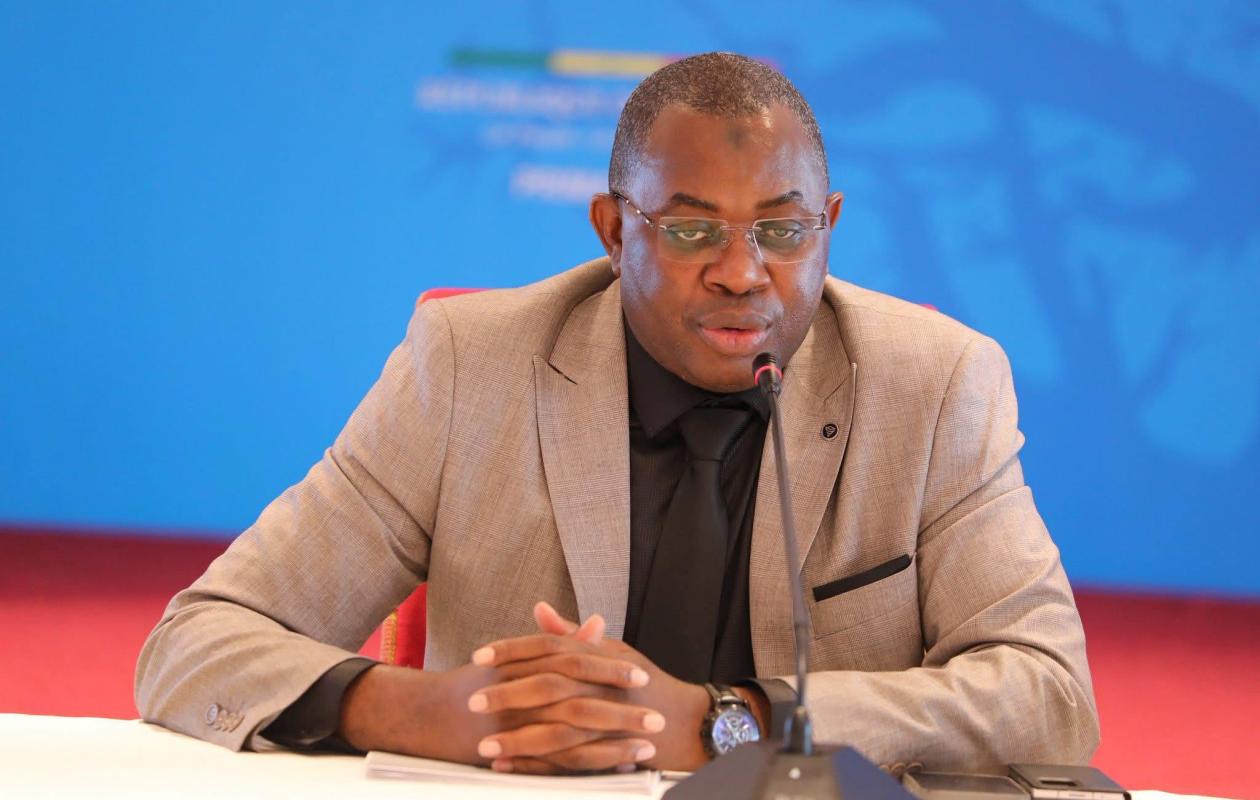
Réforme de la protection sociale : La mise au point du ministère de la Fonction publique
The article published under the title "Dianté: Counterproductive Dirigisme…" raises questions that deserve a calm response, because they concern not one individual, but the future of our national social protection system. The Minister's Office fully respects the right of every citizen, union representative, retiree, or social activist to question public policy. Open debate is legitimate. However, to be useful to workers, employers, retirees, and the State, this debate must distinguish between the measures actually adopted, the interpretations made of them, and the intentions attributed to the public authorities. It is therefore necessary to return to the facts.
1. THE REFORM IS NOT INTENDED TO "TAKE CONTROL" OF IPRES AND CSS
Presenting the social security reform as an operation intended to place the social welfare institutions, namely the Senegal Retirement Welfare Institution (IPRES) and the Social Security Fund (CSS), under the discretionary control of the minister, amounts to attributing to it a purpose that must be demonstrated by the texts themselves.
The essential question is much simpler: does our social protection system today adequately meet the needs of workers, retirees, families and new categories of workers while integrating the principles of good governance?
This is the question the reform aims to answer. Modernizing the legal framework, strengthening control mechanisms, improving transparency, securing resources, and increasing beneficiary protection does not mean seizing control of social security institutions. Regulating is not administering in place of social partners. Ensuring legality is not confiscating management. Modernizing is not nationalizing.
As an employer, the State has the right to sit, on the same basis as other social partners, on the boards of directors of social welfare institutions.
However, this representation of the State within these deliberative bodies of the CSS and the IPRES does not entail its specific prerogatives of technical supervision charged in particular with ensuring the regularity in the renewal of members and in the holding of the various statutory meetings.
To this end, it was necessary to strengthen the powers of the supervisory authority in order to remedy the situations that had led to:
2. TRIPARTISM REMAINS A FUNDAMENTAL PRINCIPLE
Dialogue between the state, workers, and employers is one of the cornerstones of our industrial relations system. No lasting social protection reform can reasonably be built against workers or employers. But tripartism does not mean that an institution responsible for managing substantial social resources should be exempt from the requirements of transparency, oversight, accountability, and responsibility.
The representation of social partners and the exercise of the sovereign responsibilities of the State are not contradictory. On the contrary, they must complement each other.
In this context, it is worth recalling that, due to the opposition of the trade union federations of workers and the confederations of employers, the issue relating to the governance of social welfare institutions, although envisaged, was not addressed by the tripartite mandates at the second Social Conference whose theme was on "Pension reform in Senegal: towards viable and inclusive schemes".
3. THE HISTORY OF 1991 MUST BE VIEWED RIGOROUSLY
The crisis experienced by IPRES in the early 1990s constitutes a significant episode in the history of our social protection system. It deserves to be studied, documented, and understood. However, simply invoking this crisis is not enough to establish that a contemporary strengthening of public regulation would necessarily lead to the same consequences. Senegal in 2026 is not the same as Senegal in 1991. Governance rules, control mechanisms, accounting requirements, supervisory instruments, and the legitimate expectations of citizens have evolved. The lesson to be learned from history should therefore not be: "the State should no longer control," but rather: "no one should be able to dispose of social resources without control, transparency, and accountability." This requirement applies to the State as well as to managers and social partners.
Moreover, in 1991, even though the emergence of plurality within workers' trade union federations was already noted, the vestiges of responsible participation still conferred upon a trade union federation the privilege of designating the Minister in charge of Labour who was to ensure the technical supervision of social welfare institutions.
4. The achievements of IPRES must be preserved and consolidated.
No one disputes the importance of the progress made by IPRES. The regular payment of pensions, their indexation, social benefits, and healthcare coverage mechanisms represent significant gains for retirees. A responsible reform must not destroy what works. On the contrary, it must preserve existing achievements, correct shortcomings, and prepare for the future. The real question, therefore, is less about who can claim credit for past results than about how to guarantee their sustainability for future generations of retirees.
5. OF THE 149,000 BENEFICIARIES AND HEALTH EXPENDITURE
The figures presented concerning the number of beneficiaries and healthcare expenditures must be assessed based on the institution's consolidated accounting and actuarial data. If confirmed, they clearly illustrate the strategic importance of IPRES and the need to secure its long-term funding. The more significant an institution's responsibilities towards tens of thousands of citizens, the more its governance, solvency, and financial sustainability must be subject to collective vigilance. The debate cannot therefore artificially pit the protection of pensioners against good governance. Good governance is, in fact, one of the conditions for the long-term protection of pensioners.
6. ON THE DEBT OF MORE THAN 100 BILLION FCFA ATTRIBUTED TO THE STATE
The report alleges that the State owes IPRES over 100 billion FCFA. Such a significant claim should not be dismissed out of hand or presented as definitive truth without a contradictory accounting review. It is essential to distinguish between acknowledged receivables, potentially disputed amounts, contractual commitments, anticipated compensation, and sums actually due. The Government has no interest in concealing a debt to a social protection institution. If certain, liquid, and due receivables of IPRES from the State are established, they must be processed according to appropriate financial and budgetary procedures. However, the potential existence of IPRES receivables from the State cannot, in itself, constitute an argument against any reform of the system's governance.
The potential state debt is one issue. The governance of social protection is another. Both must be addressed with the same high standard of transparency.
7. ON THE MINIMUM PENSION
The minimum pension directly touches upon a fundamental issue: the dignity of the retiree. If the financial compensation mechanisms between the State and the IPRES (Senegalese Social Security Institute) need to be clarified or regularized, then they must be. The Ministry supports the clear establishment of respective financial responsibilities. But this issue also raises a broader problem: how to build a system capable of sustainably guaranteeing decent pensions without compromising its actuarial balance? This is precisely why Senegal needs a structural overhaul of its social protection system.
8. THE MINISTER HAS NOT BECOME AN ADVERSARY OF THE TRADE UNIONS
Minister Mamadou Lamine Dianté's union background is well-known. But holding government office now means taking into account all the competing interests: those of workers, employers, retirees, public administrations, future generations, and, more broadly, the nation. Having a background in the union movement does not mean that, upon becoming a minister, one must relinquish the responsibilities inherent in the position. Conversely, wielding state authority does not mean abandoning social dialogue. The minister must listen. He must consult. He must explain. But he must also make decisions when the public interest demands it, in strict accordance with the law.
9. ON THE RIGHT TO STRIKE
The right to strike is a fundamental freedom recognized in the Senegalese legal system. Like any freedom governed by law, its exercise is also subject to a legal framework. When an administrative authority rules on the legality of a social movement, this assessment must therefore be examined from a legal perspective: notice period, procedure, legal obligations, continuity of services, and applicable laws. Immediately transforming a legal disagreement regarding the conditions for conducting a strike into hostility towards trade unionism does not shed light on the debate. The ministry's position must be judged on the basis of applicable law and actions taken, not on the intentions attributed to it.
10. ON THE MAGAL EPISODE
Public administration is based on rules governing its operation, leave authorization, and continuity of service. Respect for the religious beliefs of employees does not preclude adherence to these rules. Similarly, requesting explanations does not necessarily imply disciplinary action. If an administrative decision is reviewed in light of additional information, this does not necessarily constitute a contradiction. A responsible administration must also know how to correct an assessment when the facts warrant it.
11. RETIREES AND TRADE UNIONS ARE NOT ADVERSARIES
The Ministry does not consider trade unions, employers' organizations, or pensioners' associations to be adversaries. Disagreement is part of social dialogue. Trade unions have the right to challenge a reform. The Government has a duty to explain it and, when necessary, to improve it. But no group should turn an institutional disagreement into a personal attack. Pensioners have dedicated their lives to work and building the country. Their economic and social security deserves better than a personal confrontation.
12. THE REAL DEBATE: WHAT SOCIAL PROTECTION FOR THE COMING DECADES?
Beyond the controversies, several fundamental questions await answers. How can social protection be effectively extended to workers who are still excluded? How can workers in the informal sector be better protected? How can the sustainability of pension schemes be guaranteed in the face of demographic and economic changes? How can benefits be improved? How can transparency be strengthened? How can contributions be secured? How can collection be improved? How can the purchasing power of retirees be preserved? How can current generations be assured that they will benefit from a robust system in the future? This is the debate that the Ministry wishes to have with its social partners.
CONCLUSION — DIALOGUE, BUT ALSO RESPONSIBILITY
The Minister's Office will not respond to personal attacks with personal attacks. Mamadou Lamine Diatta is free to consider the Minister's approach as "counterproductive top-down control." That assessment is his alone. The Ministry, for its part, holds a different conviction: the future of Senegalese social protection requires greater transparency, greater accountability, greater dialogue, and governance robust enough to protect the contributions and rights of both workers and retirees. Autonomy must never mean the absence of oversight. Oversight must never become a confiscation of autonomy. Tripartism must never prevent accountability. And the authority of the State must never preclude dialogue. This is the balance that must be established. The Ministry's door remains open to labor unions, employers' organizations, retiree associations, and all stakeholders willing to discuss their proposals within a republican framework. Because at the end of this reform, there must be neither a victory for a minister nor a defeat for a union. There needs to be stronger social protection for workers, families and retirees in Senegal.
The Minister's Office


















Commentaires (2)
Participer à la Discussion
Règles de la communauté
💡 Astuce : Utilisez des emojis depuis votre téléphone ou le module emoji ci-dessous. Cliquez sur GIF pour ajouter un GIF animé. Collez un lien X/Twitter, TikTok ou Instagram pour l'afficher automatiquement.
Se connecter
Commentez avec votre profil, votre photo, et soyez averti des réponses.