Sécurité routière : Le danger invisible des pointeurs lasers nocturnes sur les axes de Dakar
In Dakar's main thoroughfares, from the Corniche-Ouest to the Voie de Dégagement Rapide (VDN), and including the suburban roundabouts, a new nighttime practice has taken hold without regulatory control: the uncontrolled and unauthorized use of tactical flashlights equipped with integrated laser pointers. Whether used by the police, the gendarmerie, or private security guards stationed in front of banks and shops, these beams—most often green or red—have become common tools for alerting motorists or directing traffic.
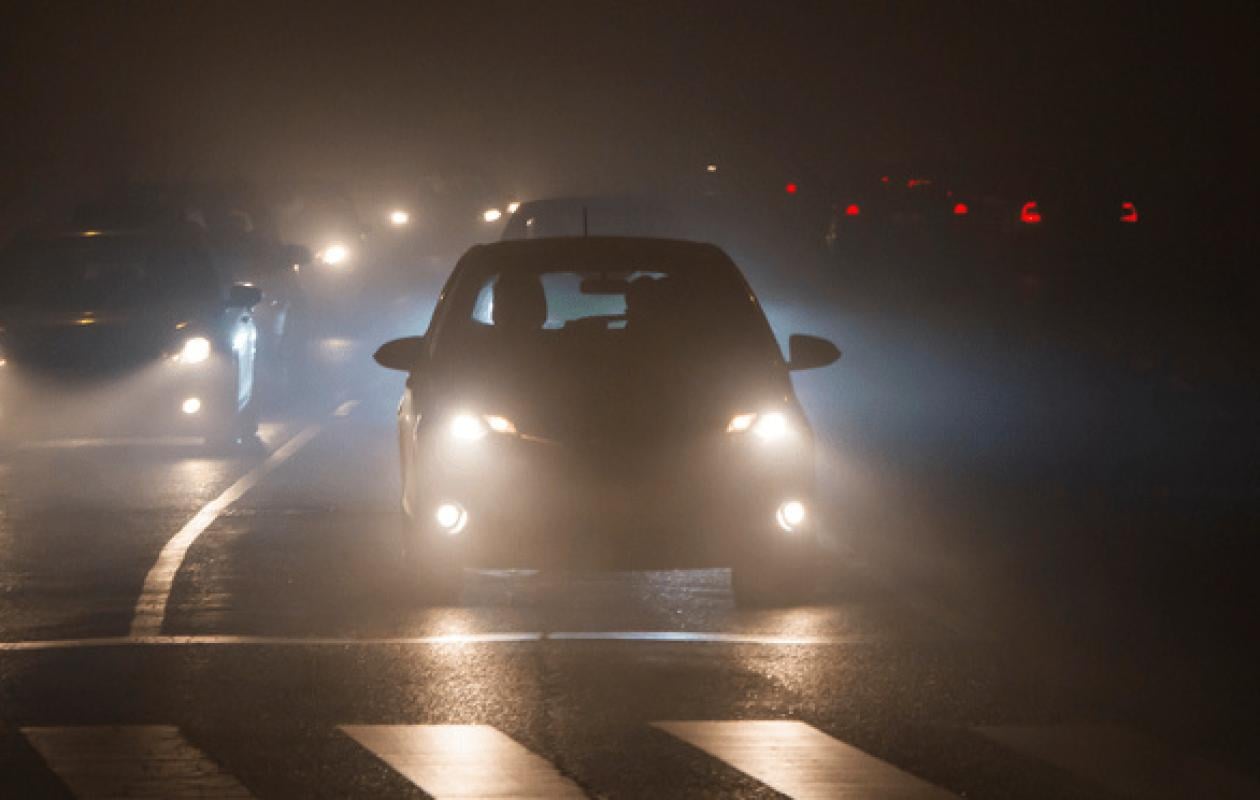
While the intention to capture drivers' attention or secure a perimeter remains legitimate, the current method poses serious public safety problems. These ultra-bright beams are routinely projected blindly, directly into the faces and eyes of road users. Behind this seemingly innocuous action lies a major health risk coupled with the danger of a tragic accident.
Unlike the light from a conventional flashlight, which disperses, a laser concentrates a colossal amount of thermal energy onto a tiny point. The green beam, particularly favored by field agents, corresponds precisely to the wavelength to which the human eye is most sensitive. When this beam passes through a vehicle's windshield in the middle of the night, the shock is immediate for the driver, whose pupils dilate to capture the limited available light. This impact causes a sudden, blinding flash, leaving persistent black spots in the field of vision.
The risk of a road accident is thus multiplied. A driver blinded for just two seconds at a speed of 50 km/h travels blind for nearly 30 meters. In the nighttime environment of Dakar, where pedestrians, motorcycles, and carts share often poorly lit roads, this situation presents a high potential for danger. Furthermore, the majority of these low-cost imported tactical devices are uncertified. They far exceed the permitted power levels, often exceeding 5 to 50 milliwatts. At this level, the laser can cause irreversible damage by permanently burning the retina before the user even has time to close their eyelids.
This situation highlights the need for adequate training for defense and security forces, as well as the private sector, since agents are often unaware of the dangers of the equipment they handle. In light of this, the Ministries of the Interior, the Armed Forces, and Health, along with the National Council for the Regulation of Private Security (CNSP), are urged to adopt firm measures to regulate this practice.
Among the proposed solutions is, firstly, a ban on uncertified equipment or equipment exceeding class 2, with a power output of less than 1 milliwatt. Secondly, strict national guidelines should be disseminated during briefings prohibiting the use of lasers to direct the beam towards the face, eyes, or rearview mirrors, instead directing the beam towards the vehicle body, license plate, or ground. Finally, a return to professional alternatives, such as the red or orange LED light sticks used internationally, would ensure excellent visibility without compromising the visual health of citizens.
























Commentaires (18)
Participer à la Discussion
Règles de la communauté :
💡 Astuce : Utilisez des emojis depuis votre téléphone ou le module emoji ci-dessous. Cliquez sur GIF pour ajouter un GIF animé. Collez un lien X/Twitter, TikTok ou Instagram pour l'afficher automatiquement.