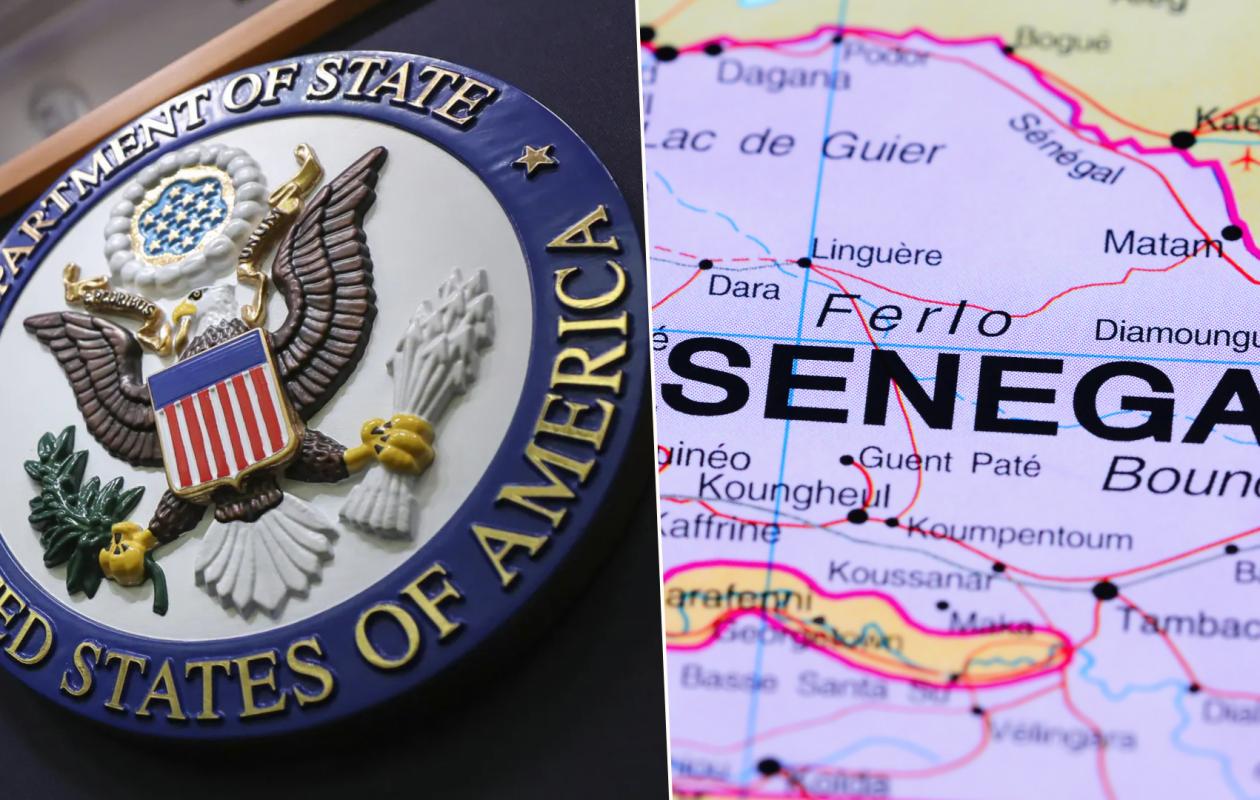
Traite de personens, prostitution, trafic sexuel : Un rapport du Département d’État américain révèle l'ampleur du mal au Sénégal
In its report on human trafficking, the U.S. State Department highlights several forms of exploitation in Senegal. Marco Rubio's office emphasizes the links between human trafficking, forced labor, and sexual exploitation in the country.
Trust and teachers who abuse their students
The report highlights several scenarios. First, some traffickers fraudulently recruit their victims under the pretext of traditional cultural practices called "entrustment", which consists of entrusting children to relatives in order to offer them better access to education and economic opportunities.
"These children are then exploited by traffickers in forced labor and prostitution," the document from the United States Department of State states.
It also reports that in schools, some high school teachers sexually exploit young girls, sometimes in the context of prostitution, by offering them sexual relations in exchange for money, goods or good grades.
Tourism and the sexual exploitation of children
The tourism sector is not spared either. The US State Department reports that "some tourists are exploiting children for sexual purposes in the cities of Dakar and Saint-Louis, and to a lesser extent in Cap Skirring and La Petite Côte."
Even more concerning, Senegalese children are being exploited in domestic servitude and gold mining. According to the report, those working in fishing, street vending, and agriculture are also vulnerable to exploitation.
The extent of sex trafficking in mining areas
In Kédougou, in the gold-mining areas, the situation is particularly alarming. “Women and girls, some as young as 12, are victims of sex trafficking,” the document states. Most of the victims are from Nigeria, but traffickers also exploit Senegalese women and women from Mali, Benin, Burkina Faso, Ghana, Guinea, Sierra Leone, and China.
The report describes, in particular, the modus operandi of organized Nigerian networks. These networks fraudulently recruit victims under the pretext of offering them employment, before sexually exploiting them in Kédougou, often through debt bondage. The traffickers confiscate their identity documents and demand travel expenses ranging from 1.7 to 2.3 million CFA francs.
The document also cites an NGO report that partly attributes the rise in demand for prostitution services in mining communities to certain cultural and religious beliefs associating sexual relations and illicit activities with an increased chance of finding gold.
In Mbour, a coastal city, the growth of tourism has also led to an increase in child begging and sex trafficking, according to the report.
The porous nature of borders opens the door to trafficking.
The U.S. State Department also emphasizes that increasing insecurity in Burkina Faso, Chad, and Niger, combined with porous borders, facilitates the passage of traffickers and the exploitation of the socio-economic vulnerability of the populations concerned.
The fishing sector is also singled out. Chinese fishing vessels flying the Senegalese flag "could exploit West African men, particularly Senegalese, and Chinese nationals, by subjecting them to forced labor," the report warns.
Chinese massage parlors and the Korean presence
The document also reports the presence of massage parlors owned by Chinese nationals in urban and tourist areas, showing indicators of prostitution.
He also mentions North Korean nationals working in Senegal who may be subjected to abusive working conditions and show several indicators of forced labor.
The trap of illegal immigration for Europe
Those seeking to emigrate are not spared. Economic insecurity and regional instability have contributed to a sharp increase in irregular migration to Europe, particularly Spain, according to the report. These migrants are vulnerable to human trafficking.
The U.S. State Department reports that traffickers are fraudulently recruiting Senegalese men and women by promising them jobs abroad, before exploiting them through forced labor and domestic servitude, particularly in the Middle East.
Even more seriously, these networks also exploit Senegalese victims by forcing them to commit criminal acts as part of online scams abroad.














Commentaires (13)
Y' d'autres choses évidement mais ces deux points la sont les faits.....
Participer à la Discussion
Règles de la communauté
💡 Astuce : Utilisez des emojis depuis votre téléphone ou le module emoji ci-dessous. Cliquez sur GIF pour ajouter un GIF animé. Collez un lien X/Twitter, TikTok ou Instagram pour l'afficher automatiquement.
Se connecter
Commentez avec votre profil, votre photo, et soyez averti des réponses.