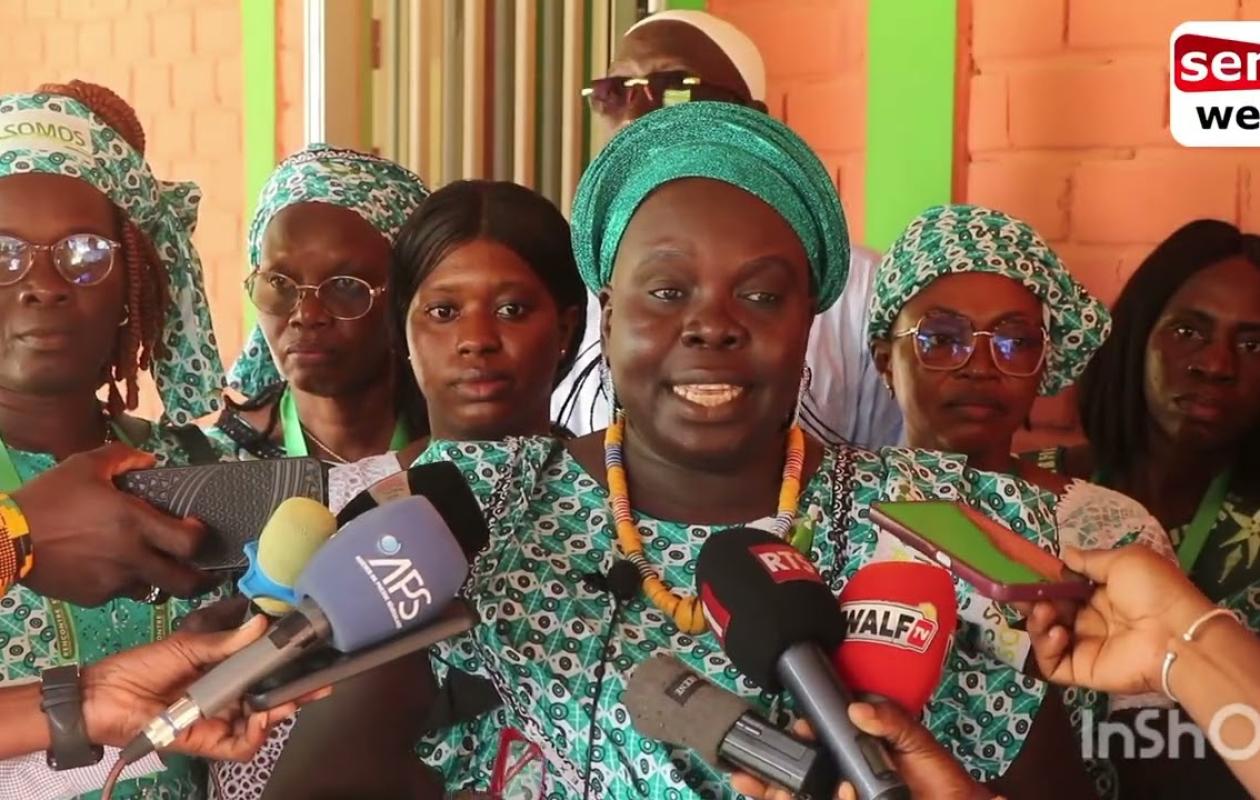
Ziguinchor : À Niaguis, les femmes rurales de 23 pays africains unissent leurs forces pour promouvoir l’agroécologie paysanne
The pan-African movement We Are the Solution (NSS), with the support of Thousand Currents, launched yesterday in Niaguis. An important international meeting dedicated to peasant agroecology. Bringing together rural women, peasant organizations and partners from 23 African countries, this meeting aims to harmonize visions, share field experiences and strengthen advocacy for agriculture that respects health, the environment and communities.
The opening ceremony was held in the presence of the sub-prefect of Niaguis, Massamba Mbaye.
In Niaguis, in the Ziguinchor department, rural Africa gathered around a shared ambition: to build a sustainable agricultural model based on the principles of agroecology. For several days, delegations from different regions of the continent exchanged experiences, faced challenges, and discussed the future prospects of African family farming.
This continental meeting is organized by the We Are the Solution (NSS) movement, a pan-African network of rural women committed to food sovereignty and the promotion of sustainable agricultural systems. It is supported by the international organization Thousand Currents, a long-standing partner of community initiatives and social movements worldwide.
Speaking at the opening of the proceedings, the president of NSS, Mariama Sonko, emphasized that this meeting addresses a fundamental need: to build a shared understanding of peasant agroecology across the continent. "Today, definitions of this practice vary. We believe we must speak the same language and have the same understanding of the topic. What are the principles that underpin this agroecological, and especially peasant, practice?" she explained to the participants.
For the movement's leader, this harmonization of visions is an essential prerequisite before any advocacy efforts with public authorities. "The ultimate goal is first and foremost to have a shared understanding at the grassroots level. Because before the authorities will support us, we ourselves, as stakeholders, must speak the same language. Then, it's about getting decision-makers to take this practice into account in national and regional agricultural policies," she stated.
Beyond production issues, Mariama Sonko defended a vision of agriculture that places the health of populations and the preservation of natural resources at the heart of its priorities. "The added value for us today is first and foremost the health of the population, of consumers, but also the health of the environment and the ecosystem. We must think about the health of living beings before thinking about profit," she insisted.
According to Ms. Sonko, the numerous diseases that have appeared in recent years, as well as the increasingly marked climate disruptions, demonstrate the limitations of an agricultural model heavily dependent on chemicals and external inputs.
The meeting is attended by delegations from 23 African countries, including Senegal, Benin, Burkina Faso, Mali, Ivory Coast, Togo, Guinea, Guinea-Bissau, Gambia, Kenya, Tanzania, Namibia, Zambia, and Zimbabwe. This diversity reflects the growing interest in agroecology across the continent.
On behalf of Thousand Currents, its Vice President of Global Programs, Zanelle Sibanda, reaffirmed her organization's commitment to supporting rural African communities. "For over forty years, we have deeply believed in the power of communities. We believe in their ability to understand the challenges they face, to identify solutions themselves, and to act collectively to solve their problems," she said.
For her, agroecology represents much more than a simple agricultural method. It constitutes one of the most relevant responses to the major challenges facing Africa.
Faced with recurring droughts, increasingly frequent floods and the need to feed a growing African population, agroecology offers concrete solutions to restore soils, preserve water resources and strengthen the resilience of farms.
“Agroecology maintains economic value within communities and helps create decent livelihoods. It places farmers at the center of development, particularly women farmers who feed our families and strengthen our communities,” argued Ms. Sibanda.
The head of Thousand Currents also called on African governments to strengthen their collaboration with peasant movements and rural communities.
According to her, grassroots innovations will only be able to produce their full effects if they benefit from a favorable political environment, adequate investments in research, community infrastructure and financing mechanisms adapted to rural realities.
Present at the opening ceremony, the sub-prefect of Niaguis praised the relevance of this initiative. Massamba Mbaye paid particular tribute to rural women and young farmers, whom he considers the true architects of the continent's agricultural transformation. "You are the beating heart of African agriculture. The networks of women producers you represent demonstrate every day that agroecology is a concrete response to poverty, a lever for empowerment, and the best shield to protect our biodiversity," he declared.
Inviting participants to make this meeting a forum for fruitful exchanges and concrete actions, he advocated for strengthening synergies between the various movements and networks present. "Together, let's show the world that African peasant agroecology is not a passing fad, but the science of the future," he declared before officially opening this continental meeting.
Through this initiative, rural African women intend to demonstrate that agroecology is no longer just an alternative, but a credible path to achieving food sovereignty, fighting climate change and guaranteeing future generations a productive, healthy and sustainable agriculture.
From Niaguis, they thus carry a common voice for an Africa that feeds its people while preserving its natural resources.


















Commentaires (0)
Participer à la Discussion
Règles de la communauté
💡 Astuce : Utilisez des emojis depuis votre téléphone ou le module emoji ci-dessous. Cliquez sur GIF pour ajouter un GIF animé. Collez un lien X/Twitter, TikTok ou Instagram pour l'afficher automatiquement.
Se connecter
Commentez avec votre profil, votre photo, et soyez averti des réponses.