JOJ 2026: «On ne peut pas exiger beaucoup en donnant peu», le plaidoyer des mamans de la natation sénégalaise
Finishing fifth in his 50-meter breaststroke heat on Thursday, November 5th, rising star Naël Lamine Voisin was the last Senegalese swimmer to enter the water at the Youth Olympic Games. Swimming leaves the competition without a medal, but in the stands, the pride of the families is mingled with a question: what could these young athletes have achieved with better preparation?
Naël Lamine Voisin left the Olympic pool at the Tour de l'Œuf complex with disappointment in his eyes. He had hoped for a final; his fifth-place finish in the 50-meter breaststroke heats ended his Olympic journey. But the young swimmer refused to reduce his Games to this last race. "I'm not disappointed. I'm quite satisfied. I was hoping to reach the final, but I didn't manage it." He didn't break his personal best in the event, he clarified. The day before, however, he had "significantly beaten" his record in the 100-meter breaststroke.
Interviewed a year ago by RFI at the national championships, which he dominated, Naël has changed: he has gained in stature and muscle. He also appreciates how far he has come. "I gave it my all," he says, before thanking the woman who has supported him this far: "Without my mother, I wouldn't have been able to get here."
One chapter closes, but his horizons extend beyond these Youth Olympic Games. He wants to reach "a good level in the senior category and hopes to qualify for the Olympic Games in the United States."
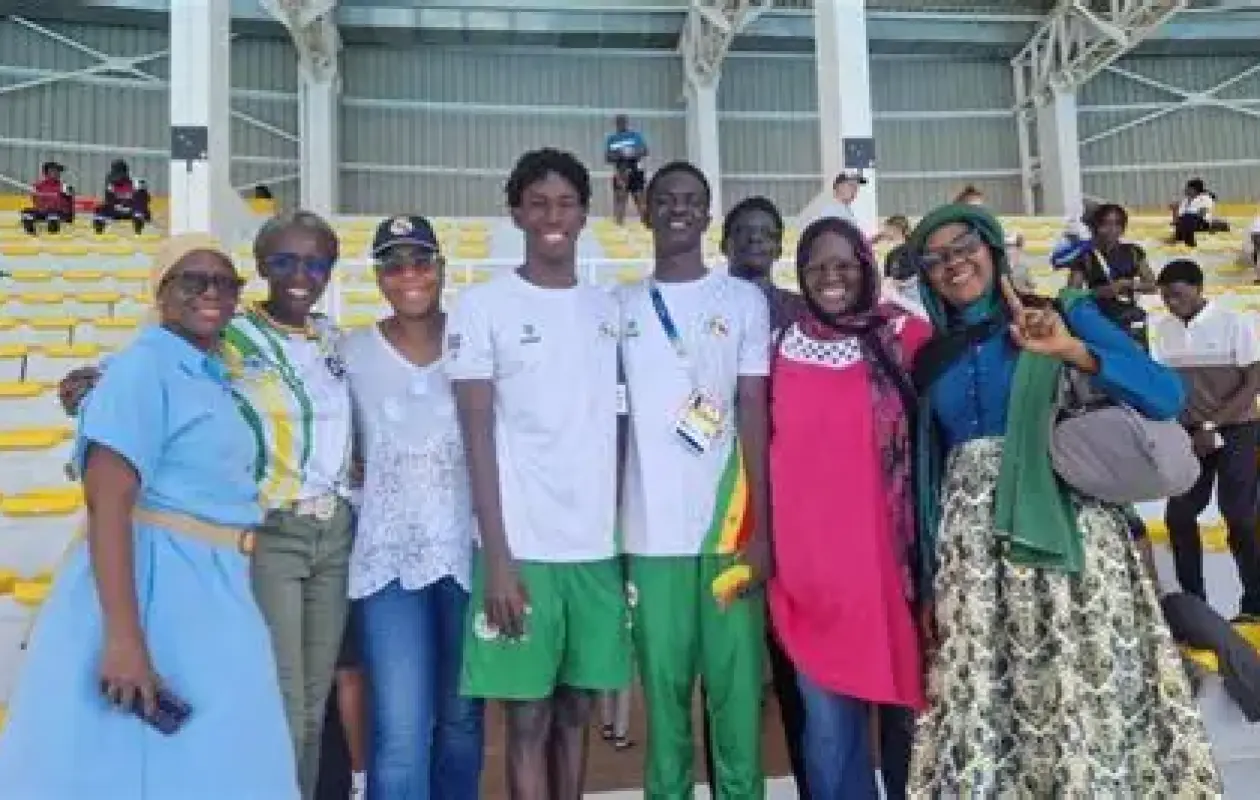
Moments after his race, his mother, Nafi Touré, was in the stands, surrounded by other parents and people who had come to support Naël. A former fencer, an Olympian in Athens in 2004 and then in Beijing in 2008, she knows the pressure of major competitions. For her, this final race closed a chapter she had been preparing for for many months. "I feel proud. I'm proud that Senegal was represented and that these young people pushed themselves to the limit. I'm not just talking about my son Naël."
She points out that a first experience at the elite level isn't judged solely on the finishing position. Naël, she says, had to manage stress and emotion in front of all those who had come to support him. She also acknowledges his best time in a 50-meter pool. But her pride doesn't erase her regrets about the support provided to swimmers: "We can't expect a lot from these young people while giving them very little." She calls for better supervision and greater involvement from the government.
Nafi Touré, former fencer and mother of neighbor Naël Lamine, takes her son in her arms after his last race at the Youth Olympic Games.
Nafi Touré, a former fencer and mother of neighbor Naël Lamine, embraces her son after his last Youth Olympic Games race. © RFI/Ndiassé SAMBE
Maïmouna Diakhaté, Rassoul Lèye's mother, adopts the same double standard: congratulating the athletes while simultaneously defending their working conditions. Her son finished third in his 100-meter backstroke heat, but his time wasn't sufficient to advance to the next round. "Even without a medal in swimming, they deserve congratulations, not criticism," she insists.
She describes a training program far removed from the demands of competition. "The Olympic pool was closed to them for four years. The swimmers trained in club pools, sometimes 20 meters long, while national competitions were held in 20 or 25-meter pools. They also had to attend classes. If we want these young people to reach the same heights as others, we must give them the necessary conditions to achieve this," she argues.
The president of the Senegalese Swimming Federation, Maguette Dièye, preferred to celebrate the personal bests achieved by the swimmers and looked ahead to the next Games, while also defending his record. “We were able to enter six swimmers because Senegal is hosting the Games. At the previous Youth Olympic Games in Buenos Aires, we only had two. The young athletes benefited from two two-month training camps in China, as well as camps at Gaston Berger University in Saint-Louis, which has a 50-meter pool. Since they are students, these camps have to be organized during weekends or holidays. The main thing now is to prepare for the post-Youth Olympic Games period with long-term support from the government and the Ministry. The 2028 Olympic Games may be coming too soon, but we hope to have swimmers qualified for Brisbane 2032.”
For Mohamed Diop, president of Africa Aquatique and multiple-time Senegalese champion, the next step must begin with a clear decision: to reinstate the training center which, according to him, produced good results between 2019 and 2022. He cites Malick Fall, a legend of Senegalese swimming and four-time Olympian, who returned from France to coach swimmers in Senegal. "The problem, therefore, is not the lack of a top-level coach. What's needed is the infrastructure and to give athletes the necessary conditions to prepare for 2032," he asserts.
For now, Naël Lamine Voisin is benefiting from a scholarship from the International Olympic Committee until the Brisbane Games: this is a first achievement. The next step, for him and his young teammates, will be to finally have the resources to translate their progress into results and perhaps one day into Olympic medals.










Commentaires (0)
Participer à la Discussion
Règles de la communauté
💡 Astuce : Utilisez des emojis depuis votre téléphone ou le module emoji ci-dessous. Cliquez sur GIF pour ajouter un GIF animé. Collez un lien X/Twitter, TikTok ou Instagram pour l'afficher automatiquement.
Se connecter
Commentez avec votre profil, votre photo, et soyez averti des réponses.