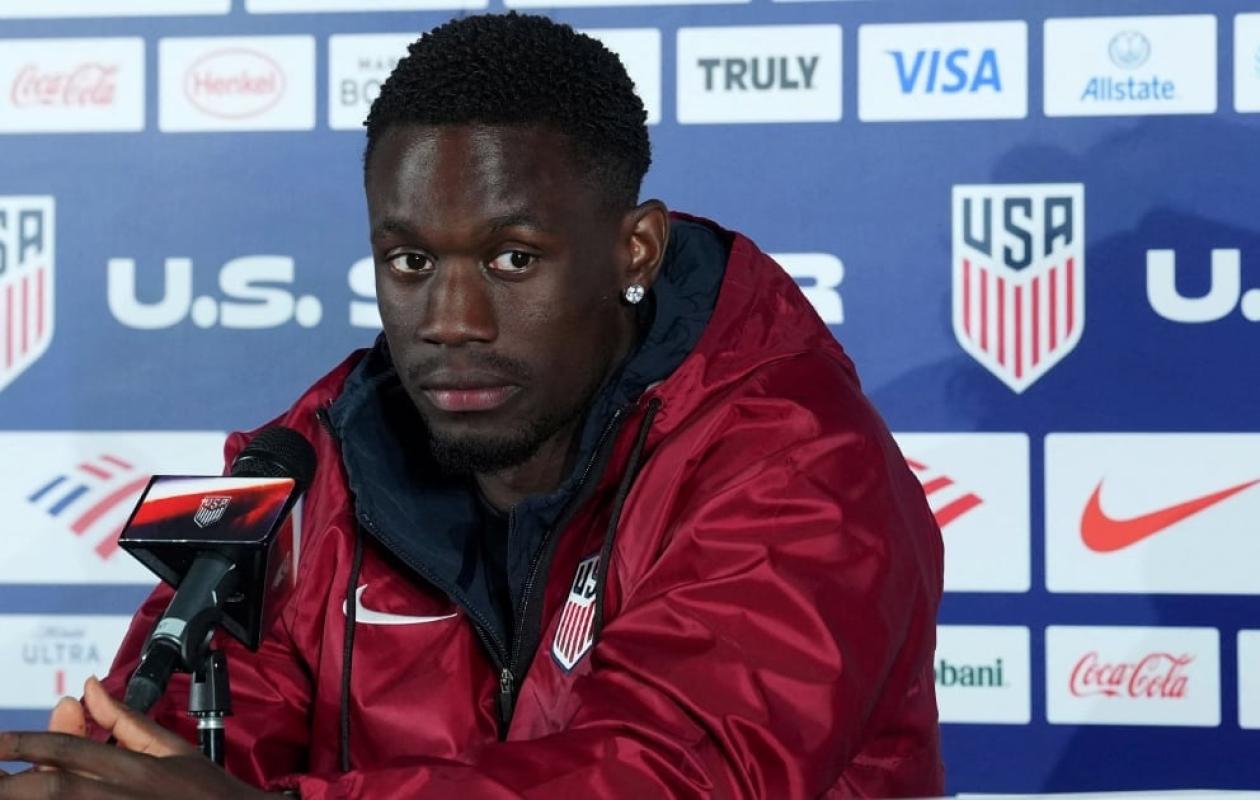
Mondial 2026 : Comment la star américaine Folarin Balogun s'est retrouvée au cœur d'un débat politique explosif
At a time when Donald Trump is questioning birthright citizenship in the United States, the star striker of the American national team, Folarin Balogun, has become one of its symbols.
Having scored twice in the resounding 4-1 victory against Paraguay at the start of the World Cup, the 24-year-old player would not be American without a series of circumstances.
“(My mother) came to the United States to visit her sister. She had her return ticket, but she was told she was too far along in her pregnancy. So I was born in New York,” the Monaco striker recounts in an Instagram video published this week by the American team.
Traditionally, anyone born on American soil automatically obtains citizenship.
A pure British product, having grown up in London and played for the Three Lions until he was 21, the striker thus benefited from birthright citizenship and chose to represent the United States rather than England or Nigeria, the country of origin of his family.
"I was eligible to represent America... I will not be the one to stand in the way of this story," he said in his characteristic London accent.
But such a trajectory could become impossible. Donald Trump wants to revisit the principle of birthright citizenship, enshrined in the 14th Amendment to the US Constitution, as part of a broader tightening of immigration policy.
The American president wants to limit citizenship to children born in the United States with at least one parent who is a US citizen or legal permanent resident — which was not the case for Folarin Balogun.
Second nationality
According to experts interviewed by AFP, the case of Folarin Balogun remains atypical in the world of football, but it illustrates the growing interweaving of migratory dynamics in this sport.
Nearly a quarter of the players in this World Cup were born in a country other than the one they represent, explains Marissa Kiss, of the George Mason University Immigration Research Institute.
"As with the Olympic Games or the World Cup, countries are competing to attract talent, and immigration policy is a strategic tool," she says.
"Countries that facilitate access to citizenship have an advantage in recruiting talent."
Diasporas are playing an increasingly important role in expanding the pool of players, adds Gijsbert Oonk, professor at Erasmus University Rotterdam, a specialist in the links between migration and sport.
"France has thus become the world's leading exporter of football talent. At the 2026 World Cup, nearly 100 players were born in France. Yet, only a minority of them represent the national team," he writes in a recent blog post, mentioning players playing for Algeria, Morocco, Senegal, Mali or Haiti — a reflection of French colonial history.
This World Cup also features four pairs of brothers playing for different teams. This is notably the case for the Doué brothers: Désiré wears the French national team jersey while Guéla, his older brother, represents Ivory Coast.
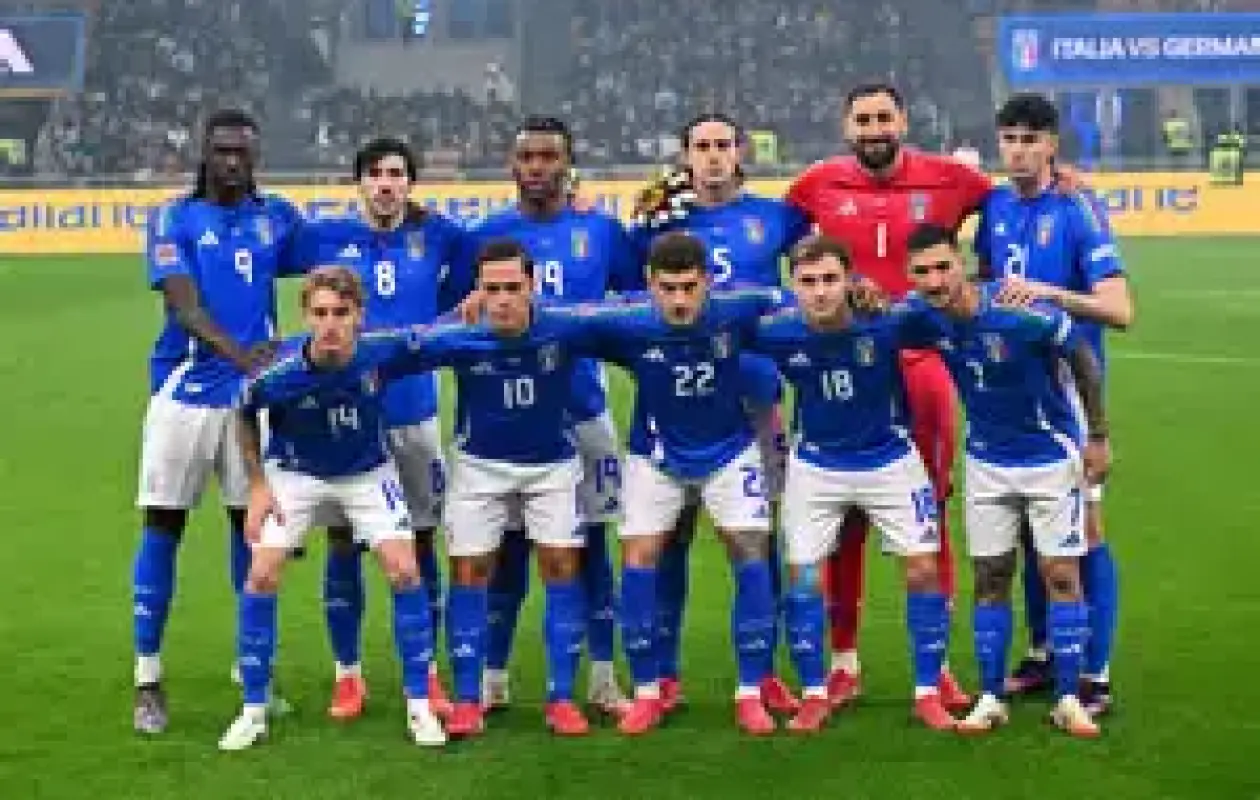
Within the American team, half of the 26 players hold at least a second nationality. This is the case for Tim Weah, son of football legend George Weah, the only African to have won the Ballon d'Or and who later became president of Liberia.
The Olympique de Marseille winger has chosen to play for the United States, although he was also eligible to represent Liberia, Jamaica or France.
The US Supreme Court is expected to rule on birthright citizenship by the end of June or early July, coinciding with the final stages of the World Cup, the final of which takes place on July 19. The decision's repercussions will be felt on the pitch.







Commentaires (5)
Participer à la Discussion
Règles de la communauté
💡 Astuce : Utilisez des emojis depuis votre téléphone ou le module emoji ci-dessous. Cliquez sur GIF pour ajouter un GIF animé. Collez un lien X/Twitter, TikTok ou Instagram pour l'afficher automatiquement.
Se connecter
Commentez avec votre profil, votre photo, et soyez averti des réponses.