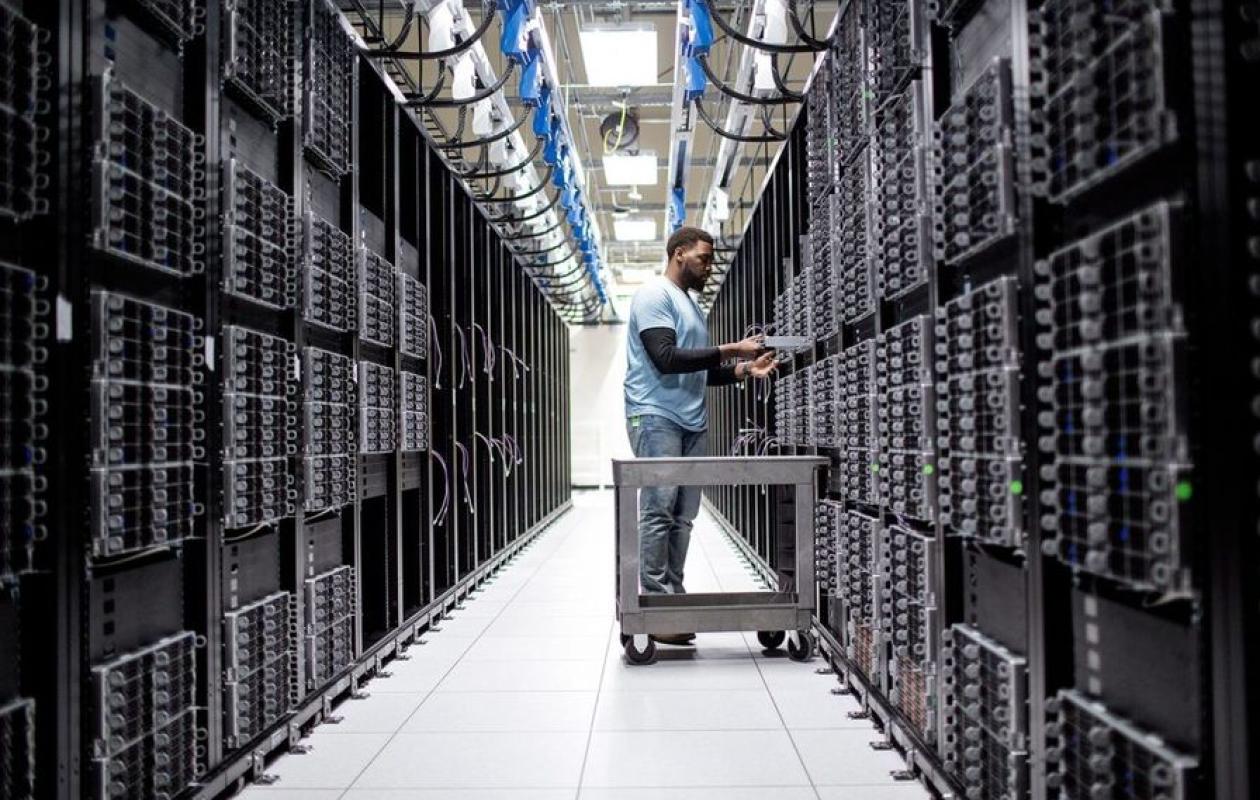
Du Gabon au Sénégal : Comment l'Afrique accélère sur les data centers pour ne plus brader ses données
The digital economy no longer depends solely on telecommunications networks or internet access. Data centers, which host the servers that power government agencies, banks, payment platforms, businesses, and artificial intelligence applications, are now considered strategic infrastructure. Their location determines not only the speed of access to digital services but also a country's ability to protect its sensitive data and develop a digital economy less dependent on large foreign platforms.
The announcements made in July 2026 reflect this evolution. On July 3, Gabon inaugurated its first sovereign data center in Nkok, certified Tier III, with the aim of hosting the data of the government, banks, businesses, and telecommunications operators within its territory. A few weeks later, Senegal confirmed the acceleration of its sovereign cloud project, developed with Alibaba Cloud, to secure the digital systems used for the Youth Olympic Games, which will be held in Dakar from October 31 to November 13, 2026.
These projects address a widely shared observation. According to the Africa Data Centres Association, the continent still represents only about 0.5% of the global cloud market and less than 1% of global data centre capacity, despite being home to nearly 19% of the world's population. Its installed capacity reaches approximately 360 megawatts, with an additional 238 megawatts currently under construction.
The lag is also evident when examining the distribution of infrastructure. According to the African Energy Chamber's State of African Energy 2026 report , Africa had 223 data centers spread across 38 countries by mid-2025. South Africa hosted 56 facilities, followed by Kenya with 19, Nigeria with 17, and Egypt with 14. Senegal already had seven data centers, the same number as Ghana, while Gabon had none before the opening of the Nkok site. South Africa, Kenya, and Nigeria alone account for more than 40% of Africa's hosting capacity.
This concentration is not insignificant. Companies wishing to develop cloud services, artificial intelligence applications, or digital platforms generally favor countries with high-performance storage infrastructure, international fiber optic networks, and reliable power supplies. Countries lagging behind in these areas risk having their data hosted abroad, with the potential consequences for cybersecurity, operating costs, and control of strategic information.
Gabon provides a concrete illustration of this situation. According to ST Digital, the company that operates the new Nkok data center, nearly 95% of the data produced in the country was previously hosted outside its national territory. The new data center, built with an investment of 8 billion CFA francs, has a capacity of 92 racks, capable of housing up to 3,000 physical servers, or the equivalent of 20,000 to 35,000 virtual servers at full capacity.
Senegal is approaching this issue from a broader perspective. The sovereign cloud project is not solely aimed at creating new storage capacity. It is part of the government's digital transformation strategy, which includes strengthening the hosting of public data, improving the continuity of digital services, and supporting the development of artificial intelligence applications. The organization of the Youth Olympic Games is a catalyst, but the deployed infrastructure is intended to be used well beyond this event.
Reducing dependence on foreign infrastructure does not, however, automatically mean achieving digital sovereignty. A country can host its data within its territory while continuing to use software, cloud services, processors, or cybersecurity systems developed abroad. Many experts therefore distinguish between data sovereignty and technological sovereignty. The former concerns where information is stored. The latter also implies having local companies capable of developing digital solutions, training engineers, securing networks, and designing services tailored to national needs.
The rise of artificial intelligence further reinforces this requirement. The most advanced models demand significant computing power, high-performance data centers, and a stable power supply. In a study published on July 21, 2026, the IMF estimates that artificial intelligence could increase sub-Saharan Africa's GDP by approximately 4% over the next decade if investments in electricity, digital infrastructure, and skills development keep pace. Otherwise, the economic gain would be limited to around 0.2%.
The availability of electricity is, in fact, one of the main factors explaining the disparities observed between African countries. A data center operates 24/7 and requires a continuous power supply to run the servers and cooling systems. Investments in data centers therefore often go hand in hand with those dedicated to electrical grids, international fiber optics, and submarine cables.
The competition that is unfolding thus goes beyond simply constructing buildings capable of housing servers. It now focuses on the ability of states to create a true digital ecosystem combining infrastructure, energy, cybersecurity, cloud computing, artificial intelligence, skills, and innovative businesses. Data centers are only the first step, even if this step has become essential to hope to retain a larger share of the value created by the digital economy.



















Commentaires (0)
Participer à la Discussion
Règles de la communauté
💡 Astuce : Utilisez des emojis depuis votre téléphone ou le module emoji ci-dessous. Cliquez sur GIF pour ajouter un GIF animé. Collez un lien X/Twitter, TikTok ou Instagram pour l'afficher automatiquement.
Se connecter
Commentez avec votre profil, votre photo, et soyez averti des réponses.