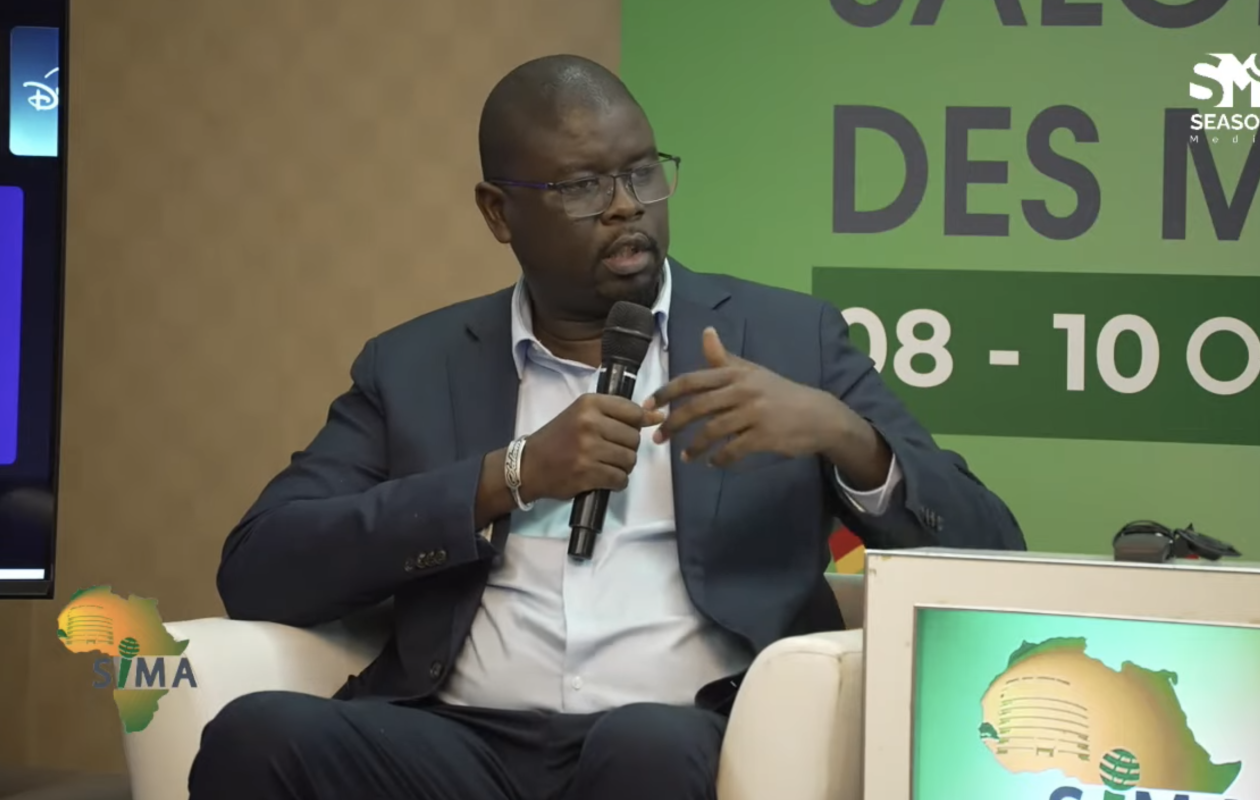
Presse en ligne et IA : Salam Fall expose le modèle de fonctionnement de Seneweb au SIMA 2026
At the 2nd edition of the International Media Fair of Africa (SIMA), held from October 8 to 10, 2026 in Dakar, Salam Fall, President and CEO of Seneweb, shared the pioneering experience of Senegal's first news portal in integrating generative artificial intelligence. After two years of experimentation, the Seneweb editorial team is deploying automated AI agents to optimize the editorial workflow, while maintaining journalistic control and responsibility at the heart of the news production process.
Artificial intelligence is gradually becoming established in African newsrooms. Between saving time, automating repetitive tasks, and the risks associated with disinformation, its use raises essential questions about the future of journalism. During discussions held as part of the 2nd edition of the International African Media Fair (SIMA), Salam Fall, CEO and Founder of Seneweb, discussed the transformations underway within the Senegalese media sector.
A computer scientist by training and a web developer, the CEO and Founder of Seneweb explains that he quickly grasped the potential of generative artificial intelligence as soon as it became widely available. He began integrating this technology into the editorial team's operations, with the aim of optimizing information production processes.
“Seneweb was my first test case,” he explained, referring to nearly two years of work dedicated to implementing this approach.
AI agents to speed up the writing process
One of the main innovations presented by Salam Fall concerns the use of artificial intelligence agents directly integrated into Seneweb's editorial process.
In practice, when a journalist submits an article by email, an AI agent can retrieve it, perform an initial proofreading, produce an English translation and generate an audio version, before transmitting the content to the team in charge of publication.
According to the CEO and Founder of Seneweb, this automation saves time at various stages of content processing. The goal is to facilitate the work of the teams and allow them to dedicate more resources to activities requiring journalistic expertise.
Salam Fall also mentioned an AI agent platform that allows the creation of assistants adapted to different needs, whether personal or professional.
This experiment, however, rests on a fundamental distinction between journalistic work and the generative output of artificial intelligence. "Journalists generate based on facts. But AI generates based on probability," he emphasized, stressing the need to know when human intervention should be decisive and when editorial validation is required.
AI at the service of quality journalism
Seneweb's experience is part of a broader reflection on the role of new technologies in African newsrooms. The challenge is not only to produce more quickly, but also to improve the quality of information.
During the discussions, the issue of time spent on administrative and repetitive tasks was raised. Managing emails, coordinating schedules, and handling certain technical operations can consume a significant portion of journalists' time, to the detriment of fact-checking and in-depth investigations.
Automating these tasks could thus help free up time for information gathering, cross-referencing sources, and producing high-value content.
This perspective also aligns with discussions on the use of AI within Faso.net , in Burkina Faso. The media outlet's representative described uses that are still in the exploratory phase, particularly for proofreading articles, researching angles, translation, documentation, transcribing interviews, and taking notes during press conferences.
He did, however, point out that adopting new technologies does not automatically guarantee better journalism. The essential question remains whether they contribute to more reliable and useful information for readers.
In the face of disinformation, human verification remains essential
While artificial intelligence offers new possibilities for the media, it also poses a challenge to the reliability of information. This technology's ability to generate images, clone voices, or create fake videos makes distinguishing between authentic and manipulated content increasingly difficult.
During the discussions, one of the participants warned of the possibility of producing fake content on an industrial scale. Videos featuring public figures or audio recordings attributed to officials can now appear credible, even to people unfamiliar with these technologies.
In this context, the role of the journalist becomes even more crucial. Verifying images, authenticating documents, cross-checking sources, and controlling information generated by AI tools are essential steps before any publication.
For African media, the challenge is therefore twofold: to take advantage of the opportunities offered by artificial intelligence while preserving the fundamental principles of journalism.
Through the Seneweb experience, Salam Fall highlights an approach based on the automation of certain operations, without confusing the machine's generation capabilities with the journalist's editorial responsibility.
The question of the future of African media in the age of artificial intelligence thus remains closely linked to one imperative: to make technology a tool at the service of information, without giving up verification, rigor and human responsibility.




















Commentaires (15)
Participer à la Discussion
Règles de la communauté
💡 Astuce : Utilisez des emojis depuis votre téléphone ou le module emoji ci-dessous. Cliquez sur GIF pour ajouter un GIF animé. Collez un lien X/Twitter, TikTok ou Instagram pour l'afficher automatiquement.
Se connecter
Commentez avec votre profil, votre photo, et soyez averti des réponses.