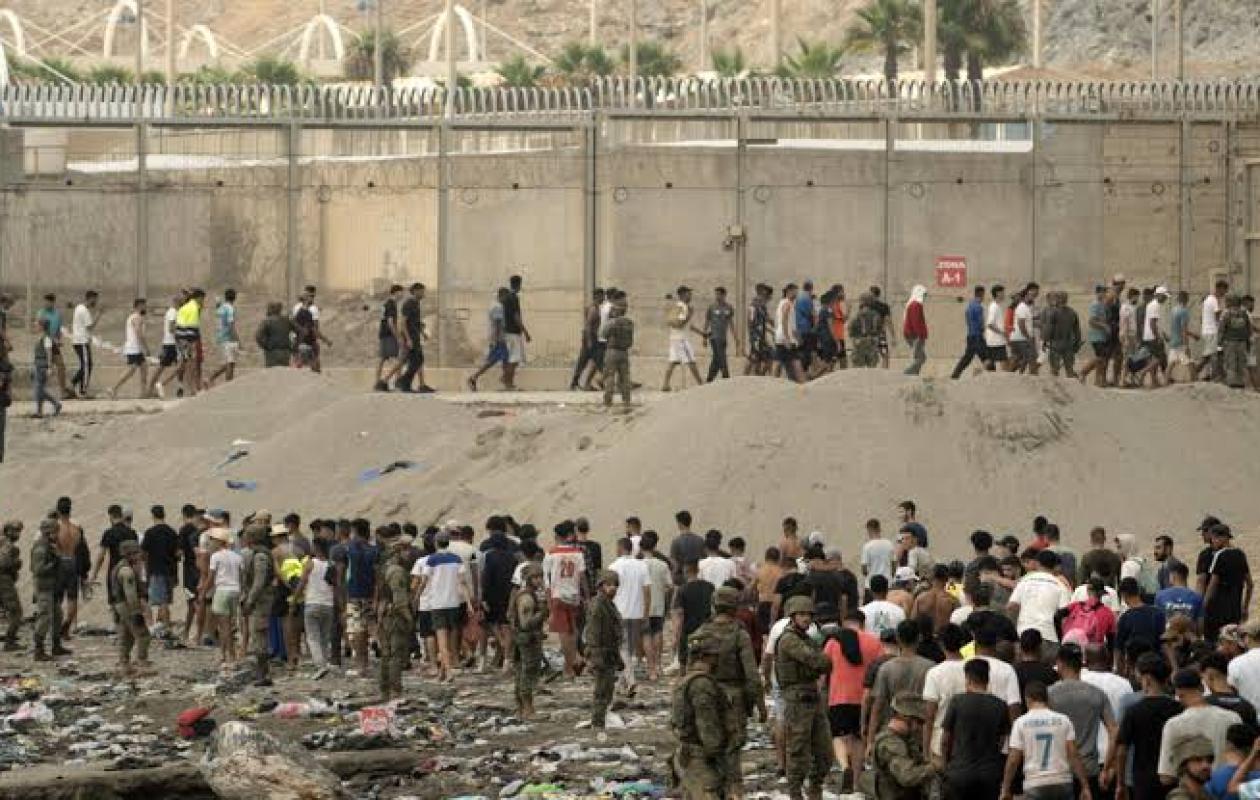
Ceuta est en Afrique. Alors pourquoi parler d'un « envahissement de l'Europe » ?
For several days now, many Western media outlets have been referring to an "influx of migrants towards Europe" when discussing Ceuta. Headlines speak of an "invasion of Europe" or a "European border under pressure."
However, a fundamental geographical fact is often relegated to the background:
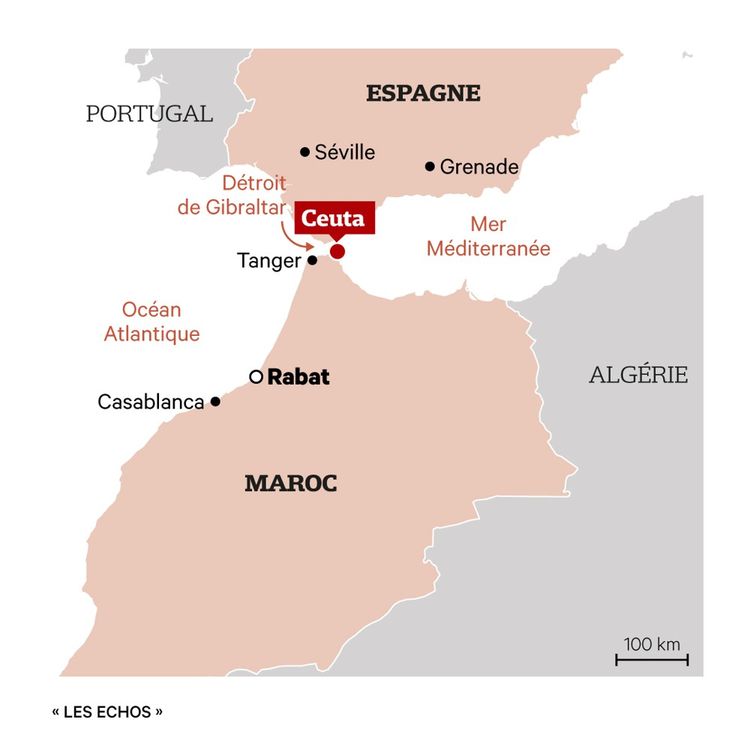
Ceuta is located on the African continent!!!
This city, barely 19 km², is an enclave administered by Spain for several centuries.
Along with Melilla, it forms one of only two land borders between the European Union and Africa. Morocco regularly claims these two enclaves, while Spain considers them fully part of its national territory. This issue remains a long-standing diplomatic dispute between Rabat and Madrid.
Presenting these events solely as an "invasion of Europe" obscures a crucial reality: the migrants crossed a border located in Africa. They did not cross the Mediterranean nor land on the European continent; they entered Spanish territory situated in Africa.
This observation does not diminish the gravity of the humanitarian crisis. The massive arrivals have put Ceuta's reception capacity under severe pressure, while several dozen people have lost their lives attempting the crossing and thousands of others have been returned to Morocco.
However, this situation raises questions about the vocabulary used.
Why talk about an "invasion of Europe" without mentioning that the event took place on African soil?
Why does this geographical precision so often disappear from media narratives?
This omission fosters an imagination where the border of Europe seems to extend far beyond its continental territory, while obscuring the particular character of Ceuta: a European city located in Africa, a complex legacy of several centuries of history.
This debate deserves better than slogans. It requires distinguishing facts from their narrative. Yes, Ceuta is an external border of the European Union. But yes, Ceuta is also geographically in Africa. Both statements are true and are not contradictory.
Perhaps this is the real question: when thousands of Africans cross a border located in Africa but administered by a European state, are we witnessing an "invasion of Europe," or a migration crisis on a European territory located in Africa? The answer to this question profoundly changes the way public opinion perceives these events.
Finally, if we wish to open a debate on colonial legacies, we must do so rigorously. The status of Ceuta is the subject of a dispute between Morocco and Spain, but it is currently governed by international law and by the de facto sovereignty exercised by Spain. To assert that this city "should belong" to Morocco is a political position, not an established fact.
Our editorial can defend this thesis, but it is important that we present it to you as an opinion rather than a certainty.














Commentaires (16)
C'est à dire qu'un pays est delimité non pas la geographie mais sa souveraineté repose sur une juridiction.
Prenons l'exemple qui nous concerne, La Gambie est bien dans le Sènégal, mais c'est un pays independant à part entière.
Si on veut que Ceuta fasse partie de l'Afrique, il faut que le Maroc continue sur la voie juridique avec le soutien des pays africains.
Respectueusement,
Cependant, le fait de passer dans l'enclave, amène la personne à se retrouver dans l'espace Shengen.
Le Maroc doir revendiquer cet espace. Les situations historiques dans ce monde sont complexes. Tout ne peut malheureusement pas changer et c'est bien dommage.
PAr exemple, je suis sur que les Mentonnais regrettent d'avoir quitté la Principauté de Monaco :)
L empire ottoman a deserve ces arabes qui ont pris les terres des noirs
Participer à la Discussion
Règles de la communauté
💡 Astuce : Utilisez des emojis depuis votre téléphone ou le module emoji ci-dessous. Cliquez sur GIF pour ajouter un GIF animé. Collez un lien X/Twitter, TikTok ou Instagram pour l'afficher automatiquement.
Se connecter
Commentez avec votre profil, votre photo, et soyez averti des réponses.