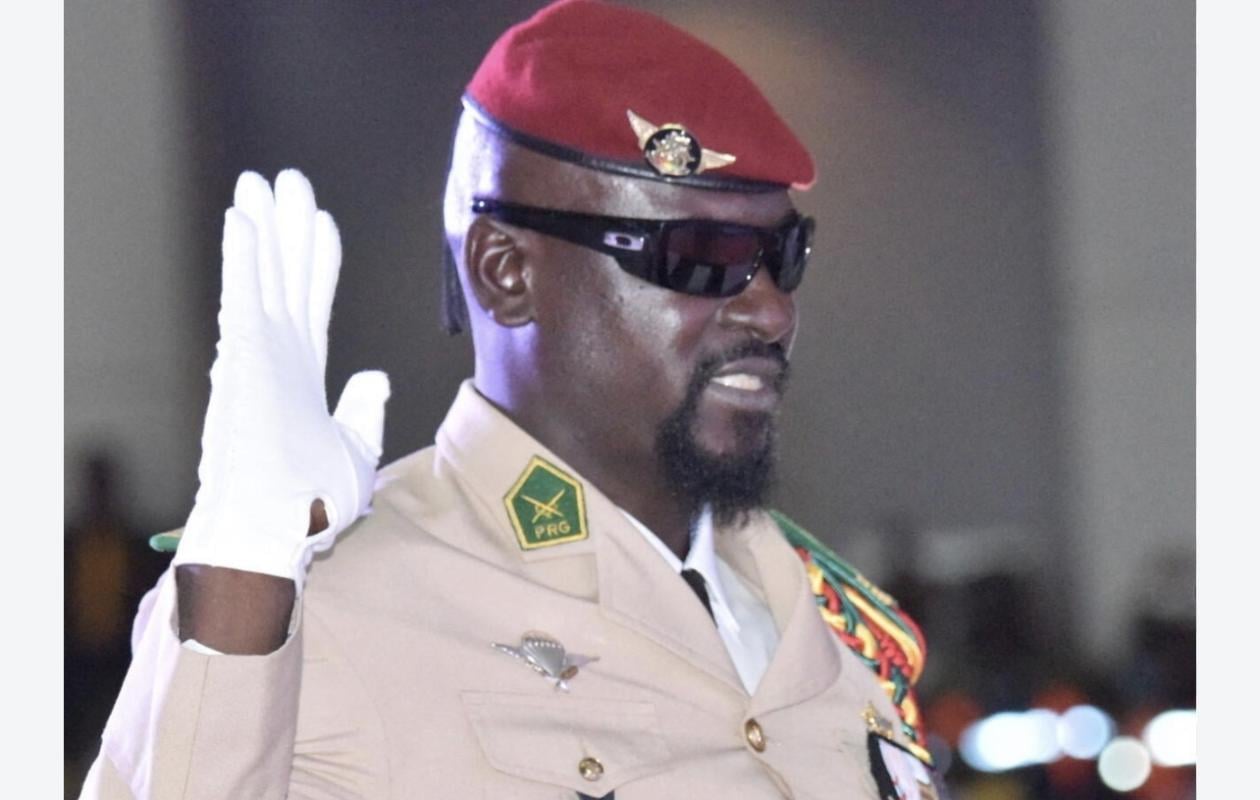
Guinée : La chute expresse d'un juge, ou le fusible d'un règlement de comptes ?
Four days. That's how long it took the Guinean authorities to suspend, revoke, and then permanently remove a magistrate whom many considered a figure of judicial independence in the country.
A timed purge
On August 18, 2026, the Minister of Justice, Ibrahima Sory II Tounkara, suspended Algassimou Diallo, Advocate General at the Supreme Court, for "breach of his statutory obligations." On August 20, the High Council of the Judiciary, meeting behind closed doors, pronounced his dismissal for "serious breaches of the duties of his office, of the honor, decency, and dignity of the profession." On August 21, President Mamadi Doumbouya signed the decree of his definitive dismissal and forfeiture of the rank of Commander. Three acts, four days: the speed of execution itself is a political message; that of a government that wants to show it can strike quickly and decisively, without allowing time for public debate to take hold.
A symbol that falls
Algassimou Diallo was not an anonymous magistrate: he had established himself as a central figure in the trial of the September 28, 2009 massacre, a case that, for many Guineans, embodies the capacity—or incapacity—of their justice system to hold the government accountable. His sudden downfall thus revives a question far broader than his personal case: that of the independence of the Guinean judiciary, precisely at a time when the state apparatus is targeting one of its own.
The audio recording that divides
At the heart of the case is a recording presented as a conversation between the magistrate and Cellou Dalein Diallo, the exiled former prime minister and leader of the UFDG, a party dissolved by the regime. According to state television, the public prosecutor allegedly "conspired" with the opposition leader, based on ethnic and political considerations. Cellou Dalein Diallo denounces a "crude fabrication" and a "political-judicial conspiracy." Those close to the regime, for their part, assert the authenticity of the voice. However, no independent technical analysis has been conducted, and it is this void that allows both sides to cling to their versions without being contradicted by verifiable facts.
Three reading grids
On the disciplinary front, the Ministry of Justice cites articles 20, 35 and 36 of the 2013 organic law to justify a procedure that was certainly rapid, but in accordance with the texts.
On the political front, the opposition in exile sees this as a maneuver to revive the bogeyman Cellou Dalein Diallo and divert attention from the country's economic difficulties.
On an institutional level, beyond the truth about the audio recording, the speed of the sanction—suspension, dismissal, and removal from the bench in four days, without any public details of the alleged offenses—raises questions about the High Council of the Judiciary's ability to act independently of executive pressure. The Liberal Bloc, while not contesting the legitimacy of the sanction, reiterated that the justice system "can only fully fulfill its mission if judges exercise their functions with complete independence."
A scenario that goes beyond Conakry
Analyzed from a pan-African perspective, this case is not an isolated incident: it is yet another episode in a well-rehearsed continental scenario. It features the compromising recording, the swift disciplinary action against a figure linked to a sensitive case, the immediate polarization between the government and the exiled opposition, and the absence of an independent third party to authenticate the evidence. From Conakry to Bamako, justice too often becomes a stage for the reenactment of political power struggles, rather than a space for truth established through adversarial debate.
What is lacking today is neither press releases nor outrage—which abound—but independent technical expertise on the audio recording and transparency regarding the exact nature of the alleged offenses. As long as this void persists, Guinea will remain faced with an unanswered question: Did Algassimou Diallo fall for a genuine crime, or has he become the scapegoat in a broader political settling of scores?




















Commentaires (8)
Participer à la Discussion
Règles de la communauté
💡 Astuce : Utilisez des emojis depuis votre téléphone ou le module emoji ci-dessous. Cliquez sur GIF pour ajouter un GIF animé. Collez un lien X/Twitter, TikTok ou Instagram pour l'afficher automatiquement.
Se connecter
Commentez avec votre profil, votre photo, et soyez averti des réponses.