RDC: l'épidémie d'Ebola franchit le cap des 2.000 morts
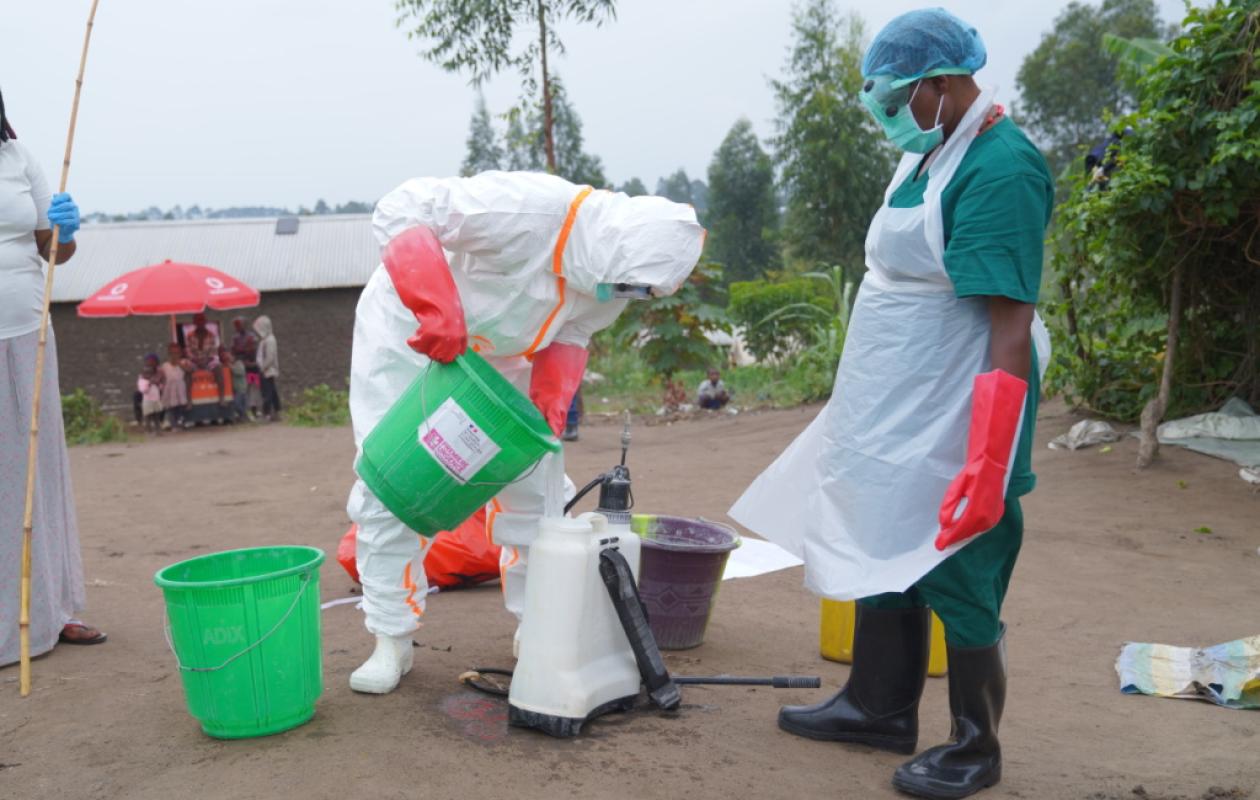
The Ebola epidemic, which is progressing at an unprecedented rate in the Democratic Republic of Congo (DRC), has caused more than 2,000 deaths and is thus approaching that of 2018-2020, the deadliest in the country's history.
The DRC declared on May 15, several weeks late, its 17th Ebola outbreak, already considered the largest in its history and likely to "become the largest ever recorded in the world", according to Sania Nishtar, director of the Gavi vaccine alliance.
The latest figures published by Congolese health authorities on Tuesday report 2,011 deaths out of 4,381 confirmed cases. The death toll had surpassed 1,000 on July 22.
The deadliest outbreak the country has ever seen resulted in nearly 2,300 deaths out of 3,500 recorded cases between 2018 and 2020.
Starting in the province of Ituri (northeast), the current epidemic is spreading "faster than any previous epidemic", according to the WHO.
It is now rampant in several northeastern and eastern provinces, densely populated regions where the state's presence is fragile and health infrastructure is largely inadequate.
The Congolese health authorities estimate the mortality rate of this outbreak at 45.9%.
"We have not yet reached the peak," said Congolese Health Minister Samuel Roger Kamba in an interview broadcast on X by his ministry on Tuesday.
"In the next three months, we believe that we will have already controlled the progression and that we will begin to see a decrease" in the number of cases, he stated.
However, insecurity maintained by armed groups and public distrust complicate the response in the provinces affected by the epidemic.
"We only see 30% of people, while 70% of people die at home," said Mohamed Yakub Janabi, WHO Regional Director for Africa, at a press conference in Bunia, the capital of Ituri, on Monday.
"That's why this Ebola epidemic is different," he said.
The response "is slow and ineffective," said Congolese virologist and co-discoverer of the Ebola virus, Jean-Jacques Muyembe, in an interview with the French newspaper Le Monde on Tuesday.
"There is an internal problem, at the level of the national coordination of the response," and "everyone wanted to show that they were doing something without things having been really organized," he added.
WHO experts on Friday recommended evaluating the Ervebo vaccine, the only approved vaccine against Ebola, in a clinical trial, due to the lack of a specific vaccine against the Bundibugyo variant currently prevalent in the DRC.
The head of the WHO, Tedros Adhanom Ghebreyesus, hailed the "good news" on X.
According to WHO experts, the extensive data already available, particularly on the safety of the Ervebo vaccine, makes it possible to consider an evaluation directly in phase 3, a step generally carried out on a large scale with thousands of people.
Doses of Ervebo from the global stockpile of Ebola vaccines, created and funded by the Gavi Vaccine Alliance, should be made available to support clinical trials, the organization said in a statement released after that of the WHO.
Gavi detailed that this global stockpile of Ervebo, which is produced by the American pharmaceutical company Merck, contains approximately 500,000 doses, some of which are permanently stored in the DRC due to the frequency of epidemics in the country.
Founded in 2000, the Gavi organization brings together public and private donors to help developing countries obtain vaccines at affordable prices.
Canada has also authorized the American pharmaceutical giant Moderna to launch clinical trials for its vaccine against Bundibugyo.
Two other candidates are also in development: the "rVSV Bundibugyo" vaccine, presented by the WHO as "the most promising" and developed by Hilleman Laboratories, and a vaccine from Oxford University, whose first volunteer received a dose at the end of July.
The United States announced on Wednesday that it had allocated more than $242 million in additional funding to combat the Ebola epidemic in the DRC.
Ebola, which is transmitted through contact with bodily fluids and causes a hemorrhagic fever, has killed more than 15,000 people in Africa over the past 50 years.
According to a study published in the journal Nature Medicine on Monday, the current outbreak could be due to transmission from animals to humans, rather than "a resurgence of previously identified variants".
AFP






















Commentaires (0)
Participer à la Discussion
Règles de la communauté
💡 Astuce : Utilisez des emojis depuis votre téléphone ou le module emoji ci-dessous. Cliquez sur GIF pour ajouter un GIF animé. Collez un lien X/Twitter, TikTok ou Instagram pour l'afficher automatiquement.
Se connecter
Commentez avec votre profil, votre photo, et soyez averti des réponses.