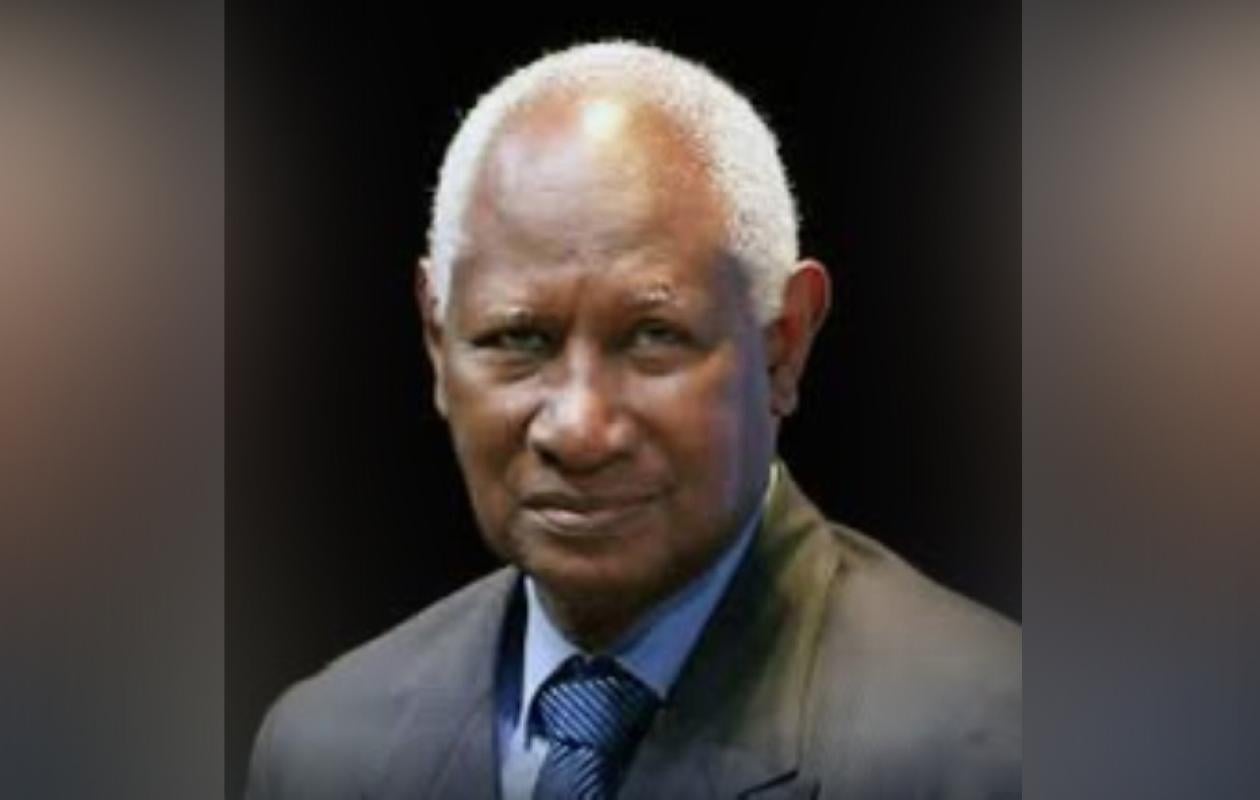
Déclaration de patrimoine : servir l’État sans se servir de l’État (Par Al Xâlifa)
The current controversy surrounding the declaration of assets, following the departure of OFNAC, should not be reduced to a matter of forms, deadlines or lists of defaulting officials.
It raises a much more fundamental question: what should remain for a man after having devoted several years to the service of the State?
Our political history offers, on this point, an example that deserves to be pondered: Abdou DIOUF .
From 1960 to 2000, he held the highest positions in the State: governor, minister, prime minister, then president of the Republic for twenty years. Nearly forty years at the heart of power.
And yet, his personal wealth, as reported, was far from the image of a man who used power to build a fortune.
No real estate empire, no vast land holdings, no spectacular accumulation of properties. A house acquired during his time as Prime Minister, notably through a mortgage.
After his defeat in 2000, he left office and settled in France, where he rented an apartment. Beyond the figures, it is above all a conception of power that deserves to be remembered: serving the state without using the state for one's own benefit.
Elsewhere, asset declaration is a culture of responsibility
Contrary to what some seem to think, the declaration of assets is not a Senegalese invention intended to put political leaders under surveillance.
It is now a widely used tool around the world. The World Bank indicates that more than 150 countries have established mechanisms for the declaration of assets by public officials.
In France, for example, approximately 18,000 public officials, elected representatives or public employees, declare their assets and interests to the High Authority for Transparency in Public Life (HATVP).
But above all, the French approach goes beyond a simple administrative formality: the HATVP controls declarations, examines changes in asset situation and seeks to detect conflicts of interest.
Certain statements are also made public so that citizens can assess the integrity of their public officials for themselves. ( HATVP)
In other countries, systems are also designed to detect unexplained enrichment, prevent conflicts of interest, and strengthen the accountability of public officials. The World Bank, for example, considers asset and interest disclosure as a tool for preventing corruption and promoting public integrity.
In other words, in democracies that have developed these mechanisms, declaring one's assets is not a humiliation: it is a normal consequence of exercising power.
Senegal is therefore not an exception
With Law No. 2025-13 relating to the declaration of assets and its implementing decree No. 2025-1835 of November 18, 2025, Senegal is following this logic of transparency and accountability.
The question should therefore not be:
"Why are we being asked to declare our assets?"
But rather:
"Why should someone who holds public office be afraid to account for their assets?"
The failure to file a declaration does not, of course, mean that the person who did not file it is corrupt. A failure to file a declaration does not, in itself, constitute proof of illicit enrichment.
But she reminds us of a basic rule: the more power we have over public resources, the more we must accept transparency.
The real question is that of the evolution of heritage
Moreover, it is not enough to know what a manager possesses when they take office.
We need to be able to understand what he possesses when he comes out of it.
The essential question is therefore:
"What did you acquire while you were responsible for managing the community's assets, and how can you explain it?"
This is where the example of Abdou Diouf takes on its full force.
Forty years at the head of state could have produced a considerable personal fortune. The historical narrative that has been passed down to us is quite different.
And perhaps that is what we need to rediscover: a conception of power in which the ambition is to leave something for the country , rather than leaving power with something from the country.
The true legacy of a statesman
We may have ended up reversing the values.
We too often look at the inheritance that a politician leaves to his family.
We should look more closely at what he leaves to the nation.
Stronger institutions.
Schools.
Hospitals.
Infrastructure.
An efficient administration.
A stronger economy.
A fairer Republic.
This is the true legacy of a statesman.
The rest should be explainable. That's precisely why a declaration of assets is useful.
It protects the Republic.
It protects the citizen.
And it also protects the honest official.
Because he who has nothing to hide should be the first to understand that he has nothing to fear from transparency.
So, to those who claim to give lessons in governance, let's simply recall the essentials:
Power is temporary, heritage is permanent, but responsibility remains.
And the example of Abdou Diouf reminds us of a rule that should be universal: to serve the State without ever making the State a means of serving oneself.
A heritage, yes.
But an honestly acquired fortune.
Al Xâlifa
Senegalese citizen




















Commentaires (9)
Nous ne faisons point vœux de pauvreté, nullement, mais prônons pour un patrimoine proprement gagné à la sueur de notre front. Nous venons en ce monde sans rien et retournerons un jour d’où nous sommes venus, également, sans rien. Outre cela, quel autre plus grand impact laisse-t-on en ce monde après notre disparition? Ici, rien de matériel, (argent, terrains, bâtiments, placements, etc.) mais juste un impact émotionnel et immatériel, mais énorme et immense : Nos Valeurs et nos Principes légués. « Un Héritage de Belles Valeurs vaut mieux que celui de lingots d’or » (Socrate). Les désirs vident le cœur, le détachement le remplit. Servir son pays du mieux possible et non se servir…
Il a fallu qu’il quitte le pouvoir pour qu’on réalise que le président Diouf ne s’est pas enrichi comme ses successeurs qui pourtant l’accusaient du contraire.
Cet article est une invite à un retour au sens premier de la politique : servir le peuple in fine la cité
C’est le principe qui doit guiderr l’action des autorités
Mais afrik mom, comment avoir de l’argent c ça leur problème
Leur problème c’était la France qui avait une mainmise sur l’économie des pays Francophones qui ont nouvellement acquis leurs indépendance en imposant le f cfa et en pillant les ressources de manière systématique avec une très grande lâcheté.
Soient ils acceptaient de jouer le jeu de la France comme l’a fait Abdou Diouf que vous êtes en train de glorifier (zéro investissement structurant pendant 20 ans ) à la place c’était les ajustements structurels qui ont fini de tuer l’industrie héritée du colon les classes à double flux et la dégradation de l’enseignement etc.
Les nationalistes qui avaient compris et qui voulaient prendre une autre voie comme Mamadou Dia ont été sacrifiés.
Ce pays est MAUDIT
Participer à la Discussion
Règles de la communauté
💡 Astuce : Utilisez des emojis depuis votre téléphone ou le module emoji ci-dessous. Cliquez sur GIF pour ajouter un GIF animé. Collez un lien X/Twitter, TikTok ou Instagram pour l'afficher automatiquement.
Se connecter
Commentez avec votre profil, votre photo, et soyez averti des réponses.