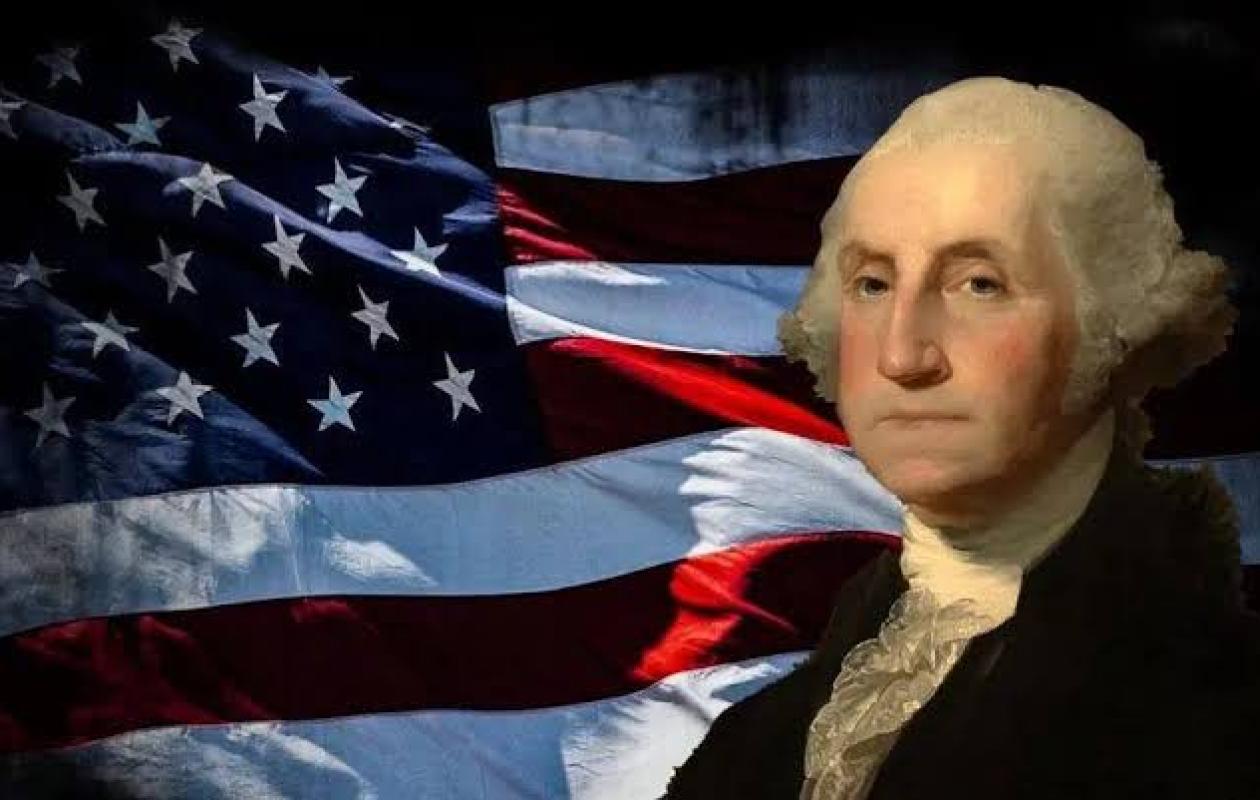
Et si l’on avait assassiné George Washington ? (Par Moussa Baldé)
Before asking why Africans leave their countries, Western powers should answer another question: what would have become of their own nations if, at the beginning of their rise, a superior power had eliminated their leaders and thwarted their sovereignty?
In Martin McDonagh's "Wild Horse Nine," John Malkovich plays a dying CIA agent. Among his character's memories is a chilling exchange about Patrice Lumumba and what his assassination would mean for African democracy. At the London Film Festival, the actor described this passage as containing "the most terrifying line" he had ever had to deliver. The scene is fictional: it does not reproduce Lumumba's authenticated last words. But the story it evokes is very real.
And this story raises a question that goes far beyond cinema.
What would have become of the West if, when laying the foundations of its power, a superpower had been able to eliminate its leaders as soon as their ambitions conflicted with its interests?
Imagine George Washington surviving the war against the British Crown, only to be condemned to disappear by the will of an even more powerful state. Imagine this state funding rival factions, rewarding compliant officers, and choosing the American leaders it deems acceptable.
Imagine the Americans wresting their independence, only to discover that their right to govern their country remains subject to external authorization.
Would the United States have followed the same trajectory?
Would their institutions have acquired the same strength? Would their economy have experienced the same growth? Would their citizens have all stayed home if instability and a lack of prospects had permanently shaped their daily lives?
No one can know. That's precisely what should give us pause.
We immediately understand that an America whose development had been hindered from the outside would have had a different destiny. Yet, some of the discourse on Africa judges its present as if no one had ever intervened in its past.
Independence under surveillance
The Congo gained independence from Belgium on June 30, 1960. Patrice Lumumba became its first Prime Minister. A few months later, he was removed from power. On January 17, 1961, he was assassinated. The official history published by the U.S. State Department acknowledges that Washington worked to remove him from office and developed plans to kill him.
Precision is essential. The existence of a CIA assassination plot does not prove that its agents carried out the murder that was ultimately committed. American archives mention an execution by Katangese soldiers and a Belgian officer. A Belgian parliamentary commission of inquiry, for its part, established the moral responsibility of certain Belgian ministers and other actors in the circumstances leading to his death. These responsibilities are distinct. Neither needs to be exaggerated to be damning.
The scandal is already immense: barely independent, a country sees its political future become the object of clandestine foreign operations.
The official US narrative also describes Washington's subsequent efforts to influence Congolese politics: buying votes, funding candidates favorable to its interests, and providing financial support for Mobutu's military position.
In light of this history, what is the value of the injunction made to Africans to simply "build strong institutions"?
An institution is not sustained solely by the texts that found it. It also rests on the conviction that a government can survive without a foreign patron, that an election matters more than the preferences of a foreign capital, and that gaining the trust of citizens is a surer path to power than controlling an army.
Foreign interference can help to reverse these rules.
Then, decades later, institutional fragility becomes the supposed proof that the people concerned are incapable of governing themselves.
The right to find one's own way
No one can honestly claim that Lumumba would necessarily have built a prosperous and democratic Congo. He could have succeeded, failed, or disappointed those who placed their hopes in him.
But a people's right to self-determination cannot depend on a prior guarantee of success.
Western nations did not become powerful because all their early leaders were exemplary or all their decisions wise. Their history includes civil wars, repression, exploitative systems, and disastrous political errors.
The question is whether other societies have enjoyed comparable latitude to navigate their conflicts, correct their mistakes, and build institutions that meet the aspirations of their populations.
An African leader should not have to guarantee a perfect future in order to have the right to build one.
This logic of intervention was not limited to Africa. Diplomatic documents published by the United States establish the existence of the operation aimed at overthrowing Guatemalan President Jacobo Árbenz in 1954. Another country, another context, but, once again, a power intervening to influence the political destiny of another nation.
Self-determination was celebrated as a principle. Its application became negotiable when it clashed with certain strategic interests.
For Europe, it was known that circumstances mattered.
After World War II, Western Europe benefited from considerable investment in its reconstruction. Under the Marshall Plan, the United States allocated $13.3 billion over four years to European recovery.
This aid does not detract from the work, skills, or political choices of Europeans. But their reconstruction also benefited from international support: their stability deserved material assistance.
This is where the comparison becomes disturbing.
The great powers understood that European prosperity required conditions conducive to its establishment. Yet, in countries like the Congo, their Cold War calculations also fueled interventions that undermined the building of sovereign institutions.
This is not to claim that Europe received all the aid and Africa none. The story is more complex.
The point is this: we acknowledge the weight of external circumstances to explain the European recovery, then we minimize them when it comes to judging African difficulties.
History does not begin at the border
All of this makes it impossible to draw a direct line between the assassination of Lumumba and each departure from Africa to Europe.
People emigrate to work, study, join their families, seek safety, or broaden their horizons. Leaving also costs money: the poorest often cannot afford it. Development may even initially increase emigration by enabling more people to finance their departure.
The historical argument is more precise: interventions that undermine political accountability and stability can degrade the conditions under which a population builds its future. These conditions are essential to any serious discussion about why some seek their fortunes elsewhere.
African leaders who embezzle public funds, repress their opponents, or squander development opportunities remain accountable for their actions. Foreign support does not absolve them. Nor do their wrongdoings absolve their foreign backers.
Responsibilities can accumulate
What is indefensible is to begin the narrative at the moment the migrant arrives at the border, erasing everything that precedes his arrival.
A government can regulate immigration. Citizens can debate it, discuss its pace and consequences. But this debate becomes intellectually dishonest when it portrays countries of origin as isolated failures, unrelated to the policies of destination countries.
Before asking why they come
Imagining an assassinated Washington doesn't tell us what would have become of the Congo. It does, however, reveal a difference in treatment.
We spontaneously understand that eliminating a founding leader, funding factions, and subordinating national sovereignty to foreign interests could have altered American development.
Why would these same interventions have left African development untouched?
Western powers did not cause all African crises. However, they contributed to shaping some of the conditions whose consequences they now comment on as if they had only been spectators.
This story does not simplify migration policy. It forces us to talk about it honestly.
Before asking why Africans do not build their future at home, let us ask how many times their will to decide for themselves has been thwarted — and by whom.
And before we criticize them for not having built what the West has built, let us ask what the West would have become if a superior power had decided which of its founders had the right to live.
Moussa Baldé











Commentaires (9)
Le Vrai.
Le Vrai.
Yaw, li nga wakh, ca vient apres.
Le Vrai.
N empeche li mou bindeu diar na bayi xel. C est pour mieux sauter la prochaine fois.
Ceux qui n'ont inventé ni la poudre ni la boussole
Ceux qui n'ont jamais su dompter la vapeur ni l'électricité
Ceux qui n'ont exploré ni les mers ni le ciel
mais ceux sans qui la terre ne serait pas la terre »
Aussi, je me dis que René Dumont a eu tort de dire que l'Afrique est mal partie. Il n'avait ps vu que l'Afrique était encore dans le starting-block
Le Vrai.
Participer à la Discussion
Règles de la communauté
💡 Astuce : Utilisez des emojis depuis votre téléphone ou le module emoji ci-dessous. Cliquez sur GIF pour ajouter un GIF animé. Collez un lien X/Twitter, TikTok ou Instagram pour l'afficher automatiquement.
Se connecter
Commentez avec votre profil, votre photo, et soyez averti des réponses.