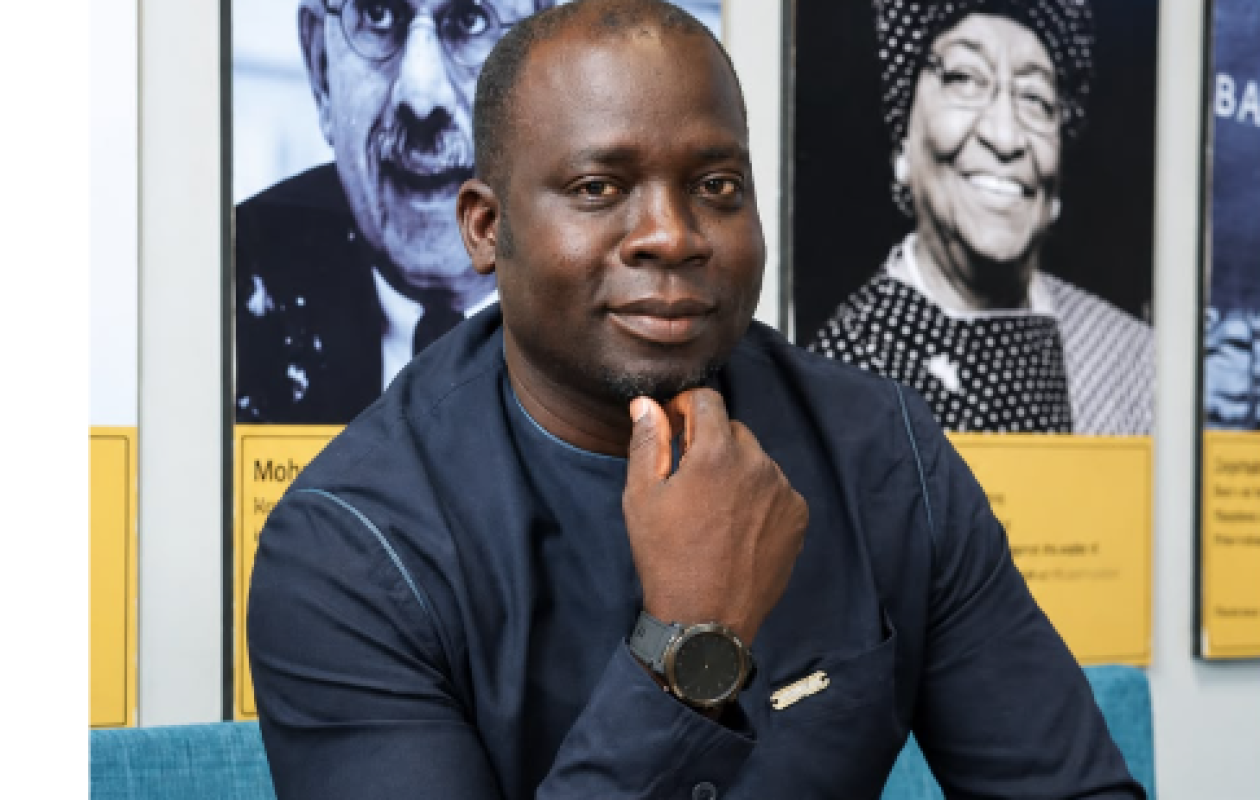
INTELLIGENCE ARTIFICIELLE : L’AFRIQUE FACE À UNE NOUVELLE FRONTIÈRE DE LA CONNAISSANCE (Par Pr Balla Diop Ngom Professeur titulaire des universités (
"The future of artificial intelligence in Africa will first and foremost be determined by its youth. If we give them the knowledge, skills, and means to innovate, they will not be a generation that consumes the world's technologies, but a generation that invents those that Africa needs."
Artificial intelligence is not simply an instrumental evolution of digital technology. It represents a systemic technoscientific transformation, capable of simultaneously reconfiguring knowledge production regimes, industrial structures, value chains, information architectures and, more broadly, power relations between nations.
For Africa, the stakes are therefore considerable.
The question is no longer just one of technological appropriation, but one of our ability to build true cognitive, algorithmic and computational sovereignty.
But at the center of this equation lies African youth.
Our demographic advantage will not produce any automatic effect on development. Like any potential energy, it must be converted into productive capacity by a coherent system combining scientific education, mathematics, computer science, computing infrastructure, data, basic research, engineering, innovation and industrialization.
We therefore need to build a techno-scientific continuum:
Education → Science → Research → Data → Algorithms → Computation → Innovation → Industrialization → Value creation.
The challenge is to enable a new generation of Africans to gradually move from using artificial intelligence models to understanding them, and then from understanding them to designing, training, adapting and deploying them in environments that correspond to the realities of the continent.
This notably involves strengthening our capabilities in applied mathematics, data science, machine learning, computing architectures, microelectronics, semiconductors, photonics, advanced materials, robotics, cybersecurity and autonomous systems.
But technology only acquires true transformative power when it addresses the real problems of a society.
African artificial intelligence will therefore also need to be able to interact with our languages, our agricultural systems, our health issues, our energy resources, our industries, our territories and our educational ecosystems.
We must gradually build an endogenous ecosystem of technological production, in which universities, laboratories, computing centers, startups, companies, investors and public authorities no longer function as decoupled entities, but as the intertwined components of the same innovation system.
This is probably where one of the major scientific and economic challenges of the coming decades lies.
Because in the emerging global economy, sovereignty will no longer depend solely on the possession of natural resources. It will also depend on nations' ability to produce knowledge, control their data, possess computational capabilities, develop their own technologies, and convert collective intelligence into economic and industrial value.
Africa possesses tremendous human energy.
Our scientific responsibility now consists of transforming this potential energy into technological capacity, and then this technological capacity into productive power.
It is in this transformation that African youth can become not simply users of the next technological revolution, but one of its creative forces.














Commentaires (2)
Participer à la Discussion
Règles de la communauté
💡 Astuce : Utilisez des emojis depuis votre téléphone ou le module emoji ci-dessous. Cliquez sur GIF pour ajouter un GIF animé. Collez un lien X/Twitter, TikTok ou Instagram pour l'afficher automatiquement.
Se connecter
Commentez avec votre profil, votre photo, et soyez averti des réponses.