LA DUALITÉ AU SOMMET DE L’ÉTAT : quand les querelles de pouvoir prennent le pays en otage (Par Al Xalifa)
From the rejection of the 2026 supplementary budget law to the successive challenges to the 2027 state budgets, Senegal is witnessing an institutional confrontation that now transcends mere political disagreement. Behind the parliamentary votes lies a fundamental question: who governs, with what majority, and according to what principles?
There comes a point when political ambiguities cease to be mere speculation and become institutional facts. Senegal seems to have reached that point.
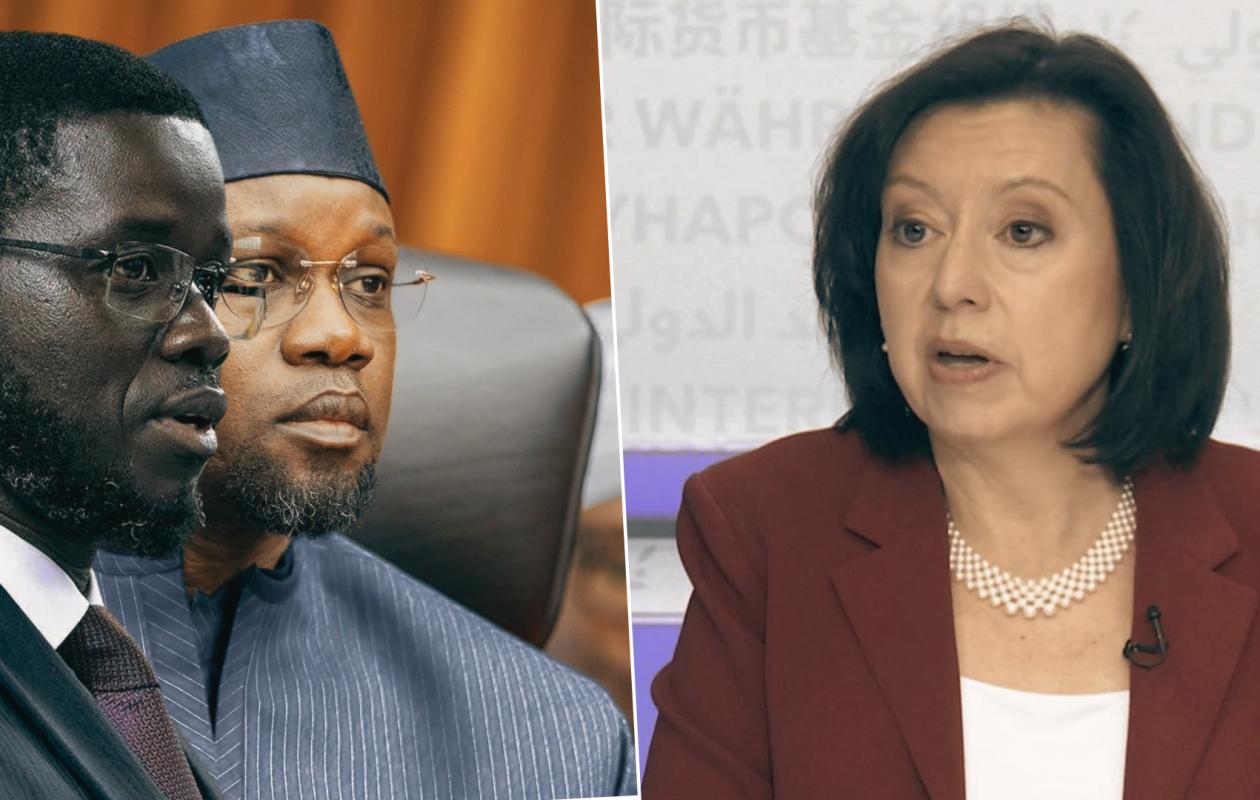
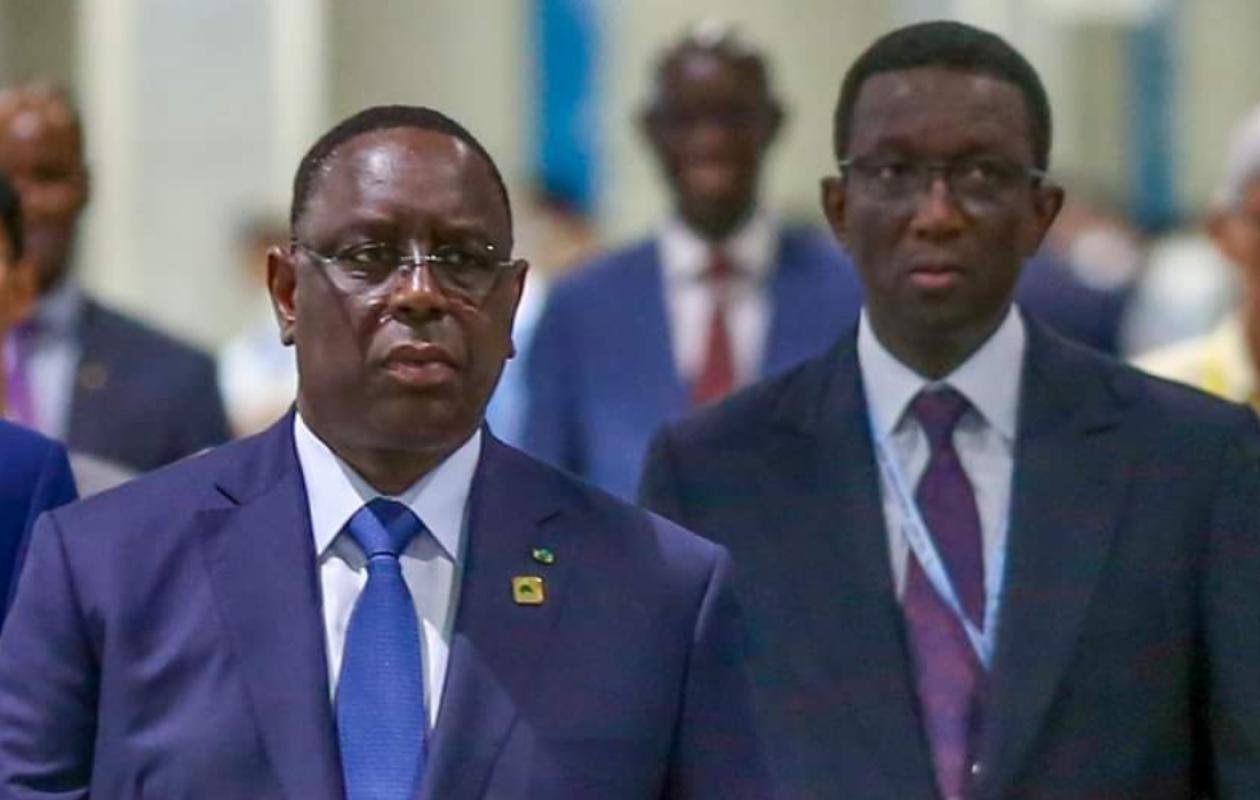
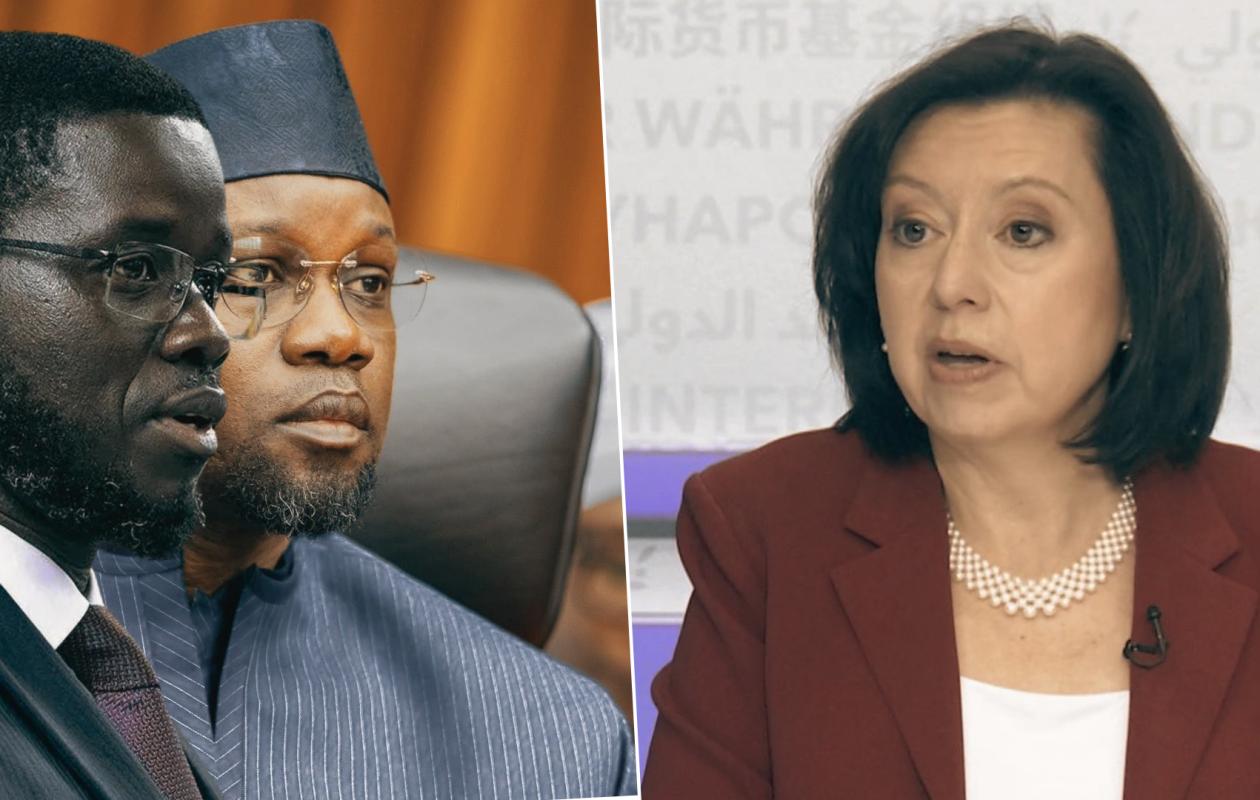
For several months, relations between the President of the Republic, Bassirou Diomaye Faye, and Ousmane Sonko, leader of PASTEF and now President of the National Assembly, have been strained, with increasingly frequent manifestations of this tension. What could previously be presented as a divergence of methods, a difference in sensibilities, or a reorganization of responsibilities within the government has now taken on the dimensions of a crisis of institutional functioning.
It is important to recall a key element for understanding the current political landscape: following Ousmane Sonko's departure from the Prime Minister's office, PASTEF officially chose not to participate in the new government. The party thus decided not to commit its political responsibility to the composition of the team led by Ahmadou Al Amine Mohamed Lô, while maintaining a dominant position in the National Assembly.
This situation has created a unique configuration: a President of the Republic, a Government formed without official participation of PASTEF and a parliamentary majority largely dominated by this same party, whose leader now presides over the parliamentary institution.
The events of the past few days give this situation a new dimension.
On November 3, the National Assembly rejected the supplementary budget bill for 2026.
A few days later, on November 7, the Finance and Budget Control Committee voted against the draft budgets relating to revenue and public debt, as well as against the budgets of the Presidency of the Republic, the Prime Minister's Office, the National Assembly and several constitutional institutions.
The sequence continued with the rejection, in committee, of the budgets of several ministerial departments, notably those of Health, Foreign Affairs and Fisheries and Maritime Economy, Youth and Sports.
This is no longer a simple parliamentary incident or a one-off disagreement over a financial text. The entire state budget structure for 2027 is facing repeated parliamentary challenges.
Admittedly, the committee's work does not yet constitute a definitive rejection of the initial budget law by the plenary assembly. However, the political implications of these successive votes are significant enough to raise questions about the institutions' ability to overcome their differences.
In a democracy, disagreement between the Government and Parliament is not abnormal.
The National Assembly is not a rubber-stamp chamber. Members of Parliament have the right, and even the duty, to scrutinize government action, to challenge budgetary choices, and to reject measures they deem inappropriate.
It would therefore be wrong to criticize PASTEF parliamentarians for not automatically supporting a government in which their party has specifically chosen not to participate.
The arguments put forward by the parliamentary group regarding the 2027 draft budget deserve examination. PASTEF specifically mentions the late submission of budget documents, the absence of several reports and reference documents, inconsistencies in the forecasts, and questions about the reform of energy subsidies.
The party also argues that the 2027 budget framework is based on assumptions from the 2026 Supplementary Budget Law, which was rejected by the National Assembly. It therefore calls on the Government to revise its projections and present a budget based on updated and legally sound data.
These arguments fall under parliamentary scrutiny and require specific responses. The Government cannot consider any challenge to its choices as obstruction. Budgetary transparency and the accuracy of forecasts are essential democratic and financial requirements.
But another question remains: how can we explain that the divergences between the different components of power take on such magnitude, to the point of compromising the examination of the main financial instruments of the State?
The problem is not that PASTEF is exercising its parliamentary independence. The problem lies in the political relationship between a party that holds a majority in the National Assembly and a government of which it has chosen not to be a part.
This configuration can perfectly exist in a democratic system. However, it presupposes a minimum of dialogue, coordination, and shared responsibility.
Non-participation in the Government does not imply an absence of all responsibility in the functioning of institutions. Nor does the existence of a parliamentary majority authorize the executive to ignore its concerns.
The freedom of elected officials to exercise oversight is a democratic requirement. The political accountability that accompanies this freedom is equally essential.
The choice of subject matter is not insignificant. Budgetary texts are not ordinary documents. They constitute the financial translation of the State's priorities, determine the available resources, and condition the implementation of public policies.
The rejection of the 2026 Finance Law had already triggered an initial period of tension. The challenge to the 2027 Finance Law, followed by the negative votes on the budgets of several institutions and ministerial departments, now gives this confrontation a much broader scope.
We need to understand what this means in concrete terms.
A budget is not simply a collection of figures presented to Parliament. It reflects economic, social, and sectoral policy choices. It determines the resources allocated to health, education, agriculture, security, infrastructure, diplomacy, and all public services.
When the appropriations of several ministries are successively rejected in committee, it is the orientations and arbitrations of the State that are put back into discussion.
However, Senegal's economic situation does not allow for institutional improvisation. The country faces significant strain on its public finances, a worrying level of debt, considerable financing needs, and international commitments whose fulfillment requires a credible budgetary trajectory.
The agreement reached at the International Monetary Fund staff level, concerning a potential $2.2 billion program, remains subject to conditions and approval by the Fund's relevant bodies. The current budget impasse could delay its implementation and complicate Senegal's debt financing and management strategy.
This obviously does not mean that the IMF's demands should take precedence over democratic control or the protection of the population. It simply means that the country cannot afford to let its financial decisions become hostages to a political confrontation.
The Government must produce truthful, consistent, and well-documented documents. Parliamentarians must be able to examine them freely and raise their objections. But, at the end of this process, the institutions must be able to establish a direction and enable the State to function.
However, when disagreements can no longer be resolved through dialogue and the search for a compromise, the budget debate gradually ceases to be an exercise in control and becomes the revealer of a deeper political crisis.
We need to go back to the origin of this situation.
Bassirou Diomaye Faye's rise to power was part of a political dynamic driven by the Diomaye President coalition, spearheaded by PASTEF and its leader, Ousmane Sonko. It was based on exceptional popular mobilization and a promise of profound transformation of the state. This victory naturally generated considerable expectations.
But a joint electoral victory does not erase the distinction between institutions or the need for a clear distribution of responsibilities.
The President of the Republic exercises the powers conferred upon him by the Constitution. The Government conducts public policy within the established institutional framework. The National Assembly votes on legislation, oversees government action, and exercises its budgetary powers.
None of these institutions can be considered the political or personal extension of another.
This is precisely where one of the current difficulties lies: the coexistence of two political legitimacies which now seem to assert themselves against each other, at the risk of blurring the distribution of institutional responsibilities.
On one side, a President of the Republic who must assume the leadership of the State and the consequences of his policies, with a Government formed under his authority. On the other, a parliamentary majority dominated by PASTEF, whose leader holds a major institutional position and whose party has chosen to remain outside the government.
This configuration is politically unique. It can work provided that the actors know how to distinguish their political differences from their institutional responsibilities.
The country does not necessarily need the Government and the parliamentary majority to share all their analyses. It needs them to be able to make the institutions function, to debate disagreements, and to reach decisions.
The question, therefore, is not whether PASTEF should support a government in which it does not participate. It is how the party, which holds a parliamentary majority, intends to exercise this responsibility without compromising the functioning of the state.
And, conversely, how do the President of the Republic and the Government intend to govern without seeking the political conditions for a constructive dialogue with the parliamentary majority?
Because a parliamentary majority and an executive that can no longer communicate with each other inevitably end up making the institutions, and beyond that, the citizens, pay for their disagreements.
Behind the parliamentary procedures, the votes and the political declarations, there is a much more concrete reality: that of the Senegalese people.
There are companies waiting for the settlement of their debts to the State, economic actors who need visibility, investors who are observing institutional stability, households facing the cost of living, and young people who are waiting for job prospects.
The consequences of a budget blockage are never abstract. They can affect the execution of public investments, the continuity of certain policies, the State's commitments, and the confidence of economic and financial partners.
The disagreement over energy subsidies deserves, in this respect, a thorough debate. The question of their financial sustainability cannot be separated from their impact on household purchasing power and business competitiveness.
But such a debate requires reliable data, clear choices, and shared responsibility. It cannot be reduced to a simple opposition between those who advocate for fiscal consolidation and those who prioritize protecting purchasing power. Both objectives must be pursued simultaneously, with clearly explained choices and their consequences precisely assessed.
What cannot be accepted is that citizens discover, through clashes between political leaders, that the institutions meant to lead change are incapable of agreeing on the very conditions of its financing.
Leadership disputes do not settle any bills, do not restart any projects, and do not create any jobs.
As the deadlock becomes entrenched, another question re-emerges in the public debate: that of a possible dissolution of the National Assembly.
The hypothesis deserves to be mentioned, but it must be examined rigorously.
Article 87 of the Constitution allows the President of the Republic, after consulting the Prime Minister and the President of the National Assembly, to dissolve the National Assembly by decree. However, this prerogative cannot be exercised during the first two years of the legislative term.
Dissolution is therefore neither an immediate decision nor an automatic consequence of the rejection of the budget proposals. It requires compliance with constitutional conditions and implies a return to the polls.
It could, when the time comes, clarify the political balance of power and give a new configuration to national representation. But it would also entail uncertainties: those of a new election campaign, a political realignment, and the future Assembly's ability to form a working majority.
The other institutional mechanism to consider is that of the Government's responsibility to the National Assembly, in particular through the motion of censure, under the conditions provided for by the Constitution.
These different possibilities show that the crisis cannot be resolved solely through political declarations or power struggles. It calls for deliberate institutional choices.
But before reaching an institutional breakdown, there remains a common responsibility: that of seeking a political solution.
It would be too easy to reduce this crisis to a simple personal quarrel. It reveals a deeper question: that of the ability of political actors to move from a logic of conquest to one of exercising power.
In opposition, unity is often built around a common adversary and a shared objective. In power, it must translate into a coherent vision, a clear distribution of responsibilities, and an ability to arbitrate disagreements.
This is the challenge that current leaders are now facing.
The promised break with the past cannot be limited to a change of faces, rhetoric, or methods. It must also be measured by the ability of institutions to function, the quality of public decisions, and the accountability of leaders to citizens.
The President of the Republic must fully assume the responsibilities attached to his office. The Government must provide the necessary answers to budgetary questions and demonstrate the coherence of its choices. PASTEF and its members of parliament, for their part, must consider the institutional implications of their decisions and clarify the conditions under which they intend to exercise their majority.
This is not about demanding artificial political solidarity. It is about remembering that the exercise of power imposes responsibilities that go beyond the interests of a party, the ambitions of a leader, or disagreements between former comrades in arms.
Senegal does not need a winner in a leadership dispute. It needs a functioning government, a leadership that takes responsibility for its choices, and institutions that inspire confidence.
The current leaders were brought to power by the same popular hope, even if their institutional choices have now placed them in different positions. They cannot allow their differences to jeopardize the conditions for fulfilling this hope.
Because, in the end, the question is no longer who holds the strongest political legitimacy, who best embodies the break, or who will emerge victorious from this confrontation.
The real question is much simpler, but far more serious: what is the point of seizing power in the name of the people if you end up exposing those same people to the consequences of their own power struggles?
Al Xalifa (Senegalese citizen)








Commentaires (2)
Maintenant ce qui se passe est le peuple n'est pas en accord avec sa politique de "bi pour Boukki, bi pour Njour, bi pour samba" 😂
Participer à la Discussion
Règles de la communauté
💡 Astuce : Utilisez des emojis depuis votre téléphone ou le module emoji ci-dessous. Cliquez sur GIF pour ajouter un GIF animé. Collez un lien X/Twitter, TikTok ou Instagram pour l'afficher automatiquement.
Se connecter
Commentez avec votre profil, votre photo, et soyez averti des réponses.