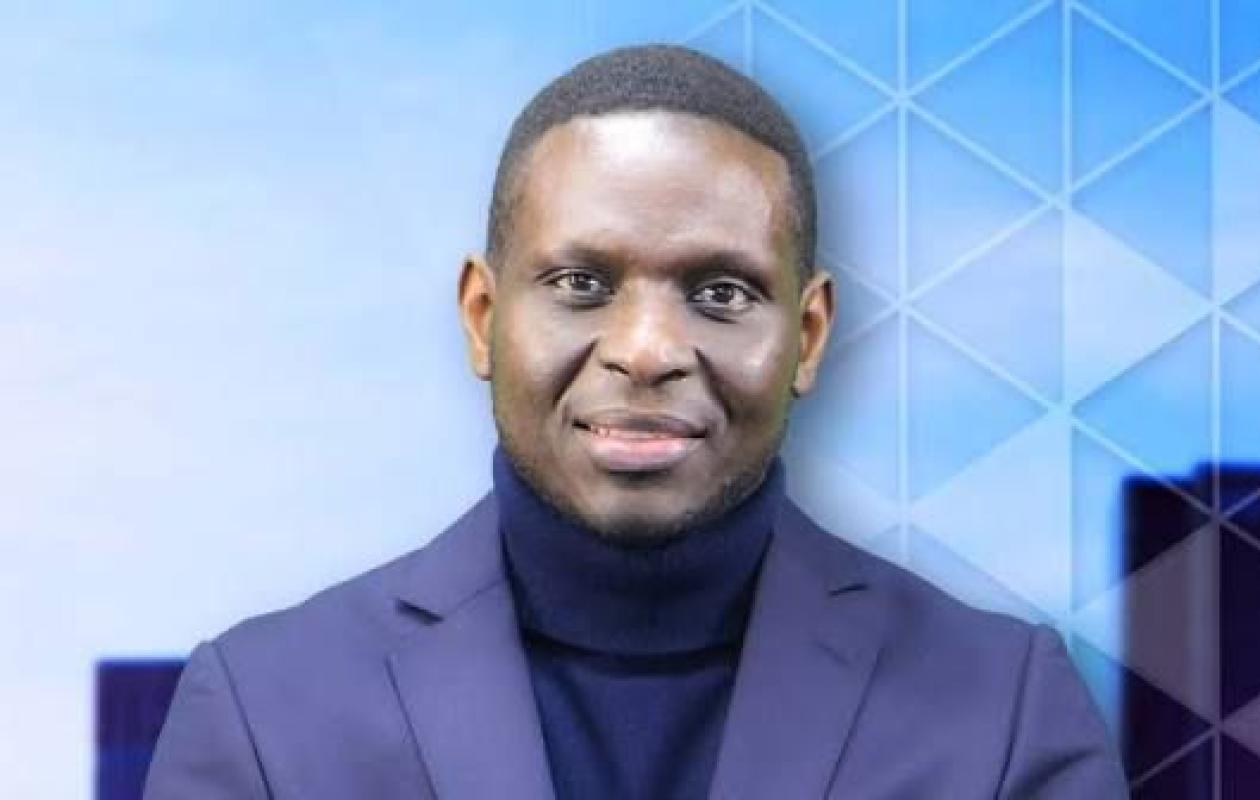
La vie chère : le Sénégalais, cet Américain qui s’ignore ? (par Ibrahima Fall)
How can prices be charged in a country where incomes remain modest? This question often arises in Senegal. It elicits familiar answers: dependence on imports, logistical and energy costs, the functioning of distribution networks, the inadequacy of certain local productions, competition, and regulation. All of these factors are obviously important. And it would be convenient, as well as unfair, to transform an economic problem into a moral indictment of the Senegalese people.
But one question remains: does economics explain everything?
Indeed, a price is never just a price. Behind a cost, a margin, and a market, there is also a social relationship. Someone asks something of someone else. The question then becomes more uncomfortable: what do I consider acceptable to charge the other person when I have the means to do so?
Let's look around us. Someone who finds their rent exorbitant doesn't necessarily become a moderate landlord when they buy a home themselves. A consumer who is outraged by prices doesn't necessarily give up demanding the maximum when they become a seller. Someone who has suffered from a certain hierarchical brutality doesn't always become a different kind of leader when they, in turn, gain a share of power.
There is a mechanism here that deserves to be examined: we can suffer from a social order and contribute to reproducing it when our position in that order changes.
Perhaps this is where the high cost of living reveals something deeper about Senegalese society. We have learned to live with certain forms of hardship to the point where we no longer always recognize them as such. It's not just about physical violence. There's the petty administrative humiliation, the authority we needlessly exert on those who depend on us, the harshness of some professional relationships, the indifference towards those to whom we have no connection. There can also be economic violence when all consideration for the vulnerability of the other party disappears from our calculations.
The problem begins precisely when this harshness ceases to surprise. "That's just the way it is." "Everyone fends for themselves." "It's the system." "It's the market." Violence that is acknowledged can provoke outrage. Internalized violence only leads to adaptation. We endure it, we learn to live with it, and when the roles are reversed, we may end up reproducing it.
Our relationship with money in this regard constitutes a remarkable observatory, not because Senegalese people "love money" more than others – that would be a caricature of little interest – but because money occupies a place in our society that far exceeds its economic function.
Anthropologist Ismaël Moya demonstrated this in his work on Dakar. Money is deeply embedded in kinship relations, ceremonies, obligations, and social hierarchies. It is not simply used for purchasing goods. It allows one to give, to honor others, to participate, to maintain one's status, to fulfill obligations, and to demonstrate one's capacity to contribute. Other studies have shown how this obligation to redistribute can concretely influence economic behavior. Senegalese solidarity is therefore not a myth. On the contrary, it can be extraordinarily demanding.
And that is precisely what makes the paradox interesting.
We generally know what we owe to our brother, our sister, our cousin, our friend. But what do we owe to someone to whom we have no connection? To our employee? To our tenant? To our client? To the person waiting outside our office? To the stranger we pass in public?
Perhaps we haven't sufficiently distinguished between two things: relational solidarity and impersonal solidarity. One can be extraordinarily generous to one's own family and remarkably harsh toward someone who is nobody to us. One might help a relative pay their rent while demanding everything the market allows from one's own tenant. One might spend lavishly to honor someone at a ceremony while paying the bare minimum to someone who works for oneself. These are obviously not behaviors unique to Senegalese people. The question is what place they occupy in our society and why we so rarely experience their contradiction with the image we have of ourselves.
This is where money meets imagination.
Cornelius Castoriadis called those meanings by which a society establishes what counts, what has value, what deserves to be desired, "social imaginary significations." He specifically included money and capital among them. The question, therefore, is not whether Senegalese people like money. It is far more serious: what place has money gradually come to occupy in our definition of success?
And this is where the American of the title appears.
The Senegalese are obviously not American. Our histories, family structures, religions, and forms of social interaction are profoundly different. But we like to contrast two imaginaries: the America of individual success, competition, and material achievement; and the Senegal of family, community, and teranga (hospitality).
What if this opposition had become too comfortable?
What if we had maintained strong family ties while integrating a growing emphasis on material success and a certain harshness in impersonal relationships? We would then be communal in our obligations but sometimes individualistic in our transactions.
The Senegalese would thus be, provocatively, a kind of "American without the dollar": not because he has become American but because certain symbolic attributes of material success have taken an increasing place in a society which does not collectively have the resources corresponding to these aspirations.
This is a hypothesis, not a verdict, but it should lead us to look differently at this word that we love so much: teranga .
Teranga (hospitality) is real. The problem begins when it becomes an answer before the question is even asked. By constantly telling ourselves that we are welcoming, generous, and supportive, we risk prioritizing our self-image over examining our practices. A proclaimed virtue can end up becoming a smokescreen. As Paul Valéry said, "That which exists only by virtue of a name is scarcely anything more than a name."
But nothing will change if we refuse to face this reality, because economic hardship may have a formidable property: it circulates. Those who endure hardship naturally seek to protect themselves from it. Those who pay dearly try to earn more elsewhere. Those who are under pressure try to postpone it whenever possible. And those who have long accepted certain practices as normal may reproduce them when they attain a position that allows them to perpetuate them.
To endure, to adapt, to postpone, to reproduce.
The risk is that of a vicious cycle where everyone, to protect themselves from the hardship they experience, transfers some of it onto someone else, generally someone less fortunate. The sum of individually understandable behaviors then collectively produces the society that everyone complains about.
Perhaps this is what the high cost of living forces us to look at. It's not just a matter of price. It questions what we consider acceptable in our relationship with others.
Economic policies will obviously be needed to combat it. But no policy will suffice if we simultaneously refuse to question what we ourselves are perpetuating.
Teranga deserves more than just celebration. It deserves to be tested in reality, because a society does not become what it says it is. It becomes, day after day, what it tolerates and what its members allow themselves to do to one another.
The problem is that this insensitivity isn't a choice; it takes hold. By constantly being exposed to certain forms of harshness, we cease to see them. What should have outraged us becomes commonplace; what becomes commonplace eventually no longer warrants judgment. The cycle can then close: we endure, we adapt, and when our position changes, we may inflict on others what we ourselves have learned to tolerate.
How to get out of this?
First, by starting to talk again about what is really happening to us. Senegalese public debate would benefit from devoting more space to these ordinary issues that nevertheless shape the lives of millions of people: the price of housing, working conditions, employer-employee relations, education, healthcare, transportation, the quality of public services, and how we treat each other in public spaces. Politics should not simply be a constant commentary on politics.
Television and radio stations bear a particular responsibility here. By devoting a considerable portion of public discourse to partisan clashes, sound bites, personal ambitions, and power struggles, they risk leaving real society in the shadows. The point is not to talk less about politics, but to talk more about what politics is for: the concrete conditions of citizens' lives.
This also means choosing differently whom we listen to. A society is shaped by the words it values. Researchers, teachers, healthcare professionals, entrepreneurs, workers, farmers, public servants, associations, and ordinary citizens should be able to not only share their experiences but also shed light on issues based on their knowledge and lived experience. Public debate should help us see reality more clearly, not just determine who won the day's controversy.
Political leaders also have a responsibility to set an example. Citizens cannot be expected to prioritize the common good if those who represent them give the impression that the bulk of collective energy is being consumed in the pursuit, maintenance, or contestation of power. Governing should first and foremost mean working on the country's problems, producing results, and being accountable for them.
Perhaps this is how we begin to break the cycle: by making visible again what habit had made invisible, by restoring judgment where we had installed resignation, and by making our real problems objects of collective conversation.
Then teranga could cease to be merely the beautiful story we tell about ourselves and become a much more difficult requirement: the way we treat someone who is neither our relative, nor our friend, nor our guest, but simply another.
Perhaps this is where we should start: not by proclaiming our values more, but by becoming demanding enough to look every day at what we do with them.
Ibrahima Fall holds a doctorate in management science from the École des Mines de Paris (Mines Paris – PSL), and is the founding president of the management research and expertise firm Hommes & Décisions.
He is the author of *The Company Against Knowledge of Real Work: Humans First or the Syndrome of the Sacrificed First* (Éditions L'Harmattan). He also co-edited, in 2026, the reference work *Command Never Sleeps: Transform or Perish* , published by Éditions de l'Aube under the patronage of the Centre for Advanced Military Studies (CHEM).





















Commentaires (6)
Sonko s'est mis dans la merde tout seul !
Vous venez de tout resumer. Le chemin est long trop long et nous n en sommes pas conscient pour une bonne majoritè
Participer à la Discussion
Règles de la communauté
💡 Astuce : Utilisez des emojis depuis votre téléphone ou le module emoji ci-dessous. Cliquez sur GIF pour ajouter un GIF animé. Collez un lien X/Twitter, TikTok ou Instagram pour l'afficher automatiquement.
Se connecter
Commentez avec votre profil, votre photo, et soyez averti des réponses.