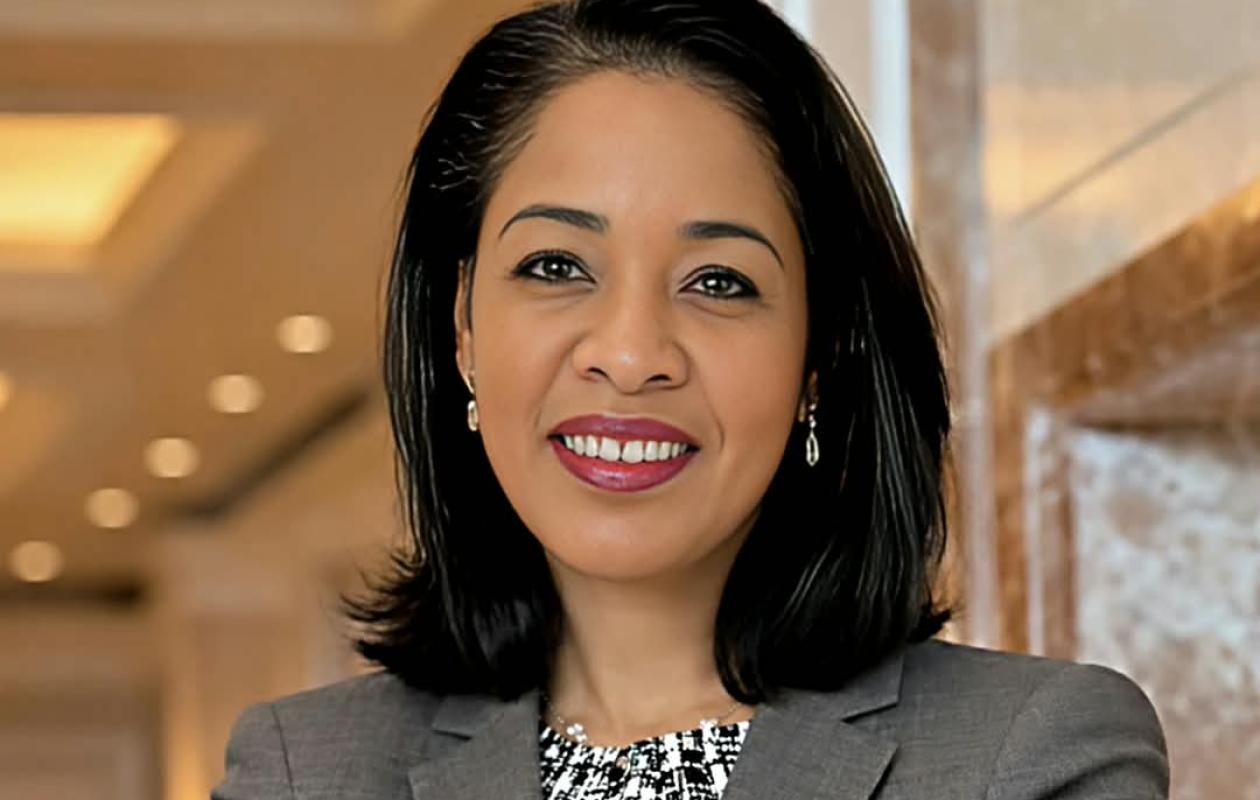
REJET DU PLFR 2026 : QUAND L'IMPASSE POLITIQUE MENACE L'ÉCONOMIE ET LE QUOTIDIEN DES SÉNÉGALAIS (Par Léna Sène)
The rejection of the 2026 supplementary budget bill by the National Assembly on November 3, 2026, sends a worrying signal about Senegal's economic and social future. Beyond political considerations and disagreements between institutions, this decision raises a crucial question: what will be the consequences of this budget impasse for Senegalese businesses, investors, and the population?
Senegal is going through a particularly delicate financial period. The revised budget projected a budget deficit of 7.6% of GDP, compared to the initial 5.4%, with general budget revenues reduced to 5,516.7 billion CFA francs and expenditures estimated at 7,251.9 billion CFA francs. Energy subsidies were expected to reach 790.3 billion CFA francs.
These figures demonstrate the extent of the strain on public finances. The question of the accuracy of budget forecasts, raised by parliamentarians, naturally warrants transparent answers. Parliamentary oversight is a democratic imperative. However, rejecting a budget bill alone cannot solve the country's economic difficulties.
An increased risk to public finances and businesses
The first risk concerns the State's ability to adapt its budget execution to new economic realities. The rejection of the supplementary budget bill does not mean an automatic halt to public spending, but it deprives the government of the approval of the adjustments it proposed.
This situation could complicate the management of public cash flow, the financing of certain investments and the settlement of debts owed to companies providing services to the State.
However, the consequences of payment delays can quickly spread throughout the real economy: cash flow difficulties for SMEs, slowdown of construction projects, pressure on jobs and weakening of many subcontractors.
In an economy where public procurement represents an important driver of activity, these risks should not be underestimated.
Investor confidence in question
The other major issue is that of Senegal's economic attractiveness.
Investors seek three fundamental elements: transparency, stability, and predictability. They can accept economic risks, but need guarantees regarding the continuity of public policies and the state's ability to honor its commitments.
A prolonged institutional blockage could increase the perception of sovereign risk, delay certain investment decisions and make financing conditions more expensive.
However, Senegal needs considerable capital to develop its infrastructure, agriculture, industry, energy sector and real estate stock.
The mobilization of private financing, the development of public-private partnerships (PPPs), and the arrival of institutional investors are essential to support this transformation. However, none of these mechanisms can function sustainably without a credible institutional and financial environment.
The IMF dossier: a strategic issue
The rejection of the PLFR also comes at a sensitive time in discussions with the International Monetary Fund (IMF).
In September 2026, Senegal secured a Services Agreement for a 36-month economic and financial program worth approximately $2.2 billion. This agreement, which remains subject to approval by the IMF's governing bodies and the agreed-upon conditions, represents a significant step towards restoring the country's financial credibility.
Rejecting the amended budget could complicate this process, particularly if financial partners feel that the authorities do not yet have a sufficiently coherent and credible budgetary framework.
This is not to conclude that the program is compromised, but to recognize that a prolonged period of institutional uncertainty could delay expected progress and affect the confidence of international partners.
The local populations, the first potential victims
Beyond the figures and financial negotiations, it is households that risk suffering the heaviest consequences of a prolonged budget crisis.
Health, education, employment, agriculture and social protection all depend, to varying degrees, on the continuity of public funding.
Cash flow difficulties could weaken the supply of health facilities, delay school investments, slow down public employment programs and reduce the capacity to support the most vulnerable populations.
Companies experiencing financial difficulties may also be forced to reduce their operations or workforce.
It is therefore necessary to prevent institutional disagreements from resulting, directly or indirectly, in a deterioration of the living conditions of Senegalese people.
Breaking the deadlock through national responsibility
Senegal does not need a political victory of the executive over Parliament, nor a parliamentary victory over the government. It needs an economic compromise that serves the general interest.
Three priorities should guide future decisions: restoring dialogue between institutions, protecting social spending and productive investments, and accelerating the mobilization of private and alternative financing to reduce pressure on public finances.
Budgetary transparency and financial discipline are not incompatible with social protection. On the contrary, they must reinforce each other.
Parliamentary oversight should improve public policies, not leave the country without any prospect of emerging from the crisis.
Similarly, the government must respond to the concerns expressed by the people's representatives with verifiable data and credible proposals.
Senegal is at a pivotal moment in its economic history. It must restore its financial credibility, reassure investors, and preserve the living conditions of its population.
Economic stability is not a partisan issue. It is a collective responsibility.
Because, ultimately, the price of a prolonged political deadlock will not be paid solely in international institutions or negotiating rooms. It could be paid by businesses awaiting payment, young people seeking employment, families struggling to make ends meet, and populations expecting quality public services.
Senegal needs transparency, stability, and accountability. Its economic future cannot be held hostage by political rivalries.
By Léna Sène
President and CEO, DCA Africa - DCA Africa – Developing Capital for Africa
Founding member of the KIIRAAY Party – The Republican Patriots
"The opinions expressed in this article are personal and solely reflect the views of the author."

















Commentaires (51)
Mais, là-bas, aucun membre du pouvoir, aucun politicien, ne dira que l'assemblée bloque le pays. Parce qu'il n'est pas con et ne suppose pas parler à des cons.
NB: Les membres de la secte ne voient toujours pas comment Allah détruit, chaque jour, les montages de leur communication.
Vous nous jouez la comédie de la panique : le FMI va se fâcher, les investisseurs vont fuir, les PME vont s'effondrer. Mais pour qui roulez-vous ? Ce discours de la peur n'est que la comptabilité servile des cercles d'affaires hors-sol qui ont vampirisé le Sénégal depuis des décennies. Le rejet du PLFR 2026 n’est pas une « impasse », c’est un coup d'arrêt magistral porté à la falsification des chiffres et à la soumission aveugle aux diktats de la finance internationale. Prétendre qu’il faudrait avaler un déficit abyssal de 7,6 % et des prévisions insincères sous prétexte d'apaiser les marchés est le raisonnement cynique d'une opportuniste pour qui la souveraineté nationale n'est qu'une variable d'ajustement. Le Sénégal n'a pas besoin des pleurs de crocodile des caméléons de la politique dont la seule boussole a toujours été le vent du pouvoir et le profit personnel. Le vrai risque pour les Sénégalais, ce n’est pas le contrôle démocratique d’un budget bancal ; c’est la persistance de cette élite transhumante, parasite et donneuse de leçons, qui demande au peuple de se serrer la ceinture pendant qu'elle vend le pays au plus offrant. Taisez-vous et laissez la vraie souveraineté réparer les ruines que votre classe politique a laissées derrière elle !
Ton texte suggère en creux que le personnel politique actuel ( ou du moins une partie de celui ci) faillit à sa mission en privilégiant des agendas égoïstes au détriment de la trajectoire de développement du pays.
pour cette percutante contribution.
2. Origine du risque : La menace sur les PME et la trésorerie découle du dérapage budgétaire (déficit de 7,6 % du PIB), non du vote négatif des députés.
3. Principe de sincérité : L'Assemblée exerce son rôle constitutionnel de contrôle. Le FMI et les investisseurs sanctionnent les comptes insincères, pas le refus d'un texte déséquilibré.
4. Fausse urgence : Brandir l'arrêt des services sociaux pour forcer l'adoption d'un collectif budgétaire est un glissement rhétorique. Le Parlement n'est pas une chambre d'enregistrement.
Que Dieu ait pitié de son âme et lui pardonne sa haine envers SONKO. Que la terre de Ngaï soit souple pour lui.
Triste fin
Participer à la Discussion
Règles de la communauté
💡 Astuce : Utilisez des emojis depuis votre téléphone ou le module emoji ci-dessous. Cliquez sur GIF pour ajouter un GIF animé. Collez un lien X/Twitter, TikTok ou Instagram pour l'afficher automatiquement.
Se connecter
Commentez avec votre profil, votre photo, et soyez averti des réponses.