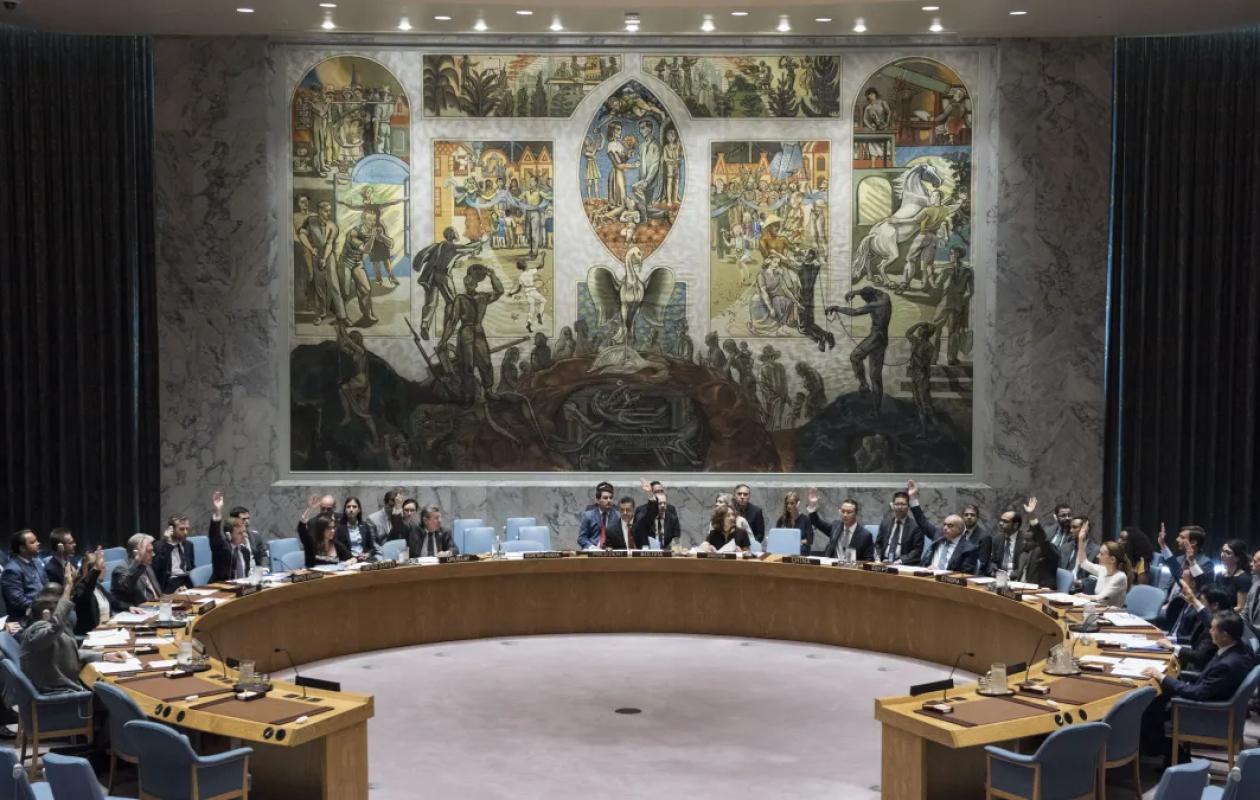
Conseil de sécurité : quatre-vingts ans après, l’Afrique n’a toujours pas de siège à la table
In 1945, the world divided the spoils of war, and five victors secured a lifetime seat in power, with a veto right to boot. Africa, however, remained under colonial rule. It wasn't just at the table: it was on the menu.
Eighty years later, the setting has changed, but the table hasn't moved.
The Security Council has fifteen members. Five are permanent: the United States, Russia, China, France, and the United Kingdom. The other ten are elected for two-year terms by the General Assembly, and Africa has no permanent seats.
Yet, a large proportion of the issues examined by this Council concern our continent: the Sahel, the DRC, Sudan, Somalia. Decisions that commit our people are made without Africa having a lasting voice in the chamber.
A long-standing and structured demand
This position is not impromptu. Since the Ezulwini Consensus in 2005, the African Union has been demanding two permanent seats and five non-permanent seats, with the same privileges as current members, including veto power. And on October 10 and 11, in Tripoli, the Committee of Ten adopted the "Tripoli 2026 Document," reaffirming this demand.
Twenty years of press releases, summits, and declarations. And still nothing in the chair.
Why is Africa losing?
The first obstacle: the interests of the major powers. Those who hold power have no desire to share it. The five permanent members retain their veto power, and none wants to see their influence diluted. France says it would not oppose extending the veto, while the United Kingdom opposes it. Each is playing its own game, and none of them are in Africa's best interest.
The second obstacle: the legal hurdle. Expanding the Security Council would require amending the UN Charter, with particularly stringent ratification requirements. In other words, the existing powers would have to vote to reduce their own relative power. It would be naive to expect that.
The third obstacle is the one we must confront: our own divisions. Analysts have long pointed to the obstructionism of states that have no chance of securing a seat and prefer that no neighbor obtain one. Nigeria, South Africa, Egypt, Algeria: who would represent Africa? The AU wants to "choose" these two seats, but how to do so on a multipolar continent is something no one truly knows. While we debate the name, the others retain the seat.
The strategy of the powers
Africans are offered crumbs: non-permanent seats, "representation," invitations. A status without power. No veto, no decision-making. This is precisely what Africa has refused, and rightly so.
Africa is not asking for favors or reparations. It is asking that its 54 states have a voice commensurate with their population and their weight in the crises that the Council claims to manage.
But let's be honest: no one will hand us this seat. It is won through genuine unity, a single candidacy, and a diplomacy that ceases to contradict itself from one capital to another.
As long as Africa remains divided, the powers don't even need to say no. They just have to wait.












Commentaires (11)
L’afrique a intérêt a se plonger dans ses propres problèmes et s'inventer un avenir a lui.
Sinon pas de dignité et donc aucun respect et jamais de reconnaissance
c'est un panier de crabe
L'afrique du sud ne laissera jamais le nigeria obtenir cette place et vice versa.
Le maroc ne laissera jamais l'algerie avoir cette place.
L'egypte est un bon candidat mais ca n'arrangerait pas des pays comme l'arabie saoudite, israel, iran our turquie
les autres pays sont trop faibles.
C'est pas pour demain cette place de lafrique
Est-il juste qu’un continent comptant 1,4 milliard d’habitants et détenant 30 % des ressources naturelles mondiales n’ait pas son mot à dire sur les décisions qui le concernent, lui et ses populations ? Pensez-vous donc qu’ils doiven tout simplement se contenter de ce que d’autres décident pour lui ? NON IT'S UNFAIR
• Platine : environ 54 %
• Diamant : environ 78 %
• Chrome : environ 40 %
• Manganèse : entre 28 % et 38 %
• Cobalt : plus de 60 % à 70 % (porté en grande partie par la République démocratique du Congo)
• Terres arables non cultivées : environ 65 % du total mondial
Participer à la Discussion
Règles de la communauté
💡 Astuce : Utilisez des emojis depuis votre téléphone ou le module emoji ci-dessous. Cliquez sur GIF pour ajouter un GIF animé. Collez un lien X/Twitter, TikTok ou Instagram pour l'afficher automatiquement.
Se connecter
Commentez avec votre profil, votre photo, et soyez averti des réponses.