News Feed
Jeudi 5 novembre 2026
à Dakar
Close icon
Se connecter

Heatwave: France suffocates, Paris and around twenty departments see red

Auteur: AFP

Heatwave: France suffocates, Paris and around twenty departments see red

Canicule: la France suffoque, Paris et une vingtaine de départements voient rouge


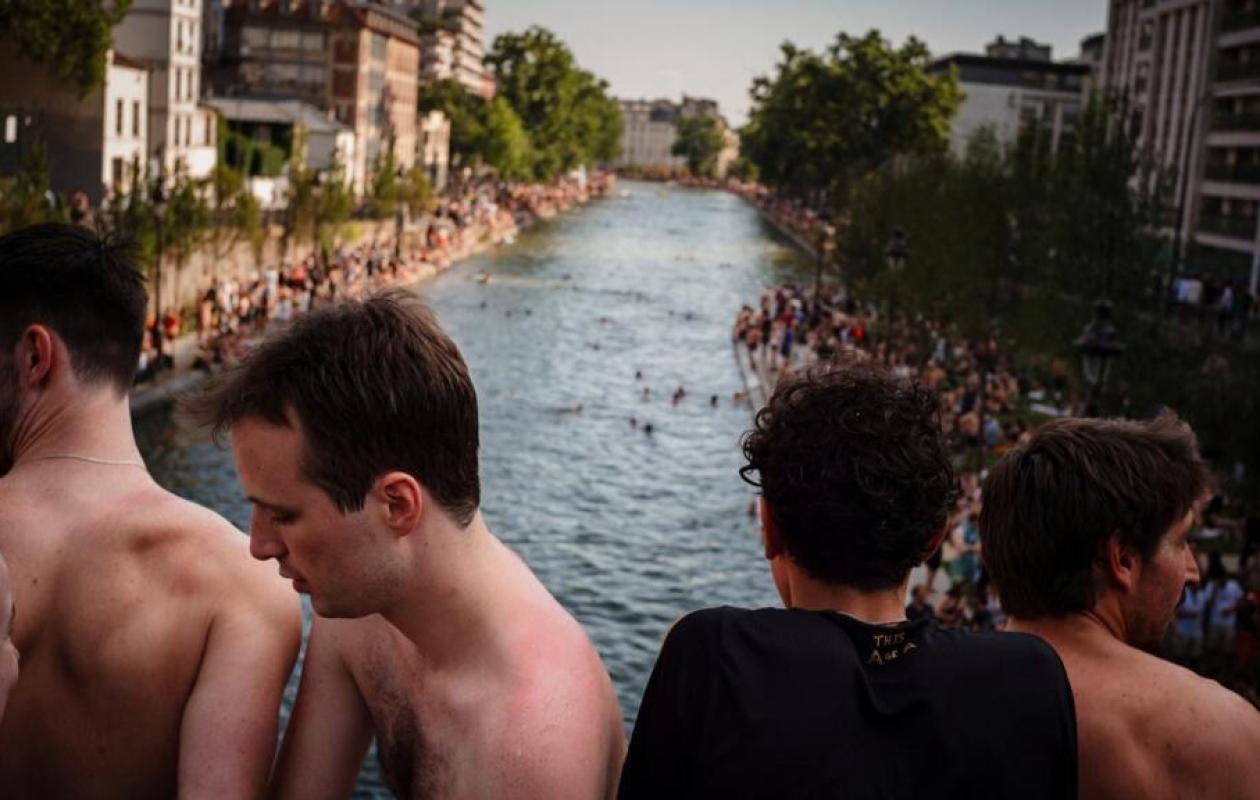
A weekend in the furnace: 24 departments, including those in the Paris region, will be on red alert on Saturday due to the heatwave, the third in two months, which is fueling fires in the southern half of the country.


This red alert extends until Sunday, Météo-France indicated in its 06:00 bulletin.


According to Météo-France, 59 other departments are now under orange alert, and only the departments in the South-East and - for thunderstorms - Corsica remain under yellow alert, spared by the heatwave temperatures.


A total of 22.2 million inhabitants - three times more than on Friday - will be affected by the highest level of alert defined by the meteorological institute, according to an AFP calculation based on annual data from INSEE which does not reflect the movements of holidaymakers.


This heat wave coincides precisely with the first major holiday weekend.


SNCF has indicated that it will provide a "normal" high-speed service during the July 14th holiday weekend, with 3,700 TGVs planned over the weekend, but intends to cancel one out of three Intercités trains during the hottest hours of the day while offering alternative bus solutions.


Temperatures of up to 36°C are expected on Saturday in Paris and Rennes, 38 in Bordeaux, 35 in Rouen or even 37 in Toulouse, and temperatures could reach up to 39 or even 40°C "locally", Météo-France indicated.


"A mass of very hot air is stagnating over the country for several days, generating a prolonged heat wave," the forecaster explained late Friday afternoon.


This heatwave episode will continue "at least until the middle of next week, although there is a likely start to a drop in temperatures in the west of the country at the beginning of the week," adds the Meteorological Institute.


Repeated heat waves are an unequivocal marker of climate change, mainly caused by the burning of coal, oil and gas, climate scientists have shown.


On Friday, the government activated an "Orsec extreme heat plan" in departments under red alert, with the opening of "protection centers" or "cooling centers" for "vulnerable people", the elderly, isolated or homeless.


In Paris, placed under red alert for "extreme heatwave" from noon, the Communist Party has decided to open its air-conditioned headquarters on Place du Colonel-Fabien on Saturday and Sunday from 12:00 to 18:00.


The government has faced widespread criticism regarding its "lack of preparedness" for the extreme heat. Excess mortality has already been recorded, particularly among people over 75.


- No firemen's balls -


The combination of intense heat and drought is also creating "an exceptional situation of forest fire danger across the entire country," notes Météo-France. More than 25,000 hectares have burned since the beginning of the year, nearly double what was projected for the same date in 2025, according to an estimate by the Civil Security service.


In recent days, France has faced multiple fires, notably in the Pyrénées-Orientales (4,900 hectares burned), the Drôme (4,000 ha) and the Indre (900 ha).


In Savoie, two villages are isolated by a forest fire. While the fire, which burned 60 hectares, is now "stabilized" according to the prefecture, several days of work are needed to secure the only road leading to it.


In the West, in Loire-Atlantique, a campsite and homes, representing 220 people, were evacuated on Friday in La Plaine-sur-Mer due to a vegetation fire that burned through 83 hectares before being brought under control in the evening.


Another consequence of the extreme heat is the significant increase in the number of drownings: 131 people have drowned since June 19, including young people under 18 and people over 60, according to authorities.


"The figures are not good, we have an increase of almost 20% compared to last year," said Sports and Youth Minister Marina Ferrari on Friday.


Festive gatherings are also suffering from the heatwave.


In Paris, the police prefect has cancelled the very popular firemen's balls traditionally held in fire stations on July 13 and 14, as well as sporting events planned outdoors or in non-air-conditioned venues.


And across France, many cities have already cancelled the fireworks displays that were planned for the national holiday.


 

⚡ Résumé express généré par IA, vérifié par la rédaction
- 24 départements, dont Paris, sont placés en vigilance rouge canicule samedi et dimanche, avec 22,2 millions d’habitants concernés. - Les températures atteignent jusqu’à 39-40°C localement, et l’épisode caniculaire devrait durer au moins jusqu’en milieu de semaine prochaine. - Plus de 25.000 hectares ont brûlé depuis janvier, et une surmortalité est enregistrée, notamment chez les plus de 75 ans.
Auteur: AFP
Publié le:

Commentaires (12)

Trier par :
  • avatar
    @Bof il y a 3 mois
    Le Gulf Stream provoque naturellement des températures bien plus chaudes en Europe qu'en Amérique du Nord à latitude équivalente. Pour information, l'Europe est à la latitude du Canada et Paris est située plus au Nord que Québec. A Paris on dépasse les 40°C plusieurs fois par été et l'été ça ne descend jamais sous les 30°C l'après midi. Je ne te parle même pas de la température des régions méditerranéennes Marseille, Perpignan, Barcelone, Athènes, Tunis, Alger, qui ont une température équivalente bien plus chaude que les grands lacs d'Amérique (lac Michigan, lac Ontario, etc..) situés à la même latitude que la Méditerranée.
  • avatar
    Lamine il y a 3 mois
    Tant que notre équipe gagne on supporte tout. Sinon le nord de la métropole doit adopter davantage les architectures de la région méditerranéenne et des outre-mer. Il faut adapter les villes au changement climatique.
  • avatar
    sur place il y a 3 mois
    Le problème c'est que c'est construit pour emmagasiner le maximum de chaleur pour l'hiver. Donc l'été les bâtiments deviennent littéralement des fournaises avec plus de 50°C et des températures qui ne descendent pas la nuit. Là où je vis c'est l'aube à 4h30 et la nuit à 22h30. J'ai plus chaud en France que je n'ai jamais en en 19 ans à Fatick.
  • avatar
    émigré il y a 3 mois
    @sur place  même situation que toi. je n'aurai jamais pensé pas avoir plus chaud en france qu'au senegal. le problème qui aggrave c'est qu'il n'y a pas de vent mais il c'est plus agréable dehors à l'ombre loin des villes. c'est insupportable dans les bâtiments pas adaptés et les grandes métropoles. n'oubliez pas que les températures affichées sont des températures sous abri. 57°C mesurés dans mon appartement fin juin et 43°C au plus froid la nuit. je suis allé dormir dans la cave.
  • avatar
    bof il y a 3 mois
    Ils n ont jamais passé l'été au Portugal ou en Amérique du nord , aucune brise fraiche, ça c'est la canicule.
  • avatar
    Quoi ? il y a 3 mois
    Il faut bien plus chaud l'été en France qu'au Portugal car le Portugal est plus exposé à la façade océanique. Il n'y a presque pas de vent en France.
  • avatar
    Bizarre il y a 3 mois
    J'ai toujours entendu que le Portugal ou l'Amérique du Nord étaient bien plus frais que les pays méditerranéens Espagne, sud de la France, Italie, Grèce, Turquie à par le sud des États-Unis.
  • avatar
    Ndamli il y a 3 mois
    36 a 40 degrés on dit chaleur extrême? Sincèrement il n'y a pas de quoi fouetter un chat. Ce sont des températures de chaleur normale auxquelles l'être humain normalement constitué peut survivre sans souci. Ce ne sont pas des températures qui tuent. Passons à des actualités plus sérieuses
  • avatar
    @Ndamli il y a 3 mois
    Pas quand les bâtiments ne sont pas conçus pour la chaleur mais pour le froids avec de grandes baies vitrées au sud qui transforment les bâtiments en serre en plein soleil et les nuits courtes des hautes latitudes. Il s'agit de température mesurée sous abri, pas en plein soleil. Sinon le record de température sous abri à Dakar c'est 41 °C à la station Dakar/Yoff avec une brise et des nuits longues, en France métropolitaine c'est 46°C sans vent et des nuits courtes.
  • avatar
    abc il y a 3 mois
    On sent la différence entre les appartement modernes avec une clim et les autres. Mais au bout de quelques jours le corps , en assez bonne santé, s'adapte au très chaud ou très froid. Un petit gourde et un éventail ça passe. C'est plus dur pour les gens qui ne font jamais d'effort physique peut être
  • avatar
    baris il y a 3 mois
    C'est compliqué pour les personnes qui sont obligés de travailler à l'extérieur toute la journée, surtout avec les vêtements de sécurité.
  • avatar
    doc il y a 3 mois
    Le problème c est quand il fait chaud la nuit aussi, on dort mal , le corps doit continuer à ventiler , on est fatigué.

Participer à la Discussion

Règles de la communauté
  • Soyez courtois. Pas de messages agressifs ou insultants.
  • Pas de messages inutiles, répétitifs ou hors-sujet.
  • Pas d'attaques personnelles. Critiquez les idées, pas les personnes.
  • Contenu diffamatoire, vulgaire, violent ou sexuel interdit.
  • Pas de publicité ni de messages entièrement en MAJUSCULES.

💡 Astuce : Utilisez des emojis depuis votre téléphone ou le module emoji ci-dessous. Cliquez sur GIF pour ajouter un GIF animé. Collez un lien X/Twitter, TikTok ou Instagram pour l'afficher automatiquement.

Emoji