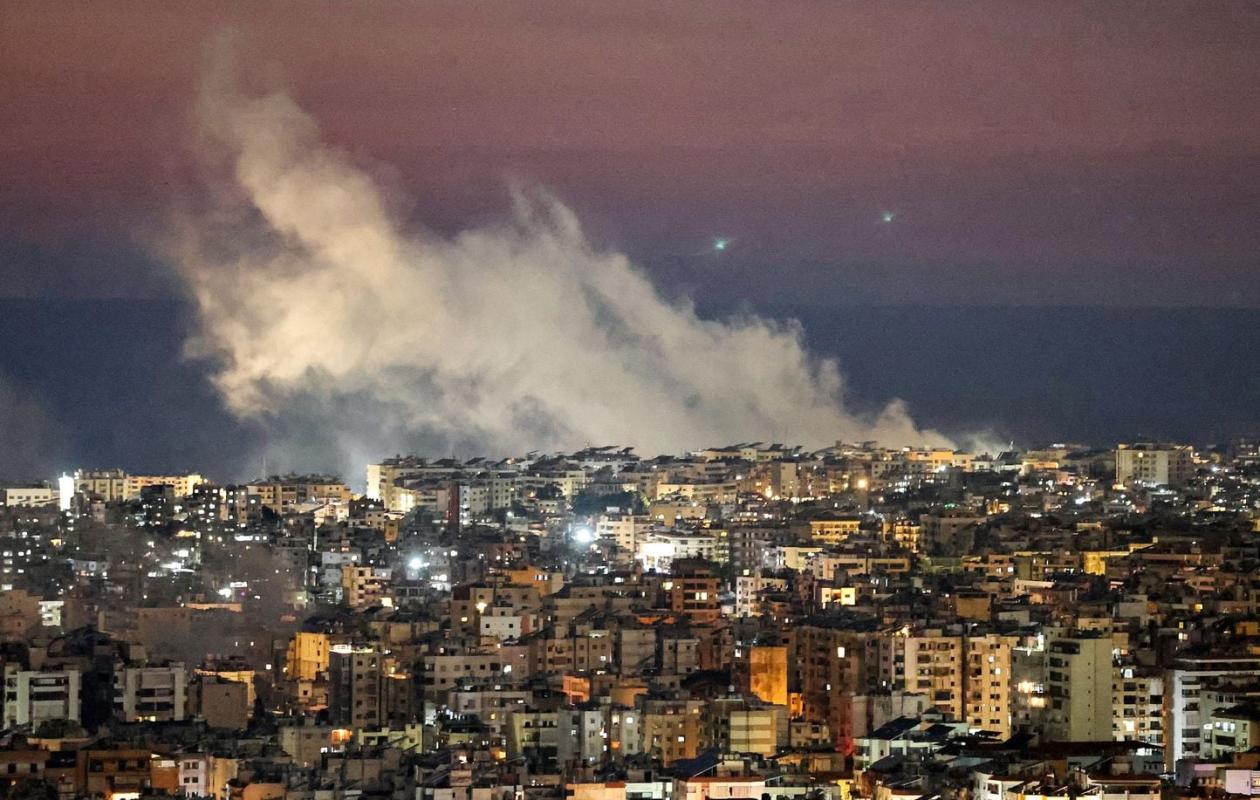
Etats-Unis et Iran échangent des frappes
Iran claimed on Saturday to have retaliated, by attacking American targets in the Gulf, against strikes carried out the previous day by the United States against its territory.
The US strikes, the first known since the signing of the memorandum of understanding between Washington and Tehran on June 17, were launched following the attack on a commercial vessel that had crossed the Strait of Hormuz the previous day and which the United States attributed to Iran.
"If the aggression is repeated, our response will be broader than that," warned the Revolutionary Guards, Iran's ideological army, as quoted by state television IRIB.
For its part, the US military announced it had "targeted missile and drone storage facilities and coastal radar sites in Iran" in response to "the previous day's attack on a commercial vessel transiting the Strait of Hormuz." It subsequently released a video of its strike against Iran on X.
Iranian state television reported on Friday evening an explosion and a projectile impact on a dock in the southern city of Sirik, as well as several warning shots aimed at what Tehran calls "ships in violation" in the Strait of Hormuz.
"The port of Sirik suffered no damage during the enemy attack," a port official in the Hormozgan region later told the Iranian news agency Mehr.
US Vice President JD Vance wrote on X that Iran had "signed a ceasefire agreement. We have respected it. If they have disagreements about the implementation of the memorandum of understanding, they can pick up the phone. But violence will only breed violence."
Earlier in the day, Donald Trump called the cargo ship attack a "stupid violation" of the ceasefire, as the two warring parties entered a sixty-day phase of negotiations to reach a final agreement.
"You'll see," he replied evasively to questions about a possible American military response.
Ships nevertheless continued to cross the Strait of Hormuz on Friday, which Iran reopened following the memorandum of understanding between Washington and Tehran.
And several boats took a route not approved by Tehran, even though the Iranian maritime authority had warned that "any passage outside the defined framework would not benefit from the guarantees of safe passage".
On Friday, 29 commercial vessels transited the Strait of Gibraltar, according to data from the Kpler tracking website in the late afternoon. Seventeen followed a route along the coast of Oman. After a peak of 57 vessels on Wednesday, 42 had passed through on Thursday.
Suspended after the cargo ship attack, the evacuation process for some 600 ships, with 11,000 sailors on board, stranded in the Gulf since the start of the war, will be restarted as soon as "additional confirmations" are obtained on security guarantees, explained the International Maritime Organization (IMO).
Since its launch on Tuesday, some 2,500 sailors and 115 ships have been evacuated so far, according to the IMO.
On the other front, Washington on Friday published the text of a framework agreement under the auspices of the United States, between Israel and Lebanon, with the stated objective of "lasting peace and security" between the two countries, technically in a state of war for decades.
In a video released just after the announcement, Benjamin Netanyahu appeared to unveil the successes achieved on the Israeli side, starting with the maintenance of its army in southern Lebanon "as long as Hezbollah is not disarmed", despite the establishment of two "pilot zones" returned to the control of the Lebanese army.
He also warned that the displaced civilian population would not be able to return.
"Iran is trying to force us to withdraw from southern Lebanon through pressure, but in reality, Israel, Lebanon and the United States are responding to them: it's none of your business," he said.
The agreement is "a first step" towards restoring Lebanon's full sovereignty without "occupation", "subordination" or "tutelage", reacted its president Joseph Aoun.
Both the Lebanese embassy in Washington and US Secretary of State Marco Rubio have raised the issue of Hezbollah disarmament in their communications.
"The Lebanese authorities will be unable to impose" its implementation, unless "they head, with American support, towards a civil war," reacted Hassan Fadlallah, MP for Hezbollah, the armed pro-Iranian movement with a strong presence in southern Lebanon, which has always rejected these direct negotiations.
The MP also described the agreement as "an attempt to disrupt" the one concluded on June 17 between Washington and Tehran to permanently end the war in the Middle East, including in Lebanon - at the insistence of Iran, which does not want to separate the two issues.
Lebanon was drawn into the conflict in early March when Hezbollah targeted Israel in support of its Iranian patron, following the US-Israeli offensive on Tehran on February 28.















Commentaires (2)
Participer à la Discussion
Règles de la communauté :
💡 Astuce : Utilisez des emojis depuis votre téléphone ou le module emoji ci-dessous. Cliquez sur GIF pour ajouter un GIF animé. Collez un lien X/Twitter, TikTok ou Instagram pour l'afficher automatiquement.