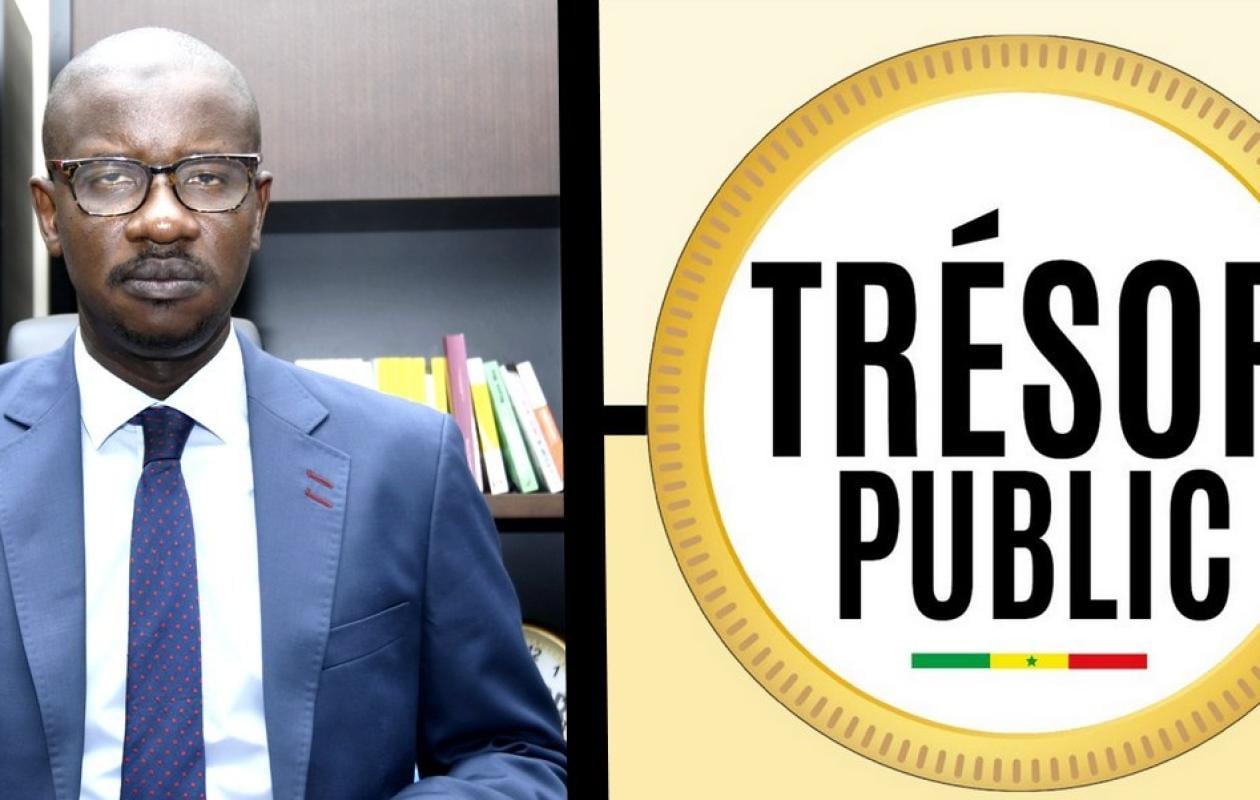
Audition sur les TRS : Le DG du Trésor révèle un trou de 1 000 milliards de FCFA causé par le mis-reporting
Faced with a financial shortfall of 1 trillion CFA francs following the misreporting of 2025 and the subsequent closure of international markets, the Senegalese government had to make urgent decisions. During a hearing before the Parliamentary Commission of Inquiry, the Director General of Public Accounting and the Treasury (DGCPT), Amadou Tidiane Gaye, defended the use of Total Return Swap (TRS) transactions. According to him, these arrangements, with their attractive 7% interest rate, prevented the risk of systemic collapse of the local banking sector while simultaneously balancing the national budget .
Why did the State of Senegal prioritize Total Return Swap (TRS) transactions in 2025 instead of relying on the usual issuance of public securities on the regional market? And were these complex arrangements required to undergo prior review by the National Public Debt Committee (CNDP)? Responding to members of the Parliamentary Commission of Inquiry, the Director General of Public Accounting and the Treasury (DGCPT), Amadou Tidiane Gaye, provided a technical and macroeconomic explanation of the executive branch's financial decisions.
Regarding the institutional framework, the Treasury official reframed the debate by suggesting a focus on "debt categories" rather than isolated financial instruments. According to him, the National Debt Planning Commission (CNDP) primarily validates the medium-term debt strategy and the annual financing plan. Once the overall volume of issuances on the domestic market is approved, the detailed technical structuring, such as TCNs or TRSs, is more a matter of ad hoc expertise than a regulatory obstacle.
Misreporting and the financial impasse of 1 trillion FCFA
To justify these controversial choices, Amadou Tidiane Gaye referred to the financial shock suffered by Senegal in 2025. The revelation of misreporting abruptly froze negotiations for a new program with the International Monetary Fund (IMF), depriving the country of at least 300 billion CFA francs in direct budgetary support. This domino effect closed access to international bond markets, creating a colossal financing gap estimated at 1 trillion CFA francs. "A gap of 1 trillion CFA francs had to be filled, or we risked having difficulty making ends meet for the year," the Treasury Minister told the commissioners.
Avoiding the risk of strangulation of the local banking sector
When asked why the government didn't simply tap the WAEMU regional financial market more extensively, Amadou Tidiane Gaye cited the need to protect the national economy. Local banks were already heavily exposed to Senegalese sovereign debt, and further borrowing could have dried up credit to the private sector and triggered a systemic banking crisis. "We were certain that if we increased the amounts planned to be raised on the domestic market, we would put the banking system in difficulty," he warned.
Rates of 7% versus international requirements of 15%
Faced with international markets demanding prohibitive returns of around 15%, the Ministry of Finance opted for a proposal from private lenders offering resources at an average effective rate of 7%, subject to additional guarantees. "What better alternative could we have had than this offer?" asked Amadou Tidiane Gaye.
However, the inquiry commission intends to go beyond the apparent interest rate argument to analyze all structuring costs, commissions, and tied-up guarantees. The upcoming review of supporting bank documents and accounting records will determine whether control procedures were rigorously followed in light of the exceptional financial context of 2025.
















Commentaires (29)
La déclaration sur le misreporting a entraîné un déficit budgétaire de 1000 milliards.
Pourquoi mentir sur le titre.
Un mouton, un etalon ou jument avec œillères eux se contentent du titre pour poster des inepties.
C'est pas de l'argent cash mais le manque à gagner.
Tout ça à cause des mensonges de Sonko.
1) Date de mise à disposition des fonds.
2) Autorité étatique contractante
3 )partenaire financier ayant accordé le prêt
4) Objet du financement.
5) Structure ( trésor, banque, entreprise) ayant reçu en premier les fonds.
Voilà quelques questions basiques qui auraient permis au citoyen lamda de comprendre un peu plus de quoi on parle.
Ce travail , un agent du Ministère des Finances peut le faire en une demi journée et nous éviter ces discours qui nous enfoncent tout le temps dans les nuages.
Quel pays de pervers!!!!Quel pays de fous !!! Les voleurs ,pilleurs de la République (Certains sont en cavale ou en exil )sont absous ,blanchis .Les lanceurs d'alerte sont vilipendés ,les personnes honnêtes sont désignées à la vindicte et clouées au pilori.
C'est l'inversion des valeurs..
Tu aurais du nous dispenser de ces élucubrations sans tête ni queue.
Participer à la Discussion
Règles de la communauté
💡 Astuce : Utilisez des emojis depuis votre téléphone ou le module emoji ci-dessous. Cliquez sur GIF pour ajouter un GIF animé. Collez un lien X/Twitter, TikTok ou Instagram pour l'afficher automatiquement.
Se connecter
Commentez avec votre profil, votre photo, et soyez averti des réponses.