Dans les coulisses du pouvoir : Ce que révèlent vraiment les communiqués du Conseil des ministres
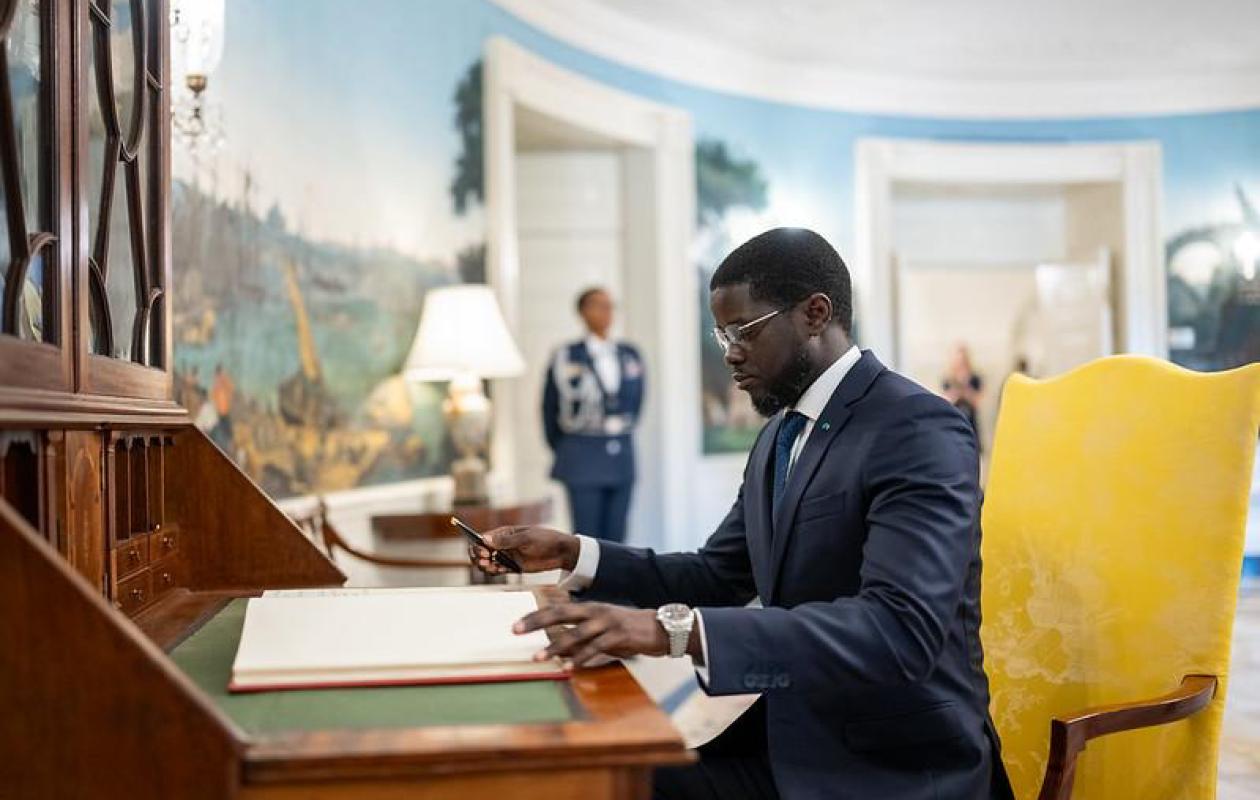
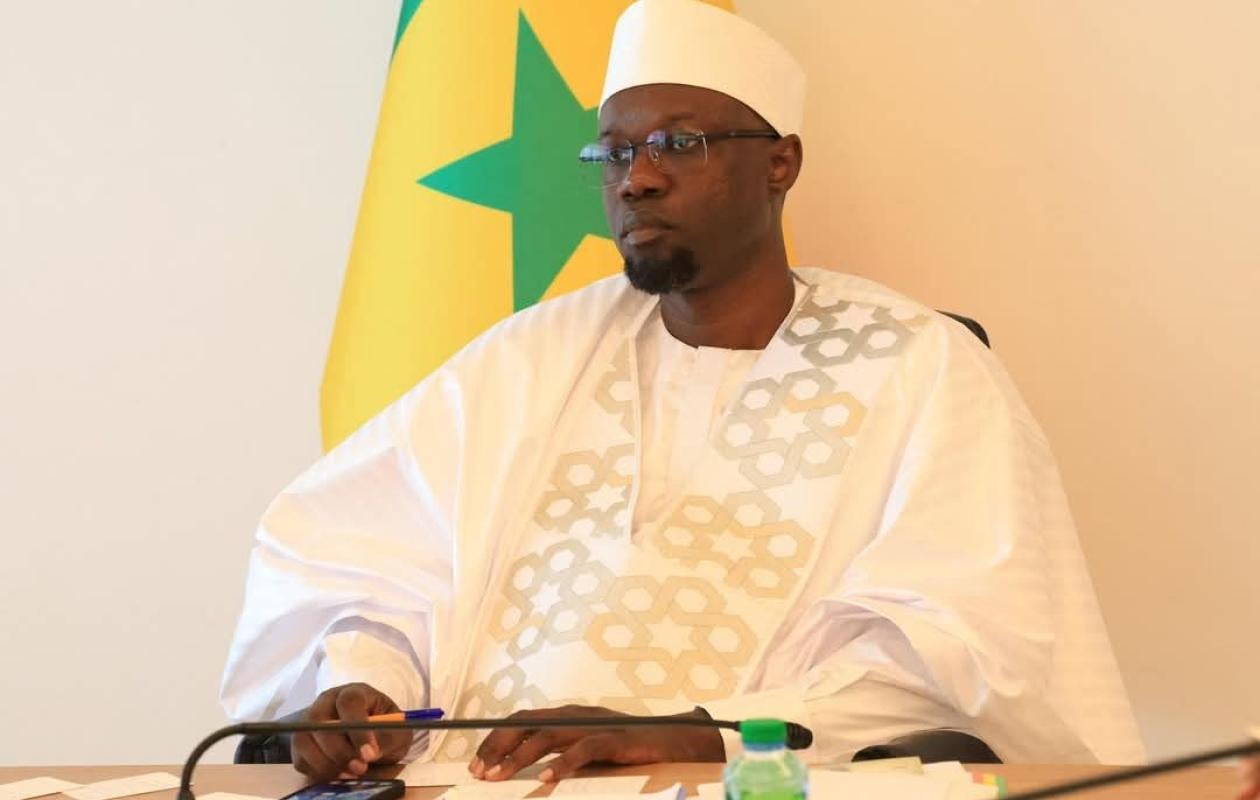
Two draft decrees on private security, a series of appointments within the administration, instructions on the start of the school year, universities, scientific research, and a section devoted to the 2026-2027 agricultural campaign. The meeting of July 29, 2026, held at the Presidential Palace under the chairmanship of Bassirou Diomaye Faye, clearly illustrates what transpires during a Senegalese Council of Ministers meeting. Not everything discussed has the same legal weight, and not everything announced is immediately implemented, but this meeting is one of the forums where presidential directives, government work, the drafting of legislation, and certain appointments converge before taking effect within the administration.
The Council of Ministers is first and foremost a meeting of the Government under the authority of the Head of State. The Senegalese Constitution stipulates that the President of the Republic chairs the Council of Ministers, while the Prime Minister directs and coordinates government action. Ministers therefore participate with their files, draft legislation, and communications, but the meeting is structured within an executive framework where the responsibilities of the President and the Prime Minister remain distinct.
Since June 2026, its schedule has been modified. During the Council meeting of June 5, held after the formation of the government led by Ahmadou Al Aminou Mohamed Lo, the President of the Republic announced that the Council of Ministers would henceforth meet every two weeks. Between these sessions, inter-ministerial councils and meetings are to be held, dedicated to the framework, monitoring, and evaluation of public policies, under the direction of the Prime Minister. The meetings of June 17, July 1, July 16, and July 29 allowed for a return to this new schedule, even though the meeting of July 16 was exceptionally held on a Thursday.
This structure highlights a difference that official statements don't always make immediately apparent. Public policy isn't necessarily conceived during the few hours spent around the Council table. Much of the work has already been done within ministries, between different government departments, and during arbitrations conducted under the Prime Minister's authority. The Council then intervenes at a level where certain texts are examined and adopted, where guidelines are established, and where the Head of State can give instructions to members of the Government.
The meeting of July 29th provides several examples. The Minister of Agriculture, Food Sovereignty, and Livestock presented a report on the 2026-2027 agricultural campaign, while the Minister of the Environment and Ecological Transition reported on the preparations for the national reforestation campaign, scheduled to launch on August 9th. These reports allow the Government to provide updates on the implementation of a policy or the preparation of a national operation, without in themselves constituting new legislation.
The Council also examined and adopted two draft decrees. The first sets out the conditions for carrying out private security activities, and the second, the rules for the organization and operation of the Private Security Activities Regulatory Council. The wording used in the press release is significant here. A draft decree examined and adopted by the Council of Ministers is part of the regulatory process, but the press release from the meeting should not be confused with the decree itself. To find out the legally applicable provisions, their effective date, or the exact obligations imposed on the stakeholders involved, one must refer to the text signed and published according to the established procedures.
The same reasoning applies to bills, with one major difference. Their adoption by the Council of Ministers does not mean that the law is passed. On June 17, 2026, the Government examined and adopted in the Council the supplementary budget bill for 2026, as well as the multi-year budget and economic planning document covering 2027 to 2029. For the bill, the Council's review constituted a governmental step prior to the parliamentary procedure. The power to pass the law then rests with the National Assembly, according to the rules established by the Constitution.
This distinction is fundamental for correctly interpreting Wednesday's press releases. "The Council adopted a bill" and "the National Assembly adopted a law" describe two different institutional moments. In the first case, the executive branch finalizes the text it wishes to submit to Parliament. In the second, the members of Parliament have voted within the framework of the legislative procedure. Between these two stages, committee review, amendments, and debates in plenary session may occur.
Appointments also feature prominently in these meetings. On July 29, Mamadou Moustapha Dia, an inspector of taxes and state property, was appointed Director of State Property, replacing Abdou Gning. Other appointments were announced in several government departments. Here again, the press release makes the decision public, but the appointments are based on the powers granted to the various authorities by law. The Constitution, in particular, gives the President of the Republic the power to appoint civil servants, while certain powers can be delegated under the conditions it stipulates.
The minutes of a Council meeting also allow us to follow the political chain of command. On July 29, Bassirou Diomaye Faye asked the Government to make the necessary logistical and security arrangements for the 132nd Magal of Touba, scheduled for August 2, with instructions specifically addressing traffic and road safety. On other matters, the Head of State can directly contact the Prime Minister or a minister and set deadlines. These instructions provide direction to the administration, but their implementation may subsequently require a decree, an order, a circular, an administrative decision, budgetary allocations, or a combination of these instruments, depending on the issue at hand.
This is also why a press release from the Council of Ministers deserves to be read over time. A presidential directive may be announced on a Wednesday, then reappear weeks or months later in the form of a bill, a decree, a budget program, or an administrative measure. Comparing successive reports thus makes it possible to follow the transition from a political direction to its implementation and, sometimes, to identify issues that are progressing more slowly than expected.
The Council should not be confused with interministerial meetings. Since the presidential decision of June 5, 2026, these meetings are intended to fill the gaps between the Council meetings held every two weeks. Chaired by the Prime Minister, they can bring together several ministries to discuss an issue requiring joint decision-making. This structure allows the Council of Ministers to be reserved for a different level of decision-making, after some of the government coordination work has been completed.
The press release issued after each session thus brings together actions of very different natures. A presidential statement sets out guidelines, a ministerial statement reports on a matter, the examination of a bill prepares its path to the National Assembly, the adoption of a draft decree contributes to the exercise of regulatory power, and individual measures concern, in particular, appointments. Placing them under the same institutional heading does not give them the same status or the same consequences.
This is undoubtedly the best way to interpret this meeting of the Senegalese executive branch. The Council of Ministers is not the place where all public decisions are conceived, nor does it transform every announcement into an immediately applicable rule. Rather, it serves as a point of convergence between the decisions prepared beforehand, the directives of the Head of State, the coordination led by the Prime Minister, and the files handled by the ministries. The communiqué of July 29, 2026, with its two draft decrees, sectoral communications, and appointments, thus provides a snapshot of government operations at a given moment. To understand the actual impact of these decisions, one must then follow their path through the legal texts, the budget, and the administration.

















Commentaires (30)
Rien à espérer d'un pays dont les membres du conseil constiutionnel se soigent à l'hopital americain de Paris et s'en vantent même devant les cameras.
Après, j ai pris le nom de l autre pour me faire élire à sa place, en disant que lui c est moi.
2 ans après je le chasse avec tous les siens et je tombe le masque en disant que lui c est lui moi c est moi et en disant à 54% des électeurs "mbeulé, c est moi que vous avez élu et je ne suis pas lui contrairement à ce que vous avez bêtement cru".
C est quelle affaire ça ?
Meta a aussi accepté de procéder à des changements significatifs dans le calibrage de ses produits pour les jeunes. L’accord prévoit notamment la limitation par défaut, pour les moins de 18 ans, à deux heures par jour sur Instagram et Facebook cumulés, ainsi que le blocage de l’accès aux deux applications, hors messagerie, de minuit à 6 heures.
Des images diffusées par la police népalaise ont montré les eaux de la crue déferlant dans une rivière et emportant des maisons sur leur passage.
Des images diffusées par la police népalaise ont montré les eaux de la crue déferlant dans une rivière et emportant des maisons sur leur passage.
Participer à la Discussion
Règles de la communauté
💡 Astuce : Utilisez des emojis depuis votre téléphone ou le module emoji ci-dessous. Cliquez sur GIF pour ajouter un GIF animé. Collez un lien X/Twitter, TikTok ou Instagram pour l'afficher automatiquement.
Se connecter
Commentez avec votre profil, votre photo, et soyez averti des réponses.