
ÉLECTIONS TERRITORIALES - « ÇA SENT LE REPORT » : MOUNDIAYE CISSÉ MET LE CALENDRIER LÉGAL SOUS PRESSION
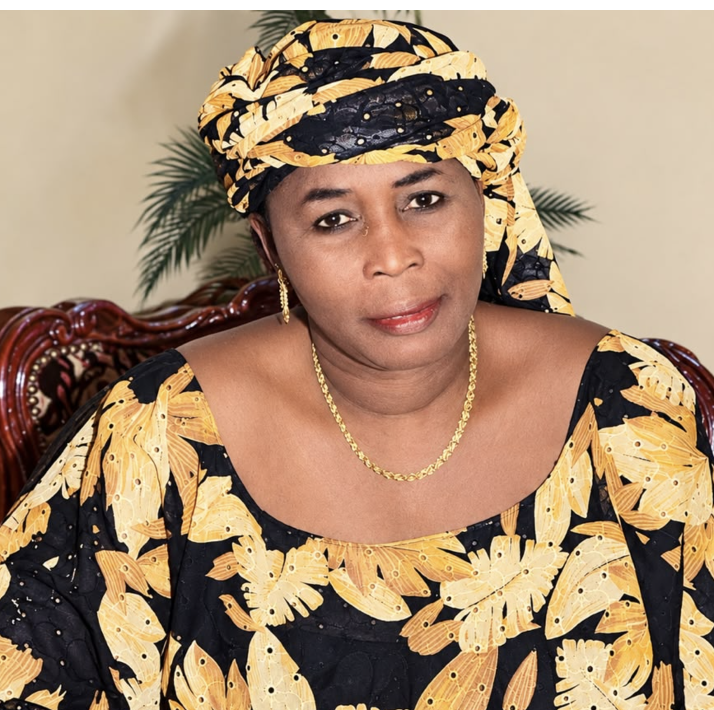
Is January 17, 2027, a realistic date for the upcoming territorial elections? While Prime Minister Ahmadou Al Aminou Lo announced before the National Assembly that the local elections would be held on that date, questions remain about whether the legal deadlines will be met. A guest on the program "En Vérité" on Radio Senegal, Moundiaye Cissé, executive director of the NGO 3D, warned: "It smells like a postponement."
The countdown has begun, but the electoral calendar already seems to be under strain. Four months before the announced vote, several deadlines stipulated by the Electoral Code have passed or are dangerously close, to the point of creating a scenario that political actors and civil society dread: that of a postponement of the territorial elections.
However, the government has made its decision. During his general policy statement, Prime Minister Ahmadou Al Aminou Lo announced that the local elections will be held on January 17, 2027, putting an end to the uncertainties that had surrounded the date of the vote until then.
But for Moundiaye Cissé, this announcement is not enough to resolve the issue. The executive director of the NGO 3D believes the problem now lies in the ability to actually comply with all the steps stipulated by law. "It smells like a postponement," he says, referring to the constraints surrounding the organization of the election.
The civil society representative points out that the electoral process is not simply a matter of setting a date. It requires a series of preparatory steps, some of which are subject to specific deadlines. He cites, in particular, the 150-day period stipulated for certain electoral operations. However, this deadline has already passed.
This situation is reminiscent of the warnings issued in recent weeks by several stakeholders. The Pastef party, in particular, denounced the lack of certain preparatory measures and argued that the 150-day deadline for setting the electoral deposit had already passed.
The Electoral Code at the heart of the power struggle
Moundiaye Cissé also relies on Articles L.236 and L.269 of the Electoral Code relating to the renewal of departmental and municipal councils. These provisions stipulate that elections must be held within thirty days preceding the expiration of the fifth year of the term.
It is precisely this provision that has fueled the debate around January 17, 2027, presented by several actors as the deadline for holding the election.
However, there is another interpretation regarding the length of the term. Some believe the term ends in January 2027, while others argue that it covers the entire calendar year of 2027.
Moundiaye Cissé supports this second interpretation. A position that could, in theory, open up more room for maneuver. But it does not resolve the question of the time needed to prepare for the election.
Because if the essential operations cannot be carried out on time, could the date of January 17th announced by the Prime Minister be maintained? This is the crux of the warning issued by the executive director of the NGO 3D.
"Circumstances demand it": is there a possibility of postponement?
Moundiaye Cissé also points out that the Electoral Code provides for an exception when "circumstances require it." In other words, a postponement of the election can be legally considered in certain circumstances.
But for him, such a decision could not be taken lightly. The authorities should clearly explain the reasons that would justify a possible postponement, especially when it concerns such an important election.
The issue therefore goes beyond the simple question of an administrative timetable. It directly concerns respect for electoral rules and citizens' trust in the democratic process.
Especially since the concerns are not new. Last August, the Front for the Defense of Democracy and the Republic (FDR) was already warning about a timetable that it considered "largely compromised", fearing a "de facto postponement" of the election and a possible extension of the mandates of the territorial elected officials.
The worrying precedent
Moundiaye Cissé rightly emphasizes the need to avoid trivializing election postponements. He points out that several local and national elections have already been postponed in the past and that, in those situations, the authorities had to provide public justifications.
For him, any postponement should therefore not be an opaque or merely administrative decision. It should be explained, acknowledged, and legally regulated.
Behind this battle of dates lies a much more sensitive question: who decides on the electoral calendar and how far can a deadline announced as legal be postponed?
This is why the head of the NGO 3D is advocating for the long-term security of the electoral calendar. He proposes, in particular, introducing "eternity clauses" into the legal framework, similar to certain provisions that protect the limited nature of presidential terms. The objective: to prevent elections from being easily postponed according to political circumstances.
Meanwhile, January 17, 2027 remains the date officially announced by the government. But according to Moundiaye Cissé, the real countdown may not only concern election day: it primarily concerns the authorities' ability to ensure that the entire process leading up to it is completed on time.















Commentaires (8)
Rien ne leur est plus désagréable qu’une perturbation de l’agenda électoral, c’est une perte de financement pour eux.
Un œil sur la scène publique, un autre sur le portefeuille.
Participer à la Discussion
Règles de la communauté
💡 Astuce : Utilisez des emojis depuis votre téléphone ou le module emoji ci-dessous. Cliquez sur GIF pour ajouter un GIF animé. Collez un lien X/Twitter, TikTok ou Instagram pour l'afficher automatiquement.
Se connecter
Commentez avec votre profil, votre photo, et soyez averti des réponses.