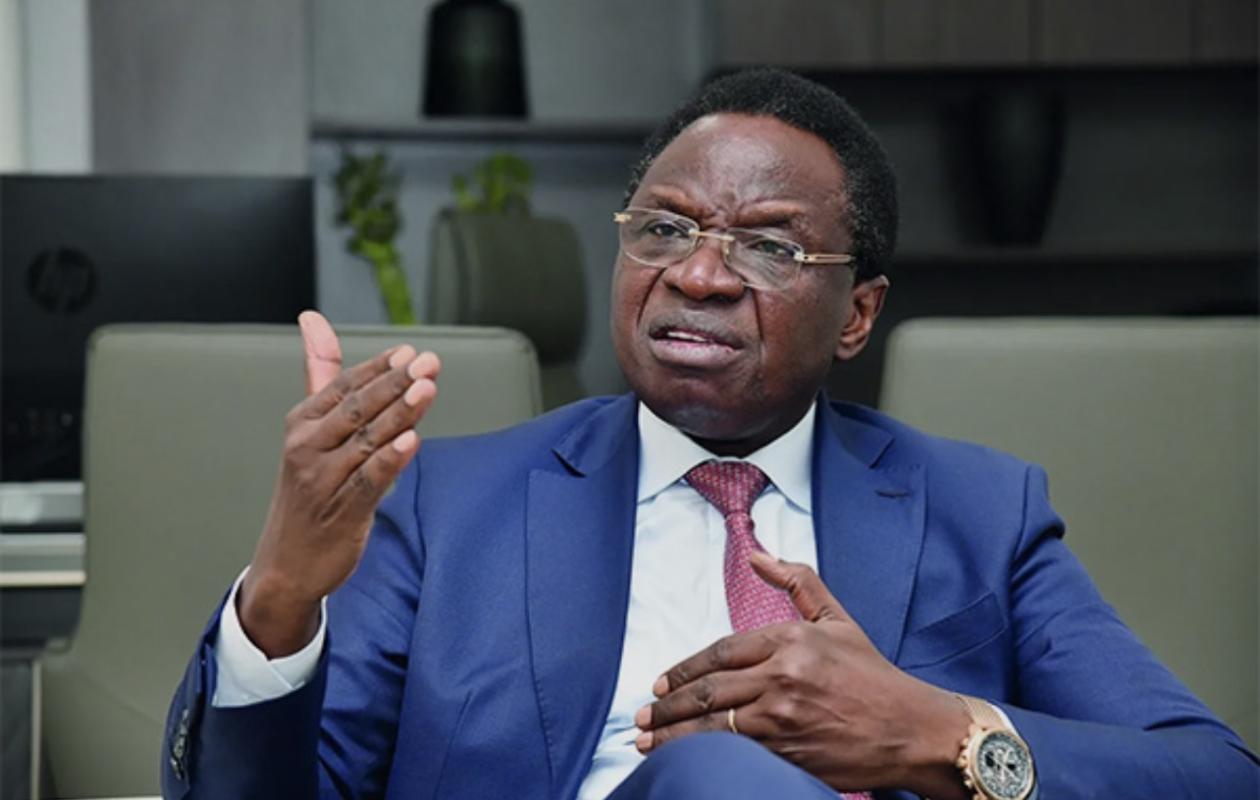
Industrialisation : Le pari de Serigne Guèye Diop pour dupliquer le « modèle Sandiara » dans tout le pays
From the Sandiara laboratory to the network covering all 45 departments of Senegal. A guest on iRadio's Sunday Jury program, the Minister of Industry and Trade, Serigne Guèye Diop, details his roadmap for decentralizing the national production system. Based on the creation of special economic zones, the protection of local sectors, and the local processing of raw materials—such as leather and food products—the government strategy aims to break with the hyper-concentration of power in Dakar and build genuine economic sovereignty.
From municipal experience to national ambition, Serigne Guèye Diop intends to make Sandiara the testing ground for a new industrial policy. Drawing on his experience within the Nestlé group and his time as mayor of this town on the Petite-Côte, the Minister of Industry and Trade is advocating a strategy based on the decentralization of production units, the local processing of raw materials, and job creation within local communities. His stated ambition is to establish industrialization as the engine of economic development, extending far beyond the Dakar region. Having demonstrated that a town in the interior of Senegal could become an industrial hub, the former mayor now intends to bring this conviction to the national level. The goal is to replicate the Sandiara model in the country's various departments: attracting investors, establishing production units, developing local resources, and offering sustainable employment opportunities to the population without forcing them into rural exodus.
Invited to the Sunday Jury program on iRadio, the minister discussed the foundations of this approach, which he presents as the cornerstone of his industrial vision for Senegal. This project is informed by his international experience, particularly within the multinational Nestlé, where he held senior positions in research and development for the African continent. His return to Senegal in 2015 stemmed from a clear desire: to put his expertise at the service of his country. But rather than immediately embarking on a national political career, he chose to establish roots in his native region, making Sandiara his first testing ground.
Sandiara , or the demonstration that a rural community can become an industrial hub
For Serigne Guèye Diop, local development cannot be reduced to the construction of administrative infrastructure or the improvement of living conditions. It must, above all, be based on a productive economy capable of creating wealth and sustainable jobs. It is around this paradigm that he designed his "Emerging Sandiara" program, driven by a central conviction: industry should no longer be systematically concentrated in major urban centers. "I told myself that I was going to build Sandiara around the function of work. We don't need to go to Dakar," he explains. This approach has resulted in the development of an industrial zone of approximately 100 hectares. The minister reports the establishment of some twenty factories involved in battery manufacturing, ironworking, poultry farming, and food processing, generating between 2,500 and 3,000 direct jobs. Adding to this dynamic is the development of agro-industrial activities, exemplified by fruit production and off-season crops such as melons. However, transforming Sandiara into an industrial destination has not been without its challenges. It was necessary to convince investors to invest in a region that initially lacked any major electrical connections or suitable road infrastructure. The minister specifically mentions his meeting with a Moroccan investor willing to commit 10 billion CFA francs to a site then covered only in baobab trees: "He told me: 'You're the only one who would get me to invest 10 billion in an industrial zone where there are nothing but baobabs.'" For the former mayor, the attractiveness of a region depends not only on its natural resources, but also on the quality of its development and the credibility of the commitments made by the authorities.
From 100 hectares to 45 hubs: Changing the scale of the national model
Now at the helm of the Ministry of Industry and Trade, Serigne Guèye Diop aims to scale up the sector by developing a network of 45 industrial hubs and zones spread across the country. This approach seeks to break with the historical concentration of infrastructure around the capital and to better distribute economic opportunities. The government strategy distinguishes between traditional industrial zones, agro-industrial parks, and special economic zones (SEZs), the latter benefiting from an incentive-based tax and customs regime. He cites Diamniadio, Sandiara, and Diass as examples of the country's three operational SEZs, while other agro-industrial platforms are being developed in Kolda, Fatick, Casamance, and the peanut basin. To attract foreign investment, the minister is leveraging Senegal's geostrategic position and its access to the markets of ECOWAS, WAEMU, and the African Continental Free Trade Area (AfCFTA). Exploratory missions have already taken him to the United Arab Emirates, Kuwait, Bahrain and Turkey, before further steps planned in Europe (France, Germany, England, Spain) in order to establish Senegal as a regional industrial platform.
Processing locally rather than exporting raw materials
Beyond its territorial network, the model advocated rests on one imperative: the local processing of resources to capture added value at the national level. This approach translates into measures to protect local sectors, such as taxes on imported batteries or temporary restrictions on imports of bananas, onions, carrots, and potatoes during national harvest periods. The ministry also intends to structure the recycling and processing of raw materials previously exported unprocessed, such as scrap metal, used lead-acid batteries, and recovered aluminum, in order to supply the local industrial base. In the minister's view, protecting the domestic market is a key factor enabling national companies to achieve the necessary competitiveness before capturing export market share.
Leather , a new illustration of a value chain rooted in local areas
Among the strategic sectors is leather and leather goods. Serigne Guèye Diop believes that Senegal has untapped potential, drawing on the Sandiara livestock market, the significant volume of slaughter during religious events in Touba, and the artisanal expertise of Thiès and Ngaye Mékhé. His ambition is to build an integrated industrial chain, from tanning hides to manufacturing leather goods, footwear, and automotive seats. Discussions have begun with a Turkish industrial group, and a fact-finding mission is underway to identify suitable sites, particularly in the agro-pastoral zone between Touba and Linguère, as close as possible to livestock farming areas.
From municipal experience to the demand for economic sovereignty
Through the Sandiara model, Serigne Guèye Diop advocates a territorialized approach to industrialization where the state creates the conditions enabling each region to leverage its unique strengths. This vision integrates land development, infrastructure, financial attractiveness, protection of key sectors, and vocational training. While Sandiara's success demonstrates feasibility at the local level, scaling this up to all 45 departments presents a challenge of a completely different magnitude. The success of this national policy of economic sovereignty will be measured by the government's ability to mobilize the necessary funding, guarantee access to competitive energy, and train a skilled workforce across the entire country.
















Commentaires (2)
Sandjara, c'est la GOANA et la coopération espagnole. Et ce sera très difficile à cacher aux sénégalais si on leur rappelle juste l'arrivée d'une grande variétés de melons espagnoles.
Participer à la Discussion
Règles de la communauté
💡 Astuce : Utilisez des emojis depuis votre téléphone ou le module emoji ci-dessous. Cliquez sur GIF pour ajouter un GIF animé. Collez un lien X/Twitter, TikTok ou Instagram pour l'afficher automatiquement.
Se connecter
Commentez avec votre profil, votre photo, et soyez averti des réponses.