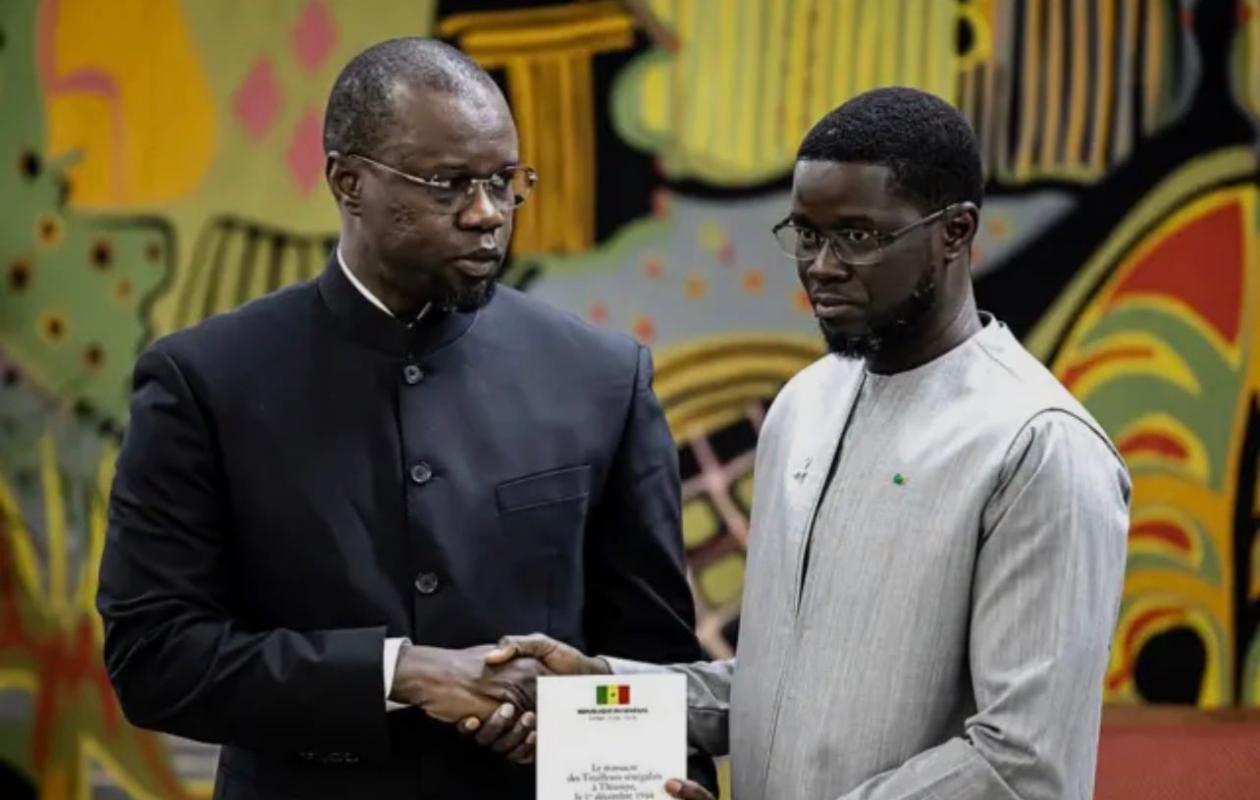
« Le président a été abandonné par ses compagnons » : Abdou Aziz Mbodj sans détour sur la rupture Diomaye-Sonko
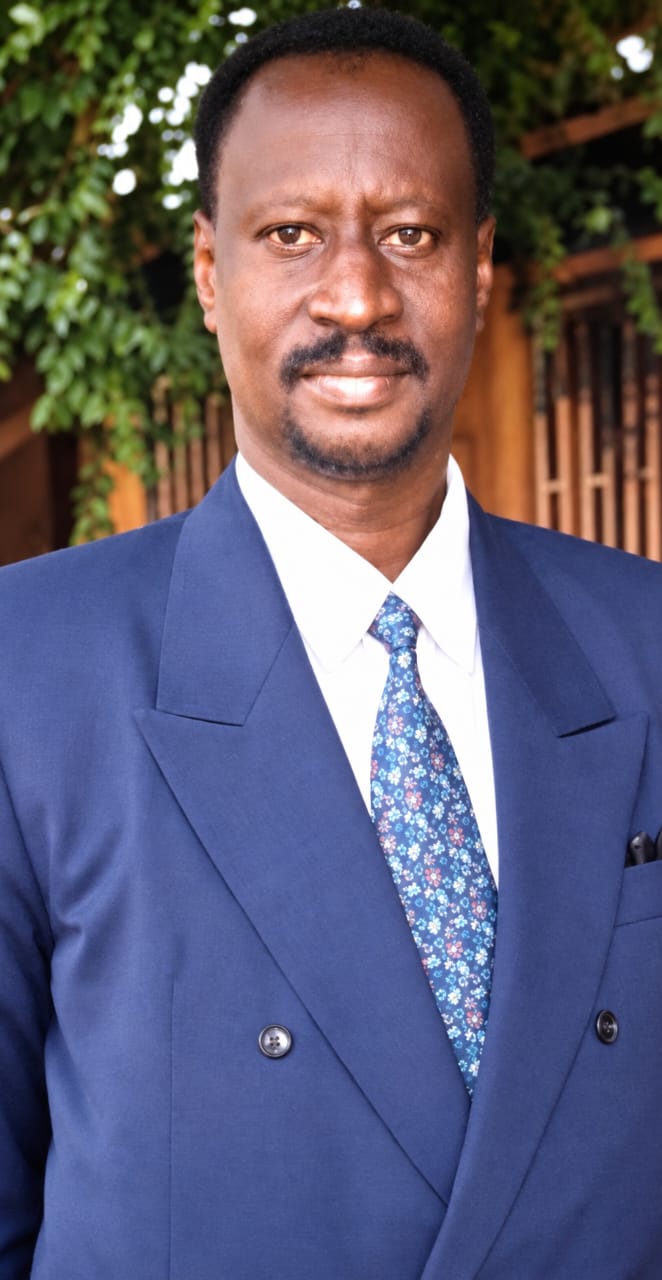
According to Professor Abdou Aziz Mbodj, the conflict at the top of the Senegalese state was not simply a divergence of political visions. Invited to speak on iRadio to discuss the tensions between President Bassirou Diomaye Faye and his former Prime Minister Ousmane Sonko, the academic believes it was rather a power struggle, during which the head of state was weakened and forced out. "There were genuine power struggles, issues of domination, and issues of appropriation," asserts Professor Abdou Aziz Mbodj.
In his view, the central issue was that of loyalty owed to the President of the Republic, a loyalty he directly links to the Constitution. The academic cites, in particular, the episode of the Prime Minister's refusal to countersign a presidential decree. For him, this gesture reflected a deeper institutional problem. The Prime Minister's countersignature, he explains, does not constitute a power to validate the presidential decision, but rather engages his responsibility for its implementation.
But it is above all the political behavior surrounding the president that concerns the professor. He cites the boycott of Bassirou Diomaye Faye's economic tour by officials from his own political camp. "What we witnessed in that country was an attempt to weaken the president, an attempt to humiliate him and force him to resign," he maintains. According to his analysis, a political force sought to seize power even before the presidential term had ended.
Professor Abdou Aziz Mbodj believes that the rift between the two heads of the executive branch cannot be explained solely by the arguments put forward publicly. He questions, in particular, the accusations related to asset declarations, transparency, and the president's alleged intentions regarding a constitutional amendment. For him, these explanations fail to grasp the heart of the crisis. "The president of the Republic is therefore leading, directing the project, and has never deviated from it. But in truth, it is his associates who have abandoned him for reasons of power," he asserts.
This interpretation also explains his silence during part of the crisis. The professor says he chose to withdraw from public debates because he believed the protagonists were bound by a shared political history and a sufficiently strong connection to eventually allow them to resume dialogue. His objective, he says, was therefore not to inflame tensions, but to foster reconciliation and allow the government to operate "in unison."
With Ousmane Sonko's departure from the Prime Minister's office, Abdou Aziz Mbodj believes the balance of power has finally been clarified. He argues that the president could not remain indefinitely in a situation where his authority was, in his view, being challenged by a segment of his own political family. The academic thus believes that the decision to part ways with his Prime Minister was a major one for Bassirou Diomaye Faye. "The choice to free oneself from the Prime Minister was a fundamental one," he states.
He emphasizes that, according to his interpretation of events, the president did not choose to break with PASTEF; rather, it was PASTEF that chose to withdraw from the government and position itself in the opposition. For Abdou Aziz Mbodj, this new situation then required the president to build a political force capable of implementing his agenda and defending his public policies on the ground.
The interview, however, goes beyond the conflict between Diomaye Faye and Ousmane Sonko. Professor Abdou Aziz Mbodj also shares his perspective on how a political party should function. In his view, a party that aspires to govern the country must itself respect the democratic principles it intends to apply to the state. "The political party must operate as a democratic framework," he insists.
He emphasizes, in particular, open debate, the periodic renewal of leadership, transparency, and the pluralism of ideas. "If a political party functions like a monarchy, if the leader comes to power, he will reproduce the same practices," he warns. From this perspective, the professor sees the new political formation surrounding the president as a space designed to welcome diverse profiles and support presidential action. He advocates for a "pluralistic" party, organized and established throughout Senegal.
Abdou Aziz Mbodj finally acknowledges that the crisis was all the more difficult because the protagonists shared a long history and strong personal relationships. But, according to him, exercising power requires distinguishing personal relationships from institutional responsibility. "We distinguish between feelings and responsibility," he summarizes.
The president may maintain ties of friendship or close relationship with his former political allies, but when he believes the interests of the state are at stake, he must take responsibility. According to the academic, this is precisely what Bassirou Diomaye Faye did by ending his collaboration with Ousmane Sonko.
Ultimately, Professor Abdou Aziz Mbodj offers a particularly harsh interpretation of the crisis at the highest levels of government: behind the political and institutional disagreements, he sees a struggle for control of power, which he claims led a faction of the former presidential camp to seek to weaken the head of state. This serious political accusation places the rift between Diomaye Faye and Ousmane Sonko at the heart of a broader debate on loyalty, presidential authority, and internal democracy within political parties.




















Commentaires (34)
En effet il enfonce le président, incidemment.
Que dit le wolof ? Kou nieup touffli nga Tony.
Comment des centaines de milliers de gens peuvent "abandonner" un seul individu qui était dans leur communauté ?
La question qui vient à l'esprit est : qu'à fait cette individu ?
Si cet opportuniste était cohérent, il devrait dire le contraire : le président a abandonné ses compagnons !
Ce sont des petites frappes qui ont ruiné les dirigeants de ce pays depuis les indépendances !!
Thiéy Sénégal!
Tout les fidèles de Sonko confondent convictions politiques et culte de personnalité.
El Malick N‘Diaye le plus grand valet de l’histoire du Sénégal
Mais, ce nouveau élément de langage aussi a un gros défaut: il admet, implicitement la trahison de Diomaye. Ils cherchent juste à le justifier. Et je vous assure que tant qu'ils seront pressés de répondre, tant que ce seront des journalistes désireux d'avoir de la matière qui les feront parler, ils sortiront toujours des discours qui impliquent une tare, voir leurs propres contradictions. Parce qu'ils oublient l'adage: "le menteur ne mesure pas l'ampleur de sa tâche, parce que pour chaque nouveau mensonge, il lui faut en fabriquer 100 pour soutenir le premier ".
Dans ce dernier élément de langage d'un Diomaye abandonné, le défaut implicite, c'est d'avoir oublier que une fois élu, Diomaye a démissionné de Pastef "pour être au dessus de la mêlée". C'est lui donc qui a été le premier à poser cet acte de démission. Mais, ensuite, c'est lui qui a voulu imposer Mimi Touré à la place de Aida Mbodj pour la coordination de Diomaye Président. Pour un démissionnaire pour être au dessus de la mêlée, n'oubliez pas. Voilà ce que omet le nouveau mensonge d'un Diomaye abandonné par ses compagnons.
L'autre aspect de cet élément de langage, c'est qu'il prouve ou un mensonge, ou une malhonnêteté. C'est que le principe du Pastef, qui a voulu être différent de toute la politique traditionnelle du Sénégal, c'est que un élu président par Pastef doit "être abandonné par ses compagnons " ou " les abandonner lui-même ". C'est un principe de Pastef pour que le président puisse être au dessus de la mêlée, un président de tous les sénégalais, et non d'un parti. Se rappeler de ce principe du Pastef enlève toute espèce de sens à une expression qui dirait que Diomaye a été abandonné. Parce que être abandonné faisait déjà parti de son programme. Déclarer être abandonné, si c'est Diomaye qui le dit, n'est qu'une autre preuve de sa trahison, la trahison de son programme, qui a théorisé cet abandon, la mis dans son programme, et promis de le systématiser par le vote d'une loi.
On n’a pas voté pour une personne mais plutôt pour un projet incarné par un parti politique.
Le président tire sa légitimité de Pastef et de son leader Sonko
S’il abandonne ses compagnons de Pastef et de Sonko en créant un parti kiiraye, pour espérer un second mandat, il se trompe car il n’a pas légitimité populaire
Le parti qu’il a crée un congolomerat d’intérêts des gens du système.
Arrêtez de nous dire qu’il a été abandonné par ses compagnons.
C’est lui qui a trahi ses compagnons et renié ses engagements
Ais passer le président pour une victime. Ça ne marchera pas. Celui qui a fait que vous avez tous un salaire et des poste aujourd’hui a été ecarté donc la question est qui a abandonné qui?? Si je te prend dans ma voiture et que je te dise moi je vais à L’Ouganda au milieu du chemin tu me dis non finalement moi je décide d’aller à tanna. Je te laisse descendre et te débrouiller
Participer à la Discussion
Règles de la communauté
💡 Astuce : Utilisez des emojis depuis votre téléphone ou le module emoji ci-dessous. Cliquez sur GIF pour ajouter un GIF animé. Collez un lien X/Twitter, TikTok ou Instagram pour l'afficher automatiquement.
Se connecter
Commentez avec votre profil, votre photo, et soyez averti des réponses.