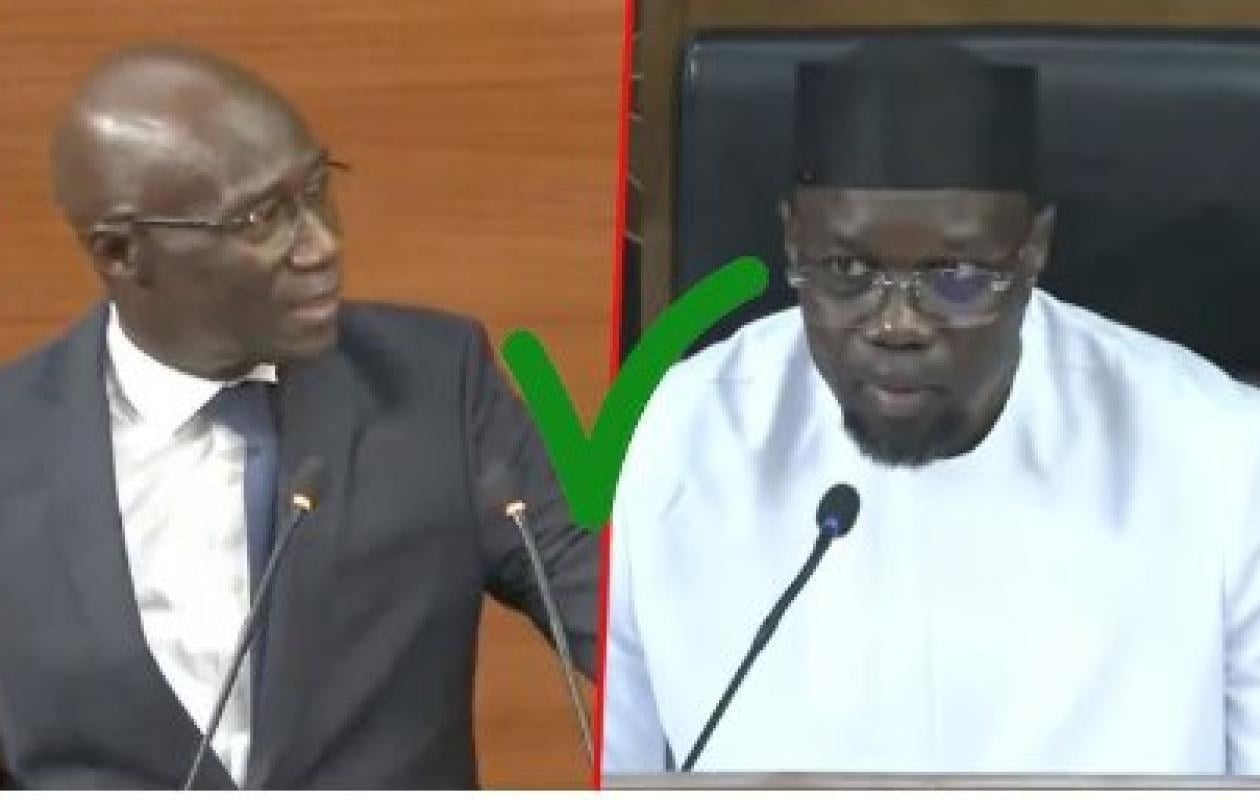
Lois de finances : Le gouvernement dépose un amendement pour supprimer la catégorie des « fonds spéciaux »
Towards the end of exceptional management for confidential and similar funds. The Senegalese government has taken a decisive step in revising the legal framework for public finances. Through Amendment No. 2 to Article 14 of the draft organic law No. 2020-07 of February 26, 2020, concerning finance laws, the Minister of Justice, Keeper of the Seals, Moussa Sarr, formalized the Executive's intention to eliminate the category of "special funds or appropriations."
In the summary statement prepared by the Minister of Justice, the government immediately recalls the republican foundations that govern the State: "According to Article 1 of the Constitution, the Republic of Senegal is secular, democratic and social. It is on this foundation that the consideration, through special credits or funds, of national solidarity actions that the Head of State is traditionally called upon to lead in the face of the most critical human situations is based."
However, the text highlights the contradiction arising from the initial drafting of the organic law: "The initial wording of Article 14, however, reserves these funds solely for the sovereign functions of defense, security, and diplomacy, excluding these solidarity actions." Such a provision, according to the ministerial document, "would be difficult to reconcile with the social character of the Republic as proclaimed, and would dissociate these funds from the constitutional prerogatives of the President of the Republic, of which they constitute, along with the other expenditures of the institution, an indivisible component."
Strict compliance with UEMOA directives
To justify this major change, the Ministry of Justice cites two particularly compelling legal reasons. The first concerns "the failure to comply with the strict limitation on expenditures subject to allocation by Directive No. 6/2009/CM/UEMOA of June 26, 2009, concerning the finance law within the WAEMU."
The report specifies in this regard that the proposed text "creates a new category of allocations for funds initially attached to the Presidency of the Republic and the Prime Minister's Office as constitutional institutions," even though the community list is strictly closed. Indeed, "the list of funds eligible for allocations is exhaustively defined by Article 14 of the aforementioned directive." The WAEMU's explanatory guide thus reiterates that public funds "must, due to the rules relating to the separation of powers and their financial autonomy, receive special treatment," but without creating exceptional categories not provided for in regional texts.
The document adds that "expenditure related to special appropriations or funds does not present a sufficiently specific budgetary characteristic to justify its separate treatment in an allocation category distinct from the one to which it already belongs." Consequently, "it cannot be assimilated to other appropriations subject to allocations other than those of constitutional institutions."
Filling a legal void regarding the authorizing officer of expenditure
The second major argument raised by Mr. Moussa Sarr concerns "the lack of clarity regarding the identity of the person authorizing the expenditure of the new allocation."
The minister points out that Article 65 of the organic law "specifies the various authorizing officers for allocations," designating the Minister of Finance for regular allocations other than those for constitutional institutions, special Treasury accounts, or public debt. However, "the authorizing officer for allocations to special appropriations or funds is not specified, which creates a legal vacuum and, consequently, an implementation problem."
With this amendment, the last bullet point of Article 14 is simply deleted, which "renders the last paragraph of Article 14 moot, as it delegates to the law the responsibility for establishing the rules relating to the execution and control procedures for appropriations or special funds." Since this category is no longer part of budgetary law, the amendment adopted by the Minister of Justice now stipulates that all these reinstated allocations "are executed under the conditions provided for in Article 67 of this organic law."


















Commentaires (16)
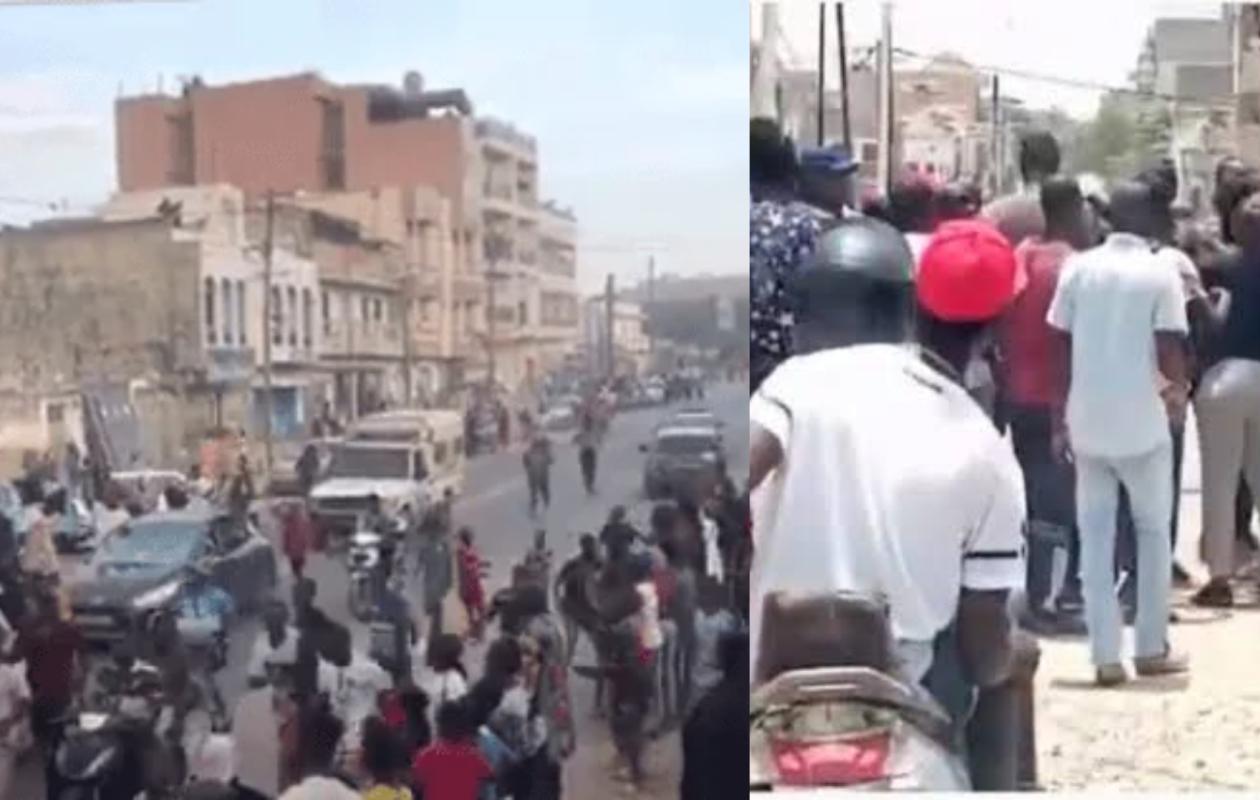
Auchan brûlés maison incendiées voitures incendiées
Station total incendiée université incendiée
Gare TER incendiée BRT saccage bus tata incendié avec deux jeunes décédées
Et vous osez nous parler de martyrs
Allez vous faire foutre pastef et ses dirigeants
Le peuple va vous bouter hors du pouvoir lors des prochaines élections
Espèces de traumatisés de la pauvreté qui veulent se vanger sur la société car ils sont pauvres depuis depuis leurs arrières grands parents
Misérables pastef
Quand plus personne n’ose dire la vérité, c’est tout un système qui finit par fonctionner autour de l’ignorance d’un seul homme. Et lorsque plus personne n’ose dire la vérité au pouvoir, le pouvoir finit par croire ses propres mensonges.
Espérons vivement qu'ils vont entendre raison et arrêter de houspiller
La rigueur républicaine n’est pas négociable. En recadrant la proposition de loi sur les fonds spéciaux, le ministre de la Justice rappelle une évidence : on ne légifère pas dans l’amateurisme et le vide juridique.
Vouloir créer des catégories budgétaires contraires aux règles de l’UEMOA, sans même être capable de désigner qui autorise la dépense, ce n’est pas du courage politique, c'est de l'irresponsabilité technique.
L’État de droit exige sérieux, conformité internationale et respect des textes. La bonne gouvernance se bâtit sur la loi et la méthode, pas sur l'agitation désordonnée. Bravo pour ce rappel à l'ordre salutaire !
Quelle arnaque !
Participer à la Discussion
Règles de la communauté
💡 Astuce : Utilisez des emojis depuis votre téléphone ou le module emoji ci-dessous. Cliquez sur GIF pour ajouter un GIF animé. Collez un lien X/Twitter, TikTok ou Instagram pour l'afficher automatiquement.
Se connecter
Commentez avec votre profil, votre photo, et soyez averti des réponses.