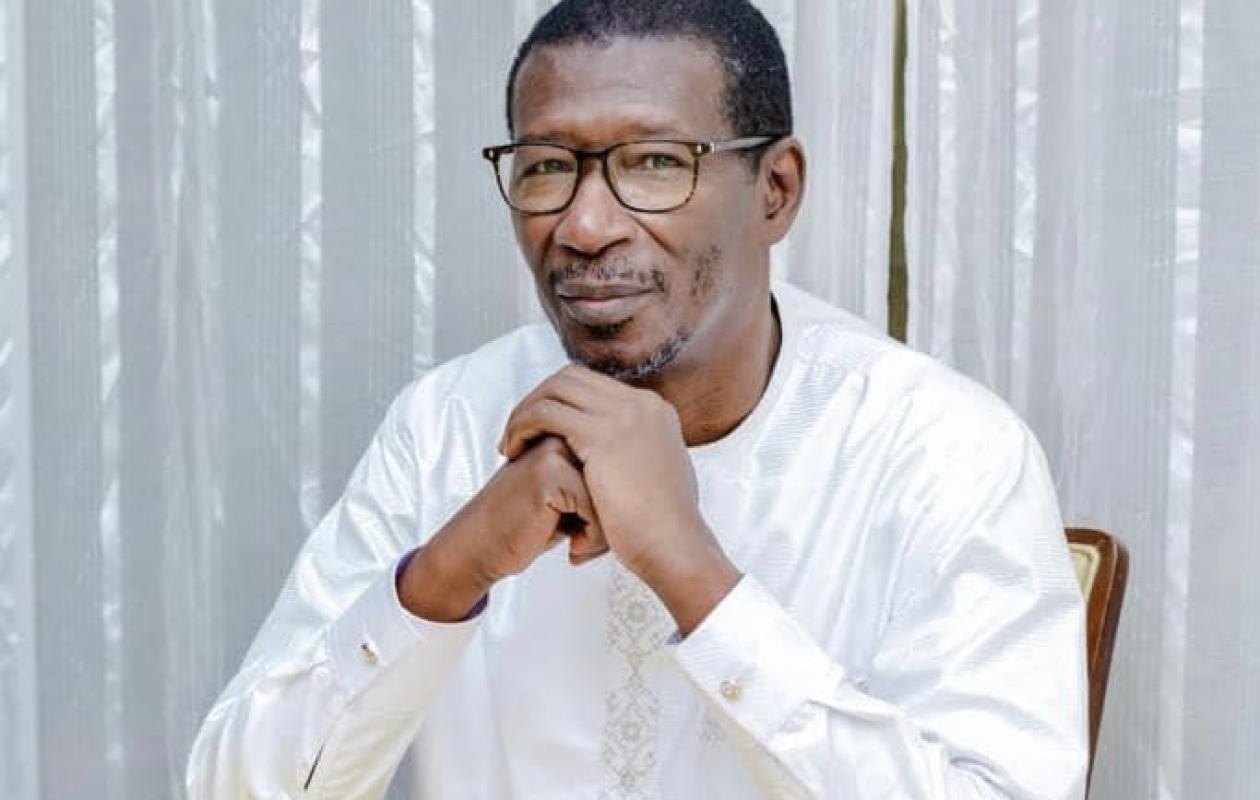
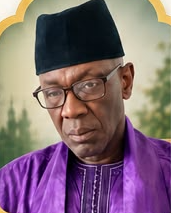
Mary Teuw Niane: « le Sénégal que nous aimons est une éthique de la relation humaine»
In a lengthy text entitled "The Senegal We Love," Minister Mary Teuw Niane, Chief of Staff to the President of the Republic, paints a portrait of a Senegal founded on work, fraternity, tolerance, and respect for institutions. Advocating for the preservation of the values that bind the nation together, he affirms that "the Senegal we love is an ethic of human relations, a promise passed down from generation to generation," while rejecting hate speech, division, and intolerance. We present the text in its entirety.
The Senegal we love
There is a Senegal stronger than circumstances, older than our differences, and more enduring than the passions of the moment. A Senegal that cannot be reduced to geography, administration, or a succession of governments. A Senegal that is first and foremost a civilization, a way of being in the world, an ethic of human relations, a promise passed down from generation to generation.
This is the Senegal we love.
The Senegal of hard work, where people rise before the sun and retire when their duty is done. A place where effort elevates a person, where merit inspires respect, and where idleness has never been an ideal. In our culture, work is not merely an economic necessity; it is a matter of dignity.
We love Senegal, where faith doesn't divide people but unites them. Here, religions don't see each other as adversaries; they engage in dialogue, respect each other, and enrich one another. For centuries, Muslims, Christians, and adherents of traditional beliefs have learned to share more than just the same territory: they share the same families, the same surnames, the same emotions, the same sorrows, and the same joys.
How many Jacques carry the Muslim faith? How many Mamadous attend Christian schools? Our first names already tell the story of this silent brotherhood.
At Korité, Christian families await the laakh; at Easter, Muslim families enjoy the ngalakh. The Gamou, the Magal, the Popenguine pilgrimage, and major religious conferences are not merely spiritual gatherings: they are celebrations of our national unity. For us, faith is a bridge, never a wall.
Our diversity has never been a threat. It is an asset.
Jokes between Fulani, Serer, Diola, Balanta, Wolof, Soninke, Mandinka, and Lebou people don't hurt: they defuse tensions and remind us that humor is sometimes the most effective form of diplomacy. Even words have transcended borders. They travel from one language to another, becoming the shared heritage of all Senegalese.
Our cuisine tells this story better than any speech. From the thiéboudiène of Saint-Louis to the couscous of Joal, from the gnoul of Casamance to the ndiorndi of travelers, from the thiéré mboum to the thousand flavors of our local regions, dishes have united people long before politics. They have taught us that identity is never impoverished when it shares a meal.
The same is true of our clothes, our music, our dances, and our languages. The boubou belongs to no one because it belongs to everyone.
Senegal is also a land of hospitality.
The neighbor, the stranger, the traveler, the destitute are not mere presences to be tolerated, but guests to be honored. Teranga, teddungal, is not a tourist slogan; it is a philosophy of life. Generosity, in our culture, has never been a matter of wealth. It is a disposition of the heart. One can possess little and share much. Eating one's meal alone when another is hungry remains one of the greatest forms of moral poverty.
We also believe that knowledge is a form of freedom.
School, Koranic school, seminary, travel, books, elders, teachers: everything is an opportunity to learn. Senegal has always honored knowledge. Our scholars have sometimes made the greatest sacrifices to acquire a book, a science, or a few pages of wisdom. In our history, knowledge is worth more than a herd, because it enlightens future generations.
We are a people of readers as much as of storytellers, a people who know that libraries extend oral traditions and that the memory of a nation is built as much in manuscripts as under the palaver tree.
Senegal is also the land of the spoken word.
We debate a great deal. Some have seen it as mere talk; we see it as the natural exercise of freedom. Discussing, arguing, persuading without humiliating, contradicting without hatred: this is an old Senegalese tradition. A democracy does not thrive on unanimity but on the quality of its disagreements.
Our Republic was built slowly. It established institutions, a justice system, an administration, and the rule of law. Nothing is perfect, nothing is complete, but everything deserves to be protected. Institutions are not obstacles to freedom; they are its guarantees. Respecting them does not preclude criticism or the ambition to improve them. On the contrary, true irreverence lies in weakening them in the name of fleeting interests.
We reject hatred because it is foreign to our history.
We reject division because it is contrary to our culture.
We reject intolerance because it is incompatible with our spiritual heritage.
We reject contempt because it offends human dignity.
No ideology founded on fear of the other, no attempt to fragment our people, no effort to pit religions, ethnicities, generations, or territories against one another can thrive in this land. They may trouble minds for a moment; they will not survive the depths of our collective memory.
Senegal is a work of patience.
It is the fruit of the teachings of our saints, the wisdom of our elders, the struggles of our intellectuals, the courage of our peasants, our fishermen, our workers, our teachers, our artists, our soldiers, of all those who built the nation without ever asking for their name to appear in history books.
Our country possesses a unique strength: the ability to always return to what is essential. In times of doubt, it finds its way back to moderation, fraternity, and common sense. Illusions may pass; values endure.
We believe in a free Senegal because it is responsible.
We believe in a strong Senegal because it is just.
We believe in a Senegal that is respected because it respects everyone.
We believe in a cultured Senegal because it knows that knowledge protects against manipulation.
We believe in a generous Senegal because solidarity is its second nature.
Finally, we believe that our future will never be built against a part of the Senegalese people, but with all Senegalese people.
Hand in hand, faithful to our history without being prisoners of the past, open to the world without giving up on ourselves, attached to our freedoms as much as to our responsibilities, we will continue to keep alive this exceptional human adventure that is Senegal.
Because this Senegal that we love is not just an inheritance.
It is a commitment.
And as long as there are women and men who believe in fraternity rather than hatred, in reason rather than violence, in the Republic rather than arbitrariness, in dignity rather than invective, that Senegal will live.
He will live on in each of us.
And he will remain, forever, our greatest hope.


















Commentaires (24)
À un moment, il faut savoir assumer ! Tourner éternellement autour du pot ne change pas les faits… ça finit juste par devenir comique.
Que Dieu nous protège.
Monsieur le proffesseur si vous n'avez plus que de la littérature à offrir pour le développement du Sénégal, je vous rappelle que nous avons eu Senghor comme premier président de la république !
C pitoyable
Il nous relate de valeurs mais dans son environnement professionnel du moment, la perception des sénégalais sensés est autre.
Voilà un monsieur en qui j'ai toujours eu du respect mais je ne le reconnais plus .
En toute sincérité sa place n'est plus plus au palais
Diomaye petit persidan sur simple diokhogne de sonko
Participer à la Discussion
Règles de la communauté
💡 Astuce : Utilisez des emojis depuis votre téléphone ou le module emoji ci-dessous. Cliquez sur GIF pour ajouter un GIF animé. Collez un lien X/Twitter, TikTok ou Instagram pour l'afficher automatiquement.
Se connecter
Commentez avec votre profil, votre photo, et soyez averti des réponses.