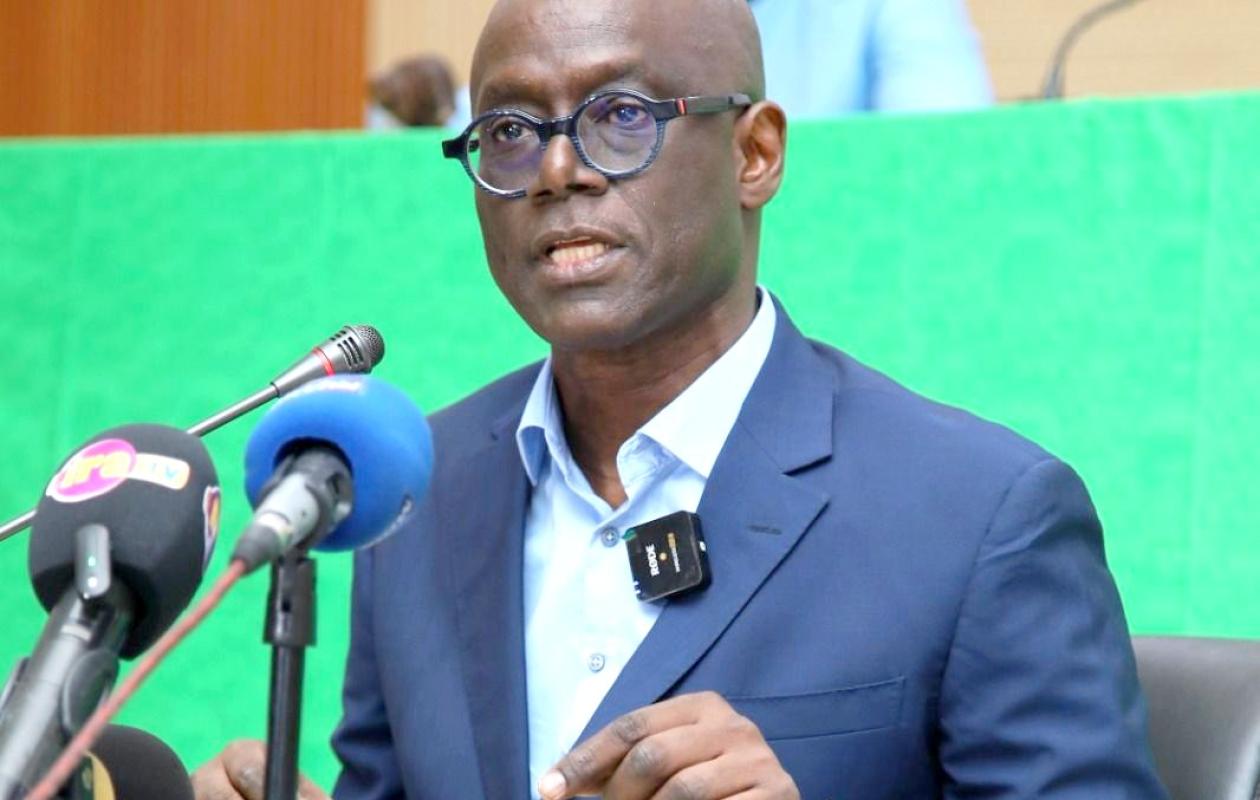
« On copie aveuglément la France » : Thierno Alassane Sall veut révolutionner le pouvoir des députés face au Conseil constitutionnel
In a public statement, Thierno Alassane Sall calls for a reform of the mechanism for referring matters to the Constitutional Court in Senegal. The member of parliament argues that the current rules hinder democratic oversight of laws and proposes granting each parliamentarian the right to individually petition the Constitutional Council.
The MP refers to the recent failure of the opposition's initiative to challenge the law amending Articles L.29 and L.30 of the Electoral Code before the Constitutional Council. This attempt failed because it did not gather the required minimum of 17 MPs, or one-tenth of the members of the National Assembly.
For Thierno Alassane Sall, this requirement raises several fundamental questions. He questions, in particular, the relevance of a system where a single member of parliament can introduce a bill, without being able to challenge an adopted law on their own before the Constitutional Court.
In his analysis, the parliamentarian argues that this rule stems from a "blind importation" of the French model. He points out that initially, only the President of the Republic had the right to refer matters to the Constitutional Court. He explains that in 1978, this right was extended, in addition to the Head of State, to fifteen members of the National Assembly, following the 1974 French constitutional reform which granted the right of appeal to 60 members of the National Assembly or 60 senators. Thierno Alassane adds that it was only in 1981 that this number was reduced from fifteen members of the National Assembly to one-tenth of the members of the Assembly.
According to him, this French legal culture, historically marked by a distrust of constitutional justice, does not necessarily correspond to Senegalese realities.
The leader of the RV party is therefore proposing to eliminate the current digital requirement as part of the constitutional reforms being considered by the executive branch. He suggests that each member of parliament should now be able to directly petition the Constitutional Court before a law is enacted.
In his view, this reform would make it possible to overcome partisan logics that can prevent the control of certain laws that are controversial in public opinion.
To illustrate the limitations of the current system, Thierno Alassane Sall cites, in particular, the amnesty law, which was not referred to the Constitutional Council despite the presence of a sufficient number of opposition members of parliament. He also mentions the recent absence of parliamentary appeals against the reform of the Electoral Code, arguing that these situations demonstrate the shortcomings of the institutional referral process as it currently operates.
The MP also dismissed the argument of a potential backlog at the Constitutional Council. According to him, the small number of laws passed each year in Senegal does not justify this fear.
For Thierno Alassane Sall, this reform would contribute to strengthening the rule of law and consolidating republican institutions. He also announced other proposals to come, notably regarding the composition of the High Court of Justice and the definition of high treason.



















Commentaires (10)
Participer à la Discussion
Règles de la communauté
💡 Astuce : Utilisez des emojis depuis votre téléphone ou le module emoji ci-dessous. Cliquez sur GIF pour ajouter un GIF animé. Collez un lien X/Twitter, TikTok ou Instagram pour l'afficher automatiquement.
Se connecter
Commentez avec votre profil, votre photo, et soyez averti des réponses.