Diabète au Sénégal : Face au coût de la maladie, l’ASSAD réclame son intégration dans la CSU
Living with diabetes in Senegal also means facing a recurring medical bill every month, with no end in sight. For thousands of patients from economically vulnerable families, this ongoing expense threatens regular access to care and further weakens already struggling households.
Faced with this reality, the Senegalese Association for the Support of Diabetics (ASSAD) is asking the State to integrate diabetes into Universal Health Coverage (UHC), in order to reduce patient expenses and guarantee them better financial protection.
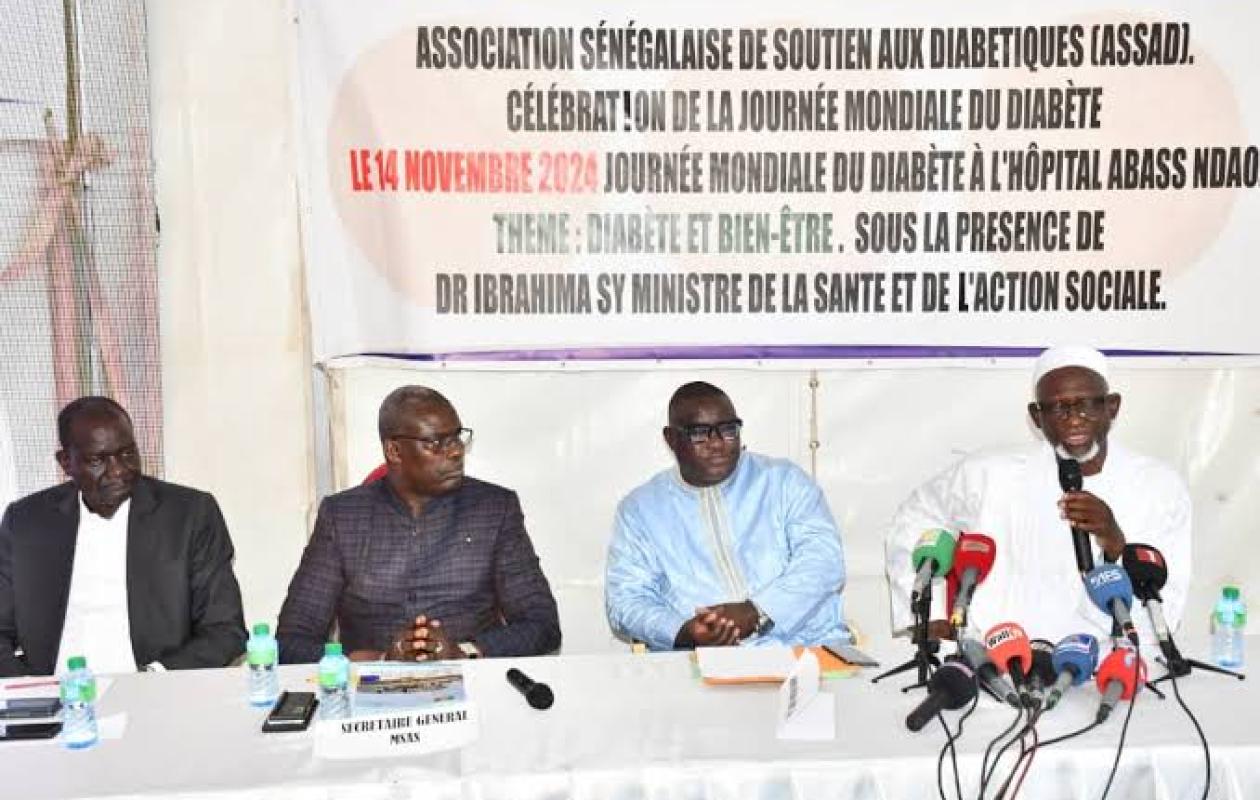
The figure cited by its president, Baye Oumar Guèye, illustrates the extent of this vulnerability: 87% of patients followed by ASSAD come from impoverished, or even particularly vulnerable, families. "Today, 87% of our diabetic patients come from impoverished families, not to mention vulnerable families," he declared on Wednesday in Dakar, during the official launch of the national awareness and prevention campaign for diabetes, themed "Diabetes in Senegal: Issues, Challenges and Prospects."
According to him, managing a patient with type 1 diabetes on insulin can cost around 75,000 CFA francs per month. This is a considerable sum for families with modest incomes, especially since expenses are not limited to medication: consultations, tests, and potential hospitalizations further increase the bill. "Once you have it, you have it for life," he reminds us, emphasizing the chronic nature of this disease and the need for regular medical monitoring.
The president of ASSAD, however, was keen to highlight the progress achieved after several years of advocacy. He cited, in particular, the subsidy allocated to insulin, the budget for which has reportedly increased from 300 million to over 500 million CFA francs. Thanks to this measure, a vial of insulin costs less than 1,000 CFA francs in Senegal, compared to 8,000 to 15,000 CFA francs in some other countries in the sub-region, according to him.
He also mentioned the free provision of insulin and administration equipment for children with type 1 diabetes enrolled in the dedicated program. These are important achievements, but they do not resolve all the difficulties related to monitoring and other medical expenses.
This is precisely what Badara Gaye, vice-president of the Dakar branch of the Young Diabetics Association, emphasizes. Diagnosed in 2009, while in his second year of high school, he explains that he continued his studies and built his career without letting the disease define his ambitions. A trained accountant, he now works at Wave Mobile Money.
But behind this resilience, the constraints related to care remain very real. "When you have diabetes, you have to be at the hospital every three months to have check-ups and get the results," he explains.
However, long waits in healthcare facilities sometimes discourage patients and cause them to miss their medical appointments. "Eventually, they stop keeping their appointments," he laments. This is a worrying situation, since irregular follow-up can lead to blood sugar imbalances and increase the risk of complications.
Adding to this difficulty is the cost of the tests. "They give you tests that you have to do every three months, every six months; it's complicated," says Badara Gaye.
Not all patients have the same resources to afford these periodic checkups. While insulin subsidies are certainly a step forward, they are not enough to guarantee comprehensive and accessible care.
Faced with this situation, ASSAD is requesting support from the Ministry of Health to include diabetes in the Universal Health Coverage program. Underlying this demand is a question of equity: enabling people living with this disease to benefit from financial protection commensurate with their needs, rather than allowing their resources to dictate the regularity of their treatment.
Beyond financial and hospital constraints, denial and ignorance also hinder screening and treatment. "Denial is a burden for people with diabetes," warns the president of ASSAD, who urges people to know their status to prevent the disease from being discovered at an already complicated stage.
Present at this meeting, Professor Abdoulaye Lèye, an endocrinologist-diabetologist at Pikine Hospital, emphasized the importance of early diagnosis. "The sooner you know your condition, the better you can deal with any potential complications," he explained.
According to the specialist, prevention should not wait for the appearance of the first symptoms. It begins during pregnancy and continues throughout life, through a balanced diet, physical activity and weight management.
He also emphasizes therapeutic education, which must involve the patient and their family. Understanding the disease, adopting healthy behaviors, and actively participating in medical follow-up are all essential for limiting complications and living better with diabetes.
For Badara Gaye, this approach also involves support and sharing experiences. Diagnosed more than fifteen years ago, he encourages those affected not to give up on their plans, but to learn to live with the disease by respecting medical recommendations: keeping appointments, engaging in regular physical activity, and monitoring their diet.
Because beyond access to insulin, the real challenge remains continuous care, enabling each patient to receive treatment without financial constraints. In Senegal, making treatment accessible is not enough: diabetics must also be given the means to receive proper care throughout their lives.





















Commentaires (0)
Participer à la Discussion
Règles de la communauté
💡 Astuce : Utilisez des emojis depuis votre téléphone ou le module emoji ci-dessous. Cliquez sur GIF pour ajouter un GIF animé. Collez un lien X/Twitter, TikTok ou Instagram pour l'afficher automatiquement.
Se connecter
Commentez avec votre profil, votre photo, et soyez averti des réponses.