
Alimentation de rue au Sénégal : « On ne peut pas contrôler ceux qu’on ne connaît pas », alerte le Dr Mamadou Ndiaye
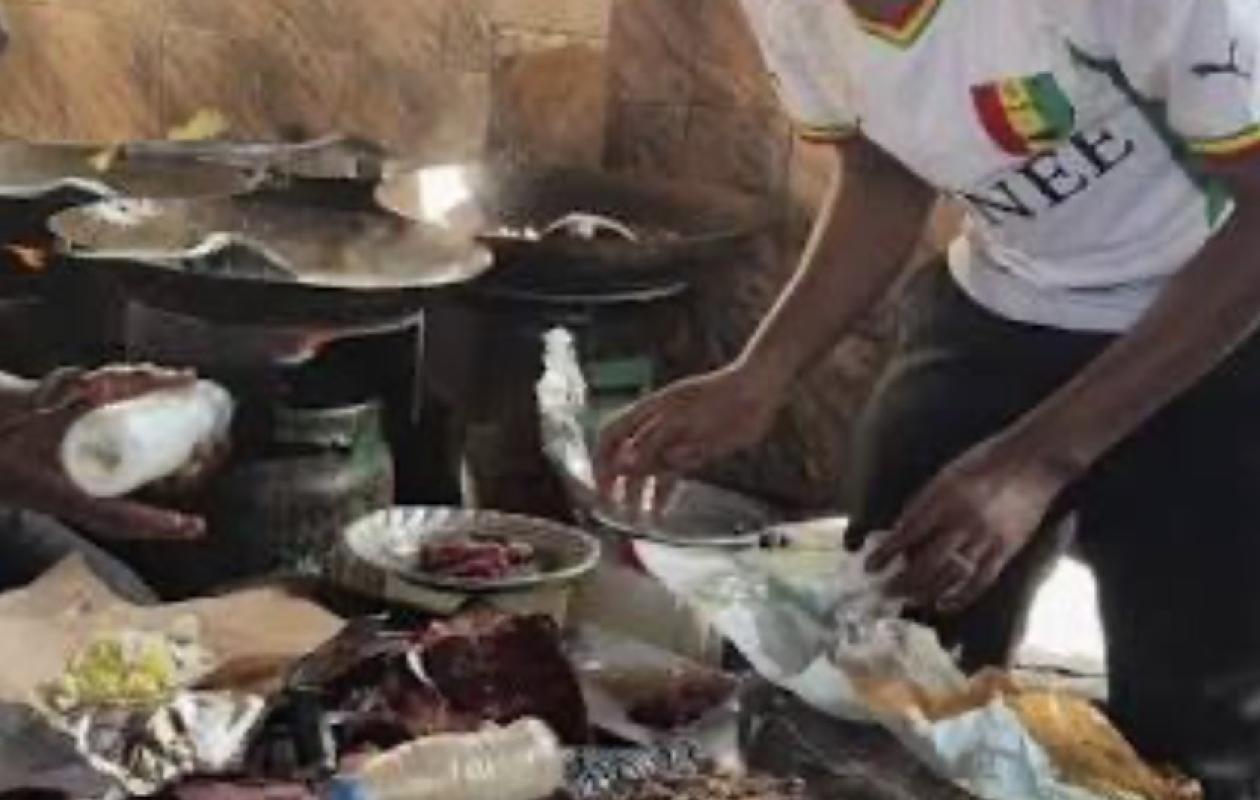
Every day, thousands of Senegalese eat on the street. But are those who feed them truly known and monitored by the services responsible for regulating their activities? In Senegal, street food plays a central role in eating habits. Yet, the people who feed the population daily remain insufficiently identified. At the community forum on food safety, organized this Tuesday, September 15th in Dakar by the Association of Journalists in Health, Population and Development (AJSPD), in collaboration with the FAO, Dr. Mamadou Ndiaye highlighted a major shortcoming: the lack of comprehensive identification of street vendors, a prerequisite for any effective control .
For Dr. Mamadou Ndiaye, a food safety expert at the FAO sub-regional office, Senegal must first know precisely who is selling what, where and under what conditions, before it can ensure real monitoring.
Efforts have already been made in some areas. In Kaolack, for example, the regional service has identified actors and issued them professional cards.
But work still needs to be done for the different categories of sellers.
For vendors of hot food, identification seems possible since they generally operate in the same location. The same applies to vendors of juice and other products offered on the streets.
"This is the work we will certainly need to do in order to really begin the follow-up work," the specialist believes.
Hygiene services need strengthening
This lack of mapping adds to another difficulty raised during the forum: the inadequacy of hygiene service agents and their means of control.
Community stakeholders have notably deplored the lack of staff and logistical resources in the area.
For them, it is difficult to ensure effective control if the services responsible for this task do not have the necessary staff and resources.
In other words, it is difficult to effectively monitor thousands of actors when they are not all identified and the services responsible for monitoring have limited resources.
At school, the control system must also change
The issue of catering around schools was also raised.
According to Dr. Ndiaye, it would not be enough to simply let vendors operate freely in front of schools.
He proposes instead to bring them into schools, to reserve suitable spaces for them and to select those that meet health criteria.
He cites the example of Dakar's Main Hospital, where street restaurants that used to be in front of the building have been brought inside.
"Let's bring the vendors inside the school, find them a suitable space, and choose those who should sell based on hygiene criteria," he recommends.
"The day politicians address this issue..."
According to the FAO specialist, the problem goes far beyond sellers and consumers. It is a matter of genuine public policy.
"I always say that the day politicians address the issue of food safety, that's the day we can hope to find solutions," he insists.
According to him, it is when food safety is integrated into general policy that funding, infrastructure and personnel can be mobilized.
The challenge is all the more significant because street food now fulfills a social need. With long working days, long distances between home and work, and the cost of traditional restaurants, many Senegalese are forced to eat outside.
The question is therefore no longer whether to eat in the street, but how to guarantee that this meal does not endanger the consumer's health.





















Commentaires (4)
C'est inadmissible comme declaration, venant de l'autorite chargee de proteger la population.
tous vendeurs, propriétaires de cantine ou de d'étale doit être identifier sur base de donnée par les services d’hygiène et de commerce afin de vérifier leur conformité et d'acquérir un quitus trimestriel d'autorisation de servir le public.
Trop de Masla et de revendication pointant le manque de personnel et de moyens alors que la première chose qui manque c'est la détermination et la connaissance du rôle de leur uniforme pendant qu'ils perçoivent le salaire du contribuable. Des statistique de performance des agents d'hygiène se doivent d’être élaborer.
Participer à la Discussion
Règles de la communauté
💡 Astuce : Utilisez des emojis depuis votre téléphone ou le module emoji ci-dessous. Cliquez sur GIF pour ajouter un GIF animé. Collez un lien X/Twitter, TikTok ou Instagram pour l'afficher automatiquement.
Se connecter
Commentez avec votre profil, votre photo, et soyez averti des réponses.