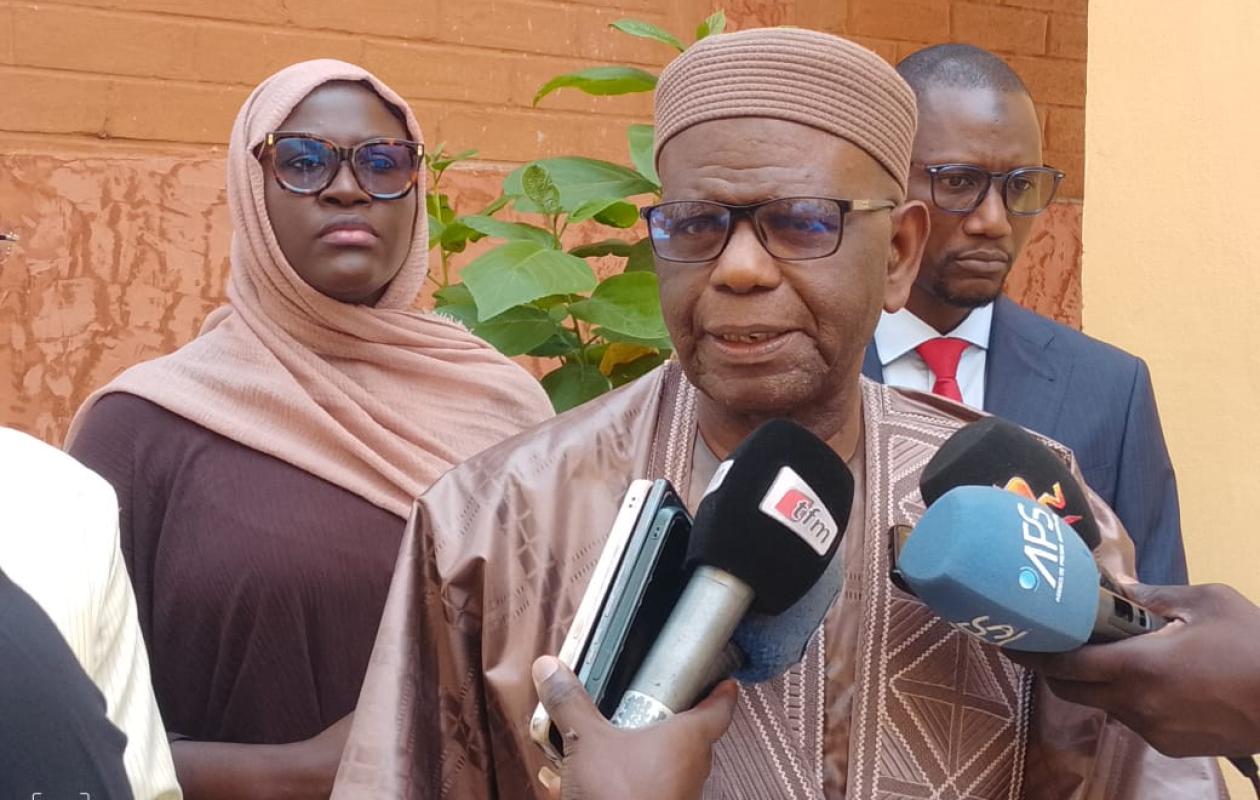
Bonne gouvernance : Le Sénégal veut en finir avec les mauvaises pratiques, la société civile exige des actes concrets
Good governance must no longer be limited to laws and declarations of intent. Senegal now wants to make it a genuine driver of transformation in public action. To this end, the Ministry of Justice, through its Directorate for the Promotion of Good Governance, brought together institutional stakeholders, civil society, the private sector, and local authorities for a workshop to validate the National Good Governance Strategy (SNBG). This policy document aims to place transparency, accountability, and citizens' rights at the heart of public action.
This technical validation workshop constitutes a decisive step at the end of a participatory process initiated in January 2025. According to Abdou Karim Lo, president of the scientific committee in charge of developing the strategy, several sharing workshops and citizen consultations have made it possible to gather the concerns and contributions of all stakeholders.
The document addresses a variety of cross-cutting issues, ranging from democracy and human rights to justice, public finance management, decentralization, the governance of extractive industries, and peace and security. For Abdou Karim Lo, the challenges remain immense.
“Democracy in Senegal needs to be consolidated,” he stressed, emphasizing the need to improve the quality of public services, accelerate the digitization of the administration, and establish transparency in the management of public funds.
Amnesty International warns of the devastating effects of corruption
Speaking at the event, Papa Diène Diop, a member of Amnesty International's International Executive Board, first welcomed the significant progress made by Senegal in economic and financial governance.
He specifically mentioned the adoption, in 2025, of several foundational legislative texts on access to information, the protection of whistleblowers, the declaration of assets and the strengthening of the prerogatives of the National Office for the Fight against Fraud and Corruption (OFNAC).
However, for the human rights organization, the adoption of laws is only a half-victory: the effective application of the texts remains the real challenge.
Amnesty International reiterates that corruption constitutes a direct violation of human rights, diverting public resources intended for education, health, or infrastructure to benefit private interests. This phenomenon primarily affects the most vulnerable populations and threatens democracy through vote buying and the illicit financing of political life.
For Papa Diène Diop, eradicating this scourge requires a collective commitment from the State, institutions and citizens themselves.
“Good governance is not something that can be achieved forever.”
Representing the Minister of Justice, Keeper of the Seals, Mr. Moussa Sarr, technical advisor Cheikh Mbacké Guissé recalled that good governance constitutes the indispensable foundation of the rule of law.
He congratulated the Directorate for the Promotion of Good Governance for the work accomplished, reaffirming that Senegal now has a solid legal framework thanks to recent legislative reforms.
He nevertheless called for constant vigilance: "Good governance is not an eternal achievement," he said, recalling that transparency must be expressed in the daily practices of the administration.
The need for local and citizen-led governance
For civil society, the challenge now is to move good governance out of seminars and produce a direct impact on people's lives.
Aïssatou Mbaye Sy, deputy executive director of the NGO Enda Ecopop, advocated for a strategy rooted in the realities of local authorities. She particularly emphasized the fundamental right of citizens to access local budget information.
According to him, many citizens are still unaware that they have the legal right to consult their municipality's budgets and their implementation reports, in accordance with the provisions of Article 102 of the General Code of Local Authorities.
For her, the democratization of budget information is the sine qua non condition to allow each citizen to exercise effective citizen control over the management of local public affairs.






















Commentaires (4)
Participer à la Discussion
Règles de la communauté
💡 Astuce : Utilisez des emojis depuis votre téléphone ou le module emoji ci-dessous. Cliquez sur GIF pour ajouter un GIF animé. Collez un lien X/Twitter, TikTok ou Instagram pour l'afficher automatiquement.
Se connecter
Commentez avec votre profil, votre photo, et soyez averti des réponses.