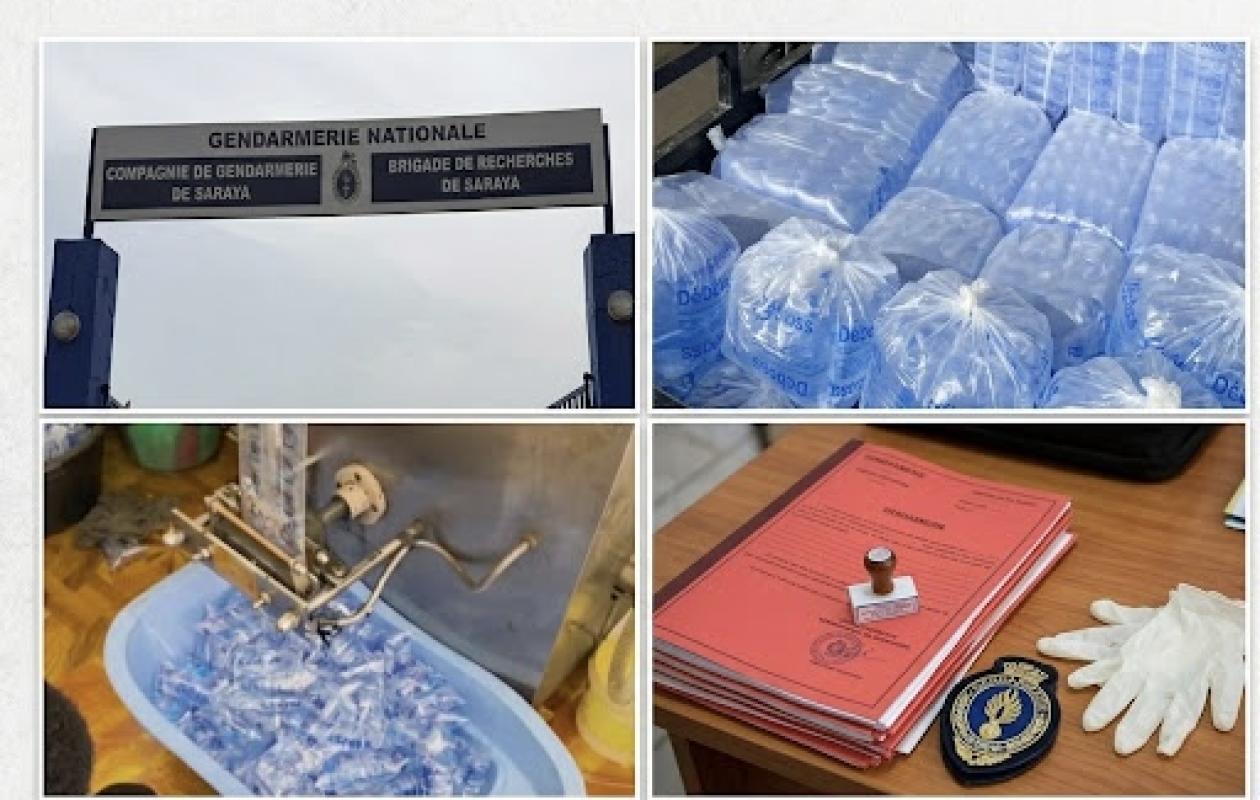
Fabrication illégale d'eau en sachets : la BR de Saraya arrête 7 exploitants
The Saraya Research Brigade arrested seven people suspected of illegally operating sachet water production units in the villages of Tenkoto and Kharakhéna. They are S. CAMARA, MY DIALLO, O. DEME, AB LY, M. BOITE, A. DIOP, and D. DIARRA. They are being prosecuted for the illegal operation of sachet water production facilities, forgery and use of forged administrative documents relating to production permits, endangering the lives of others, and misrepresenting the quality of the product. According to Seneweb sources, they were brought before the public prosecutor at the Kédougou High Court on October 12, 2026.
According to the investigation, the case began on October 6, 2026. On that day, TK Dieng and SM Sarr, representatives of the Union of Promoters of Filtered Water in Sachets (UPES) of Kédougou, went to the Saraya Research Brigade. They denounced the proliferation of sachet water manufacturing units in the department, operating without any administrative authorization. They cited the brands "MBOUMA," "GUEYE EAU," "TALEFALA," "ZAM ZAM," "BOITE et Frères," "KOKI," and "DD," located in Kharakhéna and Tenkoto. According to them, these units were tarnishing their sector.
The UPES (Union of Water and Sanitation Professionals), Kédougou branch, states that it is a legally constituted organization that complies with the procedures for obtaining the required documents: business registration, NINEA (National Identification Number for Economic Agents), investigation report, health certificate, water analysis of private water systems, and analysis of six liters of water by the state. Its regional headquarters are in Kédougou. It affirms its work to promote the production of filtered water in the area, to preserve the environment, and to protect public health. After several unsuccessful attempts with economic inspectors, it filed a complaint with the brigade.
The gendarmerie immediately opened an investigation and sent a request for assistance to the Directorate of Domestic Trade, which is authorized to issue the permits commonly known as FRAs. A request for assistance was also sent to the head of the Consumer Affairs and Consumer Safety Division. The results revealed irregularities compared to the information contained in the complaint letter.
Arrests at production sites
On October 8, 2026, investigators went to Tenkoto. S. CAMARA, MY DIALLO, and O. DEME were caught in their units in the act of production and packaging sachets of filtered water. When asked to present the documents relating to their operations, they all produced documents deemed fraudulent and inconsistent with the nature of their business.
The following day, October 9, 2026, the same scene was repeated in Kharakhéna. AB LY, M. BOITE, A. DIOP and D. DIARRA were caught in the act of production and in turn presented non-compliant documents.
Representatives from UPES were heard first. They stated that several units in the area lack the necessary administrative documents to produce sachet water. SM SARR explained that the union brings together water producers and works to improve their social and operational conditions, as well as ensuring compliance with legal standards. He indicated that UPES periodically organizes awareness seminars and uses these opportunities to advise stakeholders to abandon certain practices.
UPES, through its coordinator, strongly condemns these irregularities and announces its decision to file a complaint with a civil action.
According to investigators, all those implicated deliberately set up their bottling units without complying with the required formalities. They sold water that did not meet consumer safety and well-being standards due to a lack of testing. The detained FRAs (Family Water Recycling Units) were all relocated from their original locations without further water testing, and some were purchased on the black market in Touba.
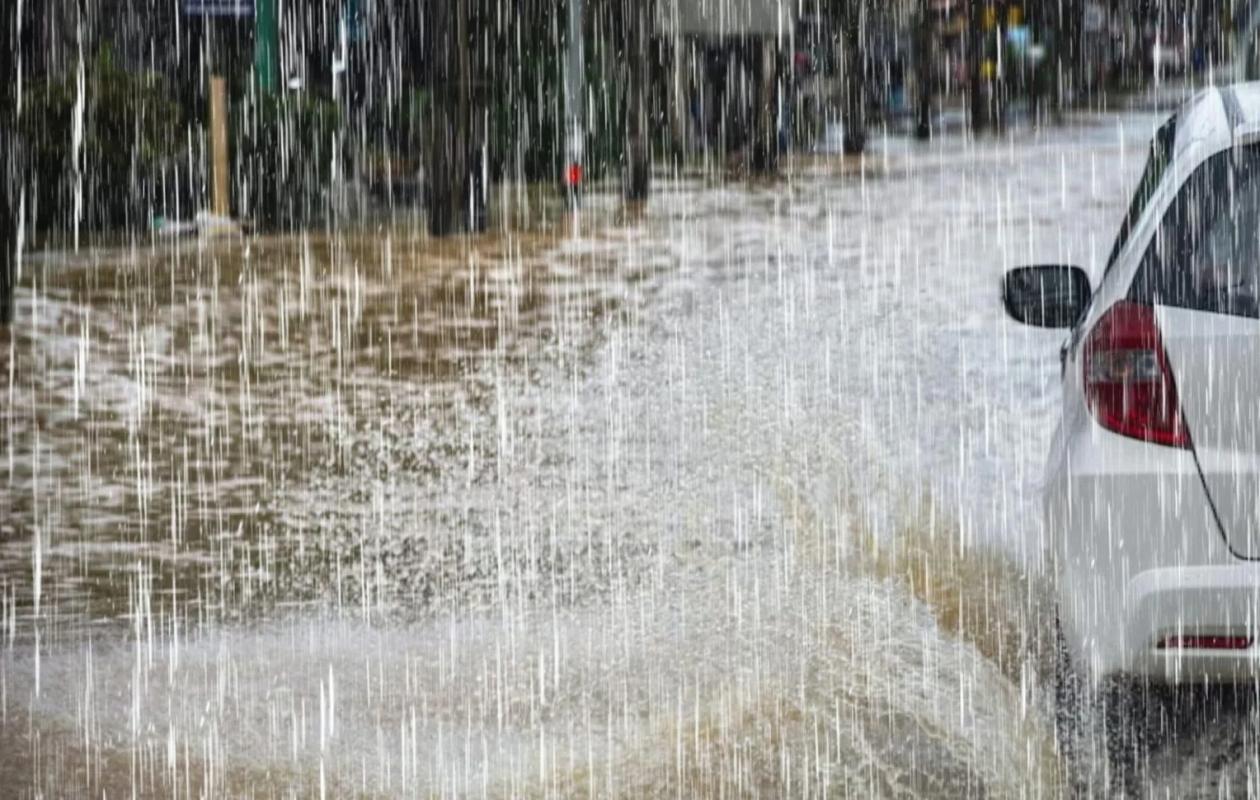
The facilities are located in areas frequented by animals, exposed to sewage and rainwater runoff, as shown in the accompanying photograph. The staff have neither health and safety certificates nor lab coats and were recruited without any qualifications. The investigation considers this a clear endangerment of public life.
Regarding forgery and the use of forged documents, the investigation notes that FRAs (Foreign Material Authorizations) are issued by the Directorate of Domestic Trade. These authorizations are no longer granted since the adoption of the law on plastics. Operators therefore purchase them from other unit holders, who duplicate them for dual use.
Regarding the misrepresentation of water quality, the operators failed to meet key drinking water standards: microbiological, chemical, organoleptic, and physicochemical parameters. The report explains that, to obtain a Water Reference Attestation (FRA), the Ministry of Commerce collects water samples from the installation site, analyzes them to verify their potability, and then compares them to those from surrounding areas before issuing the certificate. Relocating to another site therefore requires the same process and a change of address. The FRA is personal and cannot be transferred or sold.
Investigators note that while some operators possess an FRA number, others failed to follow the proper procedures for obtaining one. Even those who had completed these formalities violated the law by disregarding mandatory regulations. Mr. BOITE, for his part, possesses no such documentation.
The seized equipment
In Tenkoto, investigators seized 8 water filtration machines, 26 filters, 8 water pumps, 2 generators, and 2 surveillance cameras. Water sachets were collected as samples from each of the dismantled sites. Another operator, Y. DANFAKHA, who owned 3 filtration machines, 3 water pumps, 7 filters, 2 generators, and 2 surveillance cameras, failed to report to his unit, claiming illness.
In Kharakhéna, the seizure includes 7 water filtration machines, 23 filters, 3 water pumps, 2 voltage regulators and 1 inverter, with samples taken from each site as well.
In total, investigators seized 15 filtration machines, 49 filters, 11 water pumps, 2 generators, 2 surveillance cameras, 2 voltage regulators, and 1 inverter. The production units were sealed, numbered 1 to 7 according to the seized items, and kept at the unit pending the court's decision. All the equipment remains at the disposal of the brigade until the court's decision. The request for assistance is attached to the case file.
Brought before the prosecutor's office
At the end of the investigation, the brigade believes that there is serious and consistent evidence against S. CAMARA, MY DIALLO, O. DEME, AB LY, M. BOITE, A. DIOP and D. DIARRA.
According to the case file submitted to the public prosecutor, these elements justify their arrest for illegally operating a sachet water manufacturing unit, endangering the lives of others, forgery and use of forged administrative documents, and misrepresenting product quality. They were brought before the public prosecutor at the Kédougou High Court on October 12, 2026.











Commentaires (4)
Vraiment trop longs.
Participer à la Discussion
Règles de la communauté
💡 Astuce : Utilisez des emojis depuis votre téléphone ou le module emoji ci-dessous. Cliquez sur GIF pour ajouter un GIF animé. Collez un lien X/Twitter, TikTok ou Instagram pour l'afficher automatiquement.
Se connecter
Commentez avec votre profil, votre photo, et soyez averti des réponses.