« Libre échange, dérives des prix » : Les failles du système économique sénégalais passées au cribles
The rising cost of living continues to weigh heavily on Senegalese households. Food, transportation, housing, basic necessities: expenses are increasing while the purchasing power of a large part of the population remains under pressure. In this context, the principle of "free competition" is showing some of its limitations. For competition to be truly effective, information must be accessible to consumers, and control mechanisms must be in place to prevent abusive practices. Invited to the "Sunday Jury" program on iRadio, economist El Hadji Aliou Diouf examined these mechanisms and the issue of economic regulation. His analysis leads to a crucial question: can the market truly self-regulate when certain sectors are highly concentrated and consumers have few means to understand or challenge prices?
The paradox of "free play" in competition
In Senegal, the principle of free pricing plays a significant role in the functioning of the economy. However, free pricing alone does not guarantee effective competition. In a truly competitive market, several businesses must be able to compete, consumers must be able to compare offers, and no single player should have excessive power to impose its conditions. Yet, in certain strategic sectors, the limited number of players can reduce this competitive pressure. This is where one of the system's paradoxes lies. In some highly competitive sectors, such as the bakery industry, the state intervenes directly or indirectly in the prices of essential products. In other sectors where supply is more concentrated, price regulation may be less visible. The question, therefore, is not necessarily one of choosing between "market" and "state." It is one of determining what level of regulation is necessary for the market to truly function for the benefit of consumers.
When the consumer lacks visibility on prices
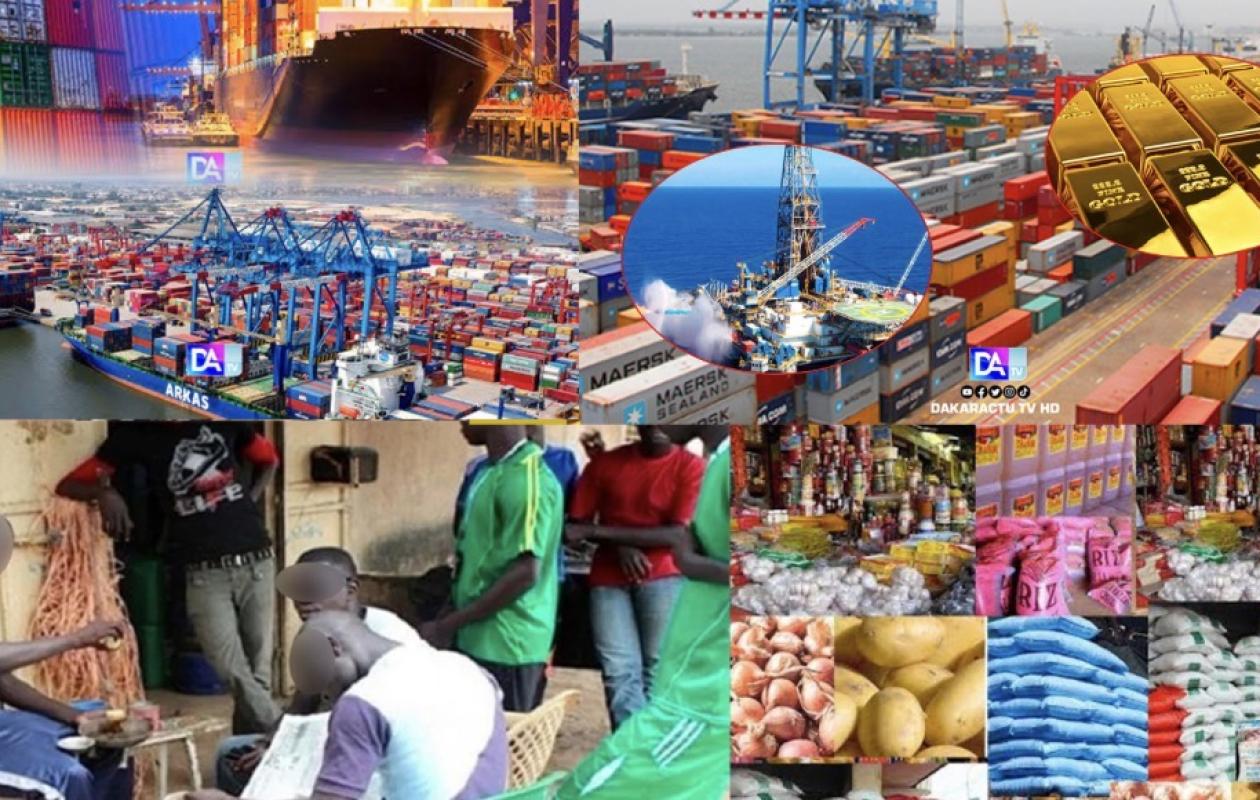
One of the major problems also lies in the difficulty of understanding how prices are formed. Between the purchase price from the supplier, maritime transport, insurance, duties and taxes, port fees, warehousing, inland transport, and the profit margin, several factors can come into play before a product reaches the store. This complexity makes it difficult for consumers to know if a price increase is truly justified. When an international crisis occurs, prices can rise rapidly. But a legitimate question arises: does the increase in the selling price always correspond to an equivalent increase in the costs borne by the importer or distributor? This is precisely where economic control and transparency become important. It is not a matter of systematically considering retailers or importers responsible for price increases. They too bear costs and risks. But in a market where information on real costs is insufficient, the authorities must have the necessary means to verify business practices.
Economic control , a tool for consumer protection
The fight against the high cost of living cannot rely solely on ad hoc discussions between the government and economic operators. Consultations can be useful, but they do not replace a permanent market monitoring system. Control services must be able to verify prices, invoices, stock levels, profit margins, the origin of goods, and compliance with trade regulations. This task becomes even more crucial when there are suspicions of fraud, speculative stockpiling, anti-competitive practices, or product misrepresentation. Consumer protection also encompasses food safety. The circulation of unfit, expired, or fraudulently sourced products is a problem that extends far beyond economic concerns: it directly impacts public health. An effective policy must therefore combine economic control, health inspections, and genuinely enforceable sanctions.
Should we return to stricter price controls?
This is one of the most delicate issues. Imposing maximum prices or margins can temporarily protect consumers on certain essential products. However, overly rigid regulation can also cause shortages, discourage investment, or encourage parallel markets if administered prices are disconnected from actual costs. The question, therefore, is not simply whether to control prices, but where, when, and how to intervene. For certain strategic products, the government may benefit from increasing transparency on costs and margins, monitoring inventories, and combating collusion between operators. In other sectors, the priority may be to facilitate the entry of new players to strengthen competition. The objective must remain the same: to prevent captive consumers from being forced to accept prices they cannot understand or challenge.
Re-arm the institutions rather than multiplying announcements
The fight against the high cost of living ultimately requires institutions capable of sustained action. Sufficiently numerous, properly trained, and well-equipped regulatory bodies with the necessary technical and legal resources can achieve far more effective results than a series of ad hoc measures. The state must also strengthen competition mechanisms, improve product traceability, and penalize fraudulent practices when they are proven. However, regulation must remain transparent and based on rules known to all. The goal is not to create an administration that arbitrarily decides the price of every product, but to build an environment in which no actor can sustainably exploit a dominant position, collusion, or a lack of information to penalize the consumer.
For a more transparent and fairer market
The high cost of living in Senegal cannot be explained by a single cause. Prices depend on international factors, import costs, exchange rates, taxation, transportation, local production, profit margins, and the level of competition. But one thing is certain: simply invoking "free competition" is not enough to guarantee fair prices. The analysis presented by El Hadji Aliou Diouf, economist and guest on "Jury du Dimanche" on iRadio, thus calls for placing economic regulation and control at the heart of the debate. The real issue is not to systematically pit the state against the private sector. It is to ensure that everyone plays their part: businesses produce and invest, retailers distribute, consumers choose, and the state guarantees the rules of the game. When competition functions, it can help contain prices. When it doesn't, the government must intervene to correct the imbalances. Ultimately, the fight against the high cost of living should not simply consist of asking economic actors to lower their prices. It should also seek to understand how these prices are formed, who controls them, and what rules allow for the long-term protection of the purchasing power of Senegalese people.




















Commentaires (1)
Participer à la Discussion
Règles de la communauté
💡 Astuce : Utilisez des emojis depuis votre téléphone ou le module emoji ci-dessous. Cliquez sur GIF pour ajouter un GIF animé. Collez un lien X/Twitter, TikTok ou Instagram pour l'afficher automatiquement.
Se connecter
Commentez avec votre profil, votre photo, et soyez averti des réponses.