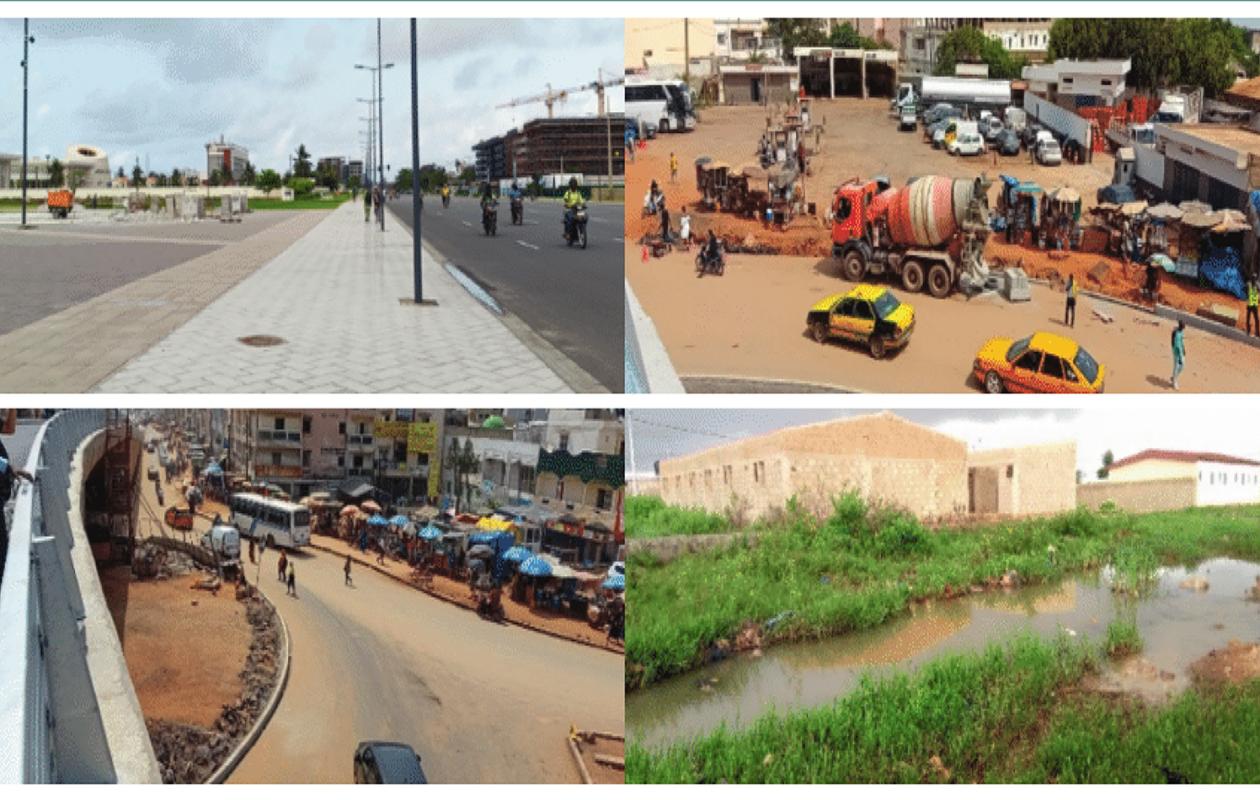
Problématique de l'aménagement du territoire : Les acteurs prônent une urbanisation viable et durable sans heurter les us et coutumes des populations
Is it possible to rethink land-use planning to promote viable and sustainable urbanization? The question was at the center of discussions during a meeting which served as a platform for Ibrahima Diop, senior manager at GCO, head of the resettlement and community development department, to review a number of essential measures.
Mr. Diop began by reminding everyone that Senegal is a predominantly rural country where every square meter is property inherited through customary law, with villages and hamlets scattered deep in the bush. The few towns that exist are mostly comprised of nonexistent or poorly planned housing developments that fail to consider natural factors (water, topography, erosion, storms, and earthquakes), basic vital infrastructure (education, health, economic activities, roads, water supply, electricity, telephone service, etc.), and also population growth (demographics, rural exodus, and migration).
Since every citizen has the right to benefit from state investments for their basic needs, their development, and their comfort, there is an urgent need to find viable and sustainable solutions. "It is true that achieving this requires courage, rigor, boldness with compromise, inclusivity, and transparency to avoid offending the traditions and customs of the population," emphasizes Ibrahima Diop.
To achieve this, he outlines several essential measures, including the need to consolidate villages and hamlets into consensual residential areas through inclusive redistricting (taking into account sociological and historical realities). This will make it easier to build roads, schools, health centers, and other basic infrastructure. He says this is "possible because the model already exists."
The community development representative also addressed the issue of preparing and developing all housing sites before any allocation, involving all stakeholders. He emphasized the need to subdivide plots into minimum sizes of 300 m² to accommodate family circumstances. He also stressed the importance of diverting all wastewater pipes to areas dedicated to agricultural irrigation, livestock farming, fishing, and green spaces, and of no longer discharging this wastewater into the sea or within cities, which dangerously contributes to rising groundwater levels (a source of flooding and risks to public safety and property).
This, he says, is quite possible by constructing pipelines in the opposite direction to those that supply cities with drinking water from boreholes in the interior of the country or from Lake Guiers. He advocates for the establishment of urban development plans that are coordinated and validated by all stakeholders (health, roads, water, electricity, telecommunications, economy, culture, sports, agriculture, environment, livestock, fishing, etc.).
Mr. Diop also suggests the creation of integrated socio-economic hubs by grouping them into large territorial units, taking into account existing or adapted economic characteristics, and establishing large vocational training centers there.
It also requires mandatory military-civic training of at least three months for young people aged 16 to 25.




















Commentaires (1)
Participer à la Discussion
Règles de la communauté
💡 Astuce : Utilisez des emojis depuis votre téléphone ou le module emoji ci-dessous. Cliquez sur GIF pour ajouter un GIF animé. Collez un lien X/Twitter, TikTok ou Instagram pour l'afficher automatiquement.
Se connecter
Commentez avec votre profil, votre photo, et soyez averti des réponses.