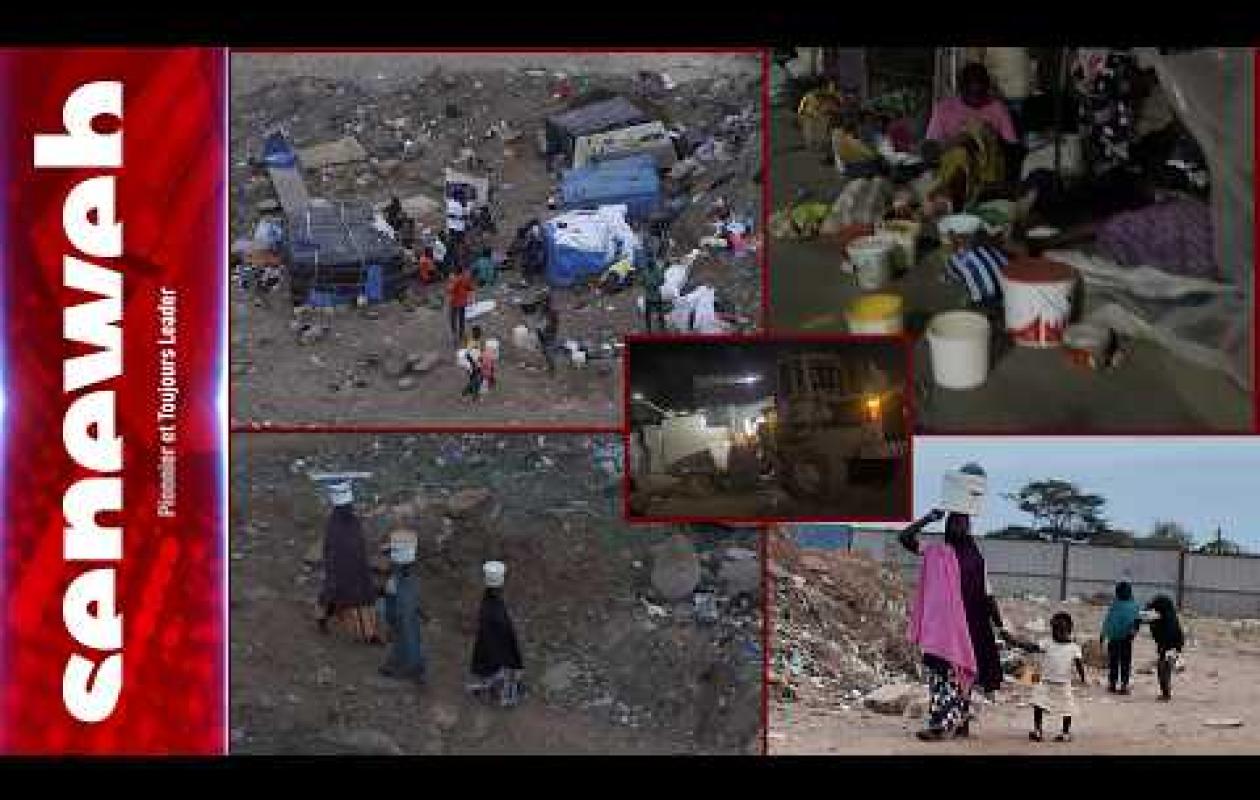
[Reportage] L'emprise grandissante des campements de mendiants étrangers dans la capitale
In the Water Catchment Zone, Liberté 6, Colobane, Mamelles, Ouest Foire, Keur Massar, and several other neighborhoods of the capital, families live under plastic tarpaulins, cardboard boxes, and a few pieces of wood. Their daily lives are marked by hardship and the search for a meal.
At dawn, the women leave the camps with their children. Some carry an infant on their back, others hold several small children by the hand. After a quick wash, they head towards the markets, traffic lights, and main roads of Dakar.
Every day begins with the same goal: to beg for alms. For many Dakar residents, these scenes have become commonplace. But behind this increasingly visible presence lie complex realities, where poverty, migration, exile, and survival intertwine.
Residents, for their part, describe a difficult coexistence. They mention unsanitary conditions, the occupation of certain public spaces, and, for some, a feeling of insecurity. In Colobane, shopkeepers say they find their stalls and storefronts transformed into sleeping quarters at nightfall. Others, however, urge people to look beyond appearances.
In Mamelles, a mechanic who has known these families for several years recounts hearing stories of war, persecution, and extreme violence. According to him, many of these people claim to have fled their country to save their lives. These harrowing accounts, which could not be independently verified, serve as a stark reminder that behind every helping hand, there may lie a story of displacement.
“The Senegalese give money. They are kind,” a woman our team met simply stated. This sentence sums up the dependence of many families on the solidarity of passersby.
In recent years, security forces have dismantled several camps in Dakar. But a few days or weeks later, new settlements often reappear in the same places.
Who are these families really? How many live in these camps today? Do they all have legal status? Are there begging networks or are they mainly people fleeing poverty and conflict? These are all questions that remain largely unanswered.
Senegal is a member of ECOWAS, an organization that guarantees the free movement of people between member states. However, this freedom of movement is subject to national rules regarding residence, settlement, and the maintenance of public order.
Under these tarpaulins are women, men, and children. Behind each face lies a story we don't always know. But one question remains: how could a phenomenon of such magnitude have become so entrenched in the heart of Dakar? Between security imperatives, the protection of the most vulnerable, and the management of migration flows, the authorities' answers are now awaited.
Our team went to meet these families, but also the residents who live alongside them on a daily basis.
An exclusive report at the heart of a reality that challenges, divides and raises an essential question: how to reconcile humanity, public order and dignity in the face of a phenomenon that is growing in the Senegalese capital?












Commentaires (56)
Alors ne vous plaignez pas
Wa Salam
Moi je pense que le problème c'est quand tu fais des enfants et tu sais très bien que t'as pas les moyens de t'occuper de ces enfants. C'est extrêmement irresponsable. Le truc des talibes ne choque personne au Sénégal
Tout est dénaturé
La politique du matin au soir
Astahfirula!! le senegalais est con oui .... motakhit.. ils vont nous envahir comme des mouches zse zse.
Participer à la Discussion
Règles de la communauté
💡 Astuce : Utilisez des emojis depuis votre téléphone ou le module emoji ci-dessous. Cliquez sur GIF pour ajouter un GIF animé. Collez un lien X/Twitter, TikTok ou Instagram pour l'afficher automatiquement.
Se connecter
Commentez avec votre profil, votre photo, et soyez averti des réponses.