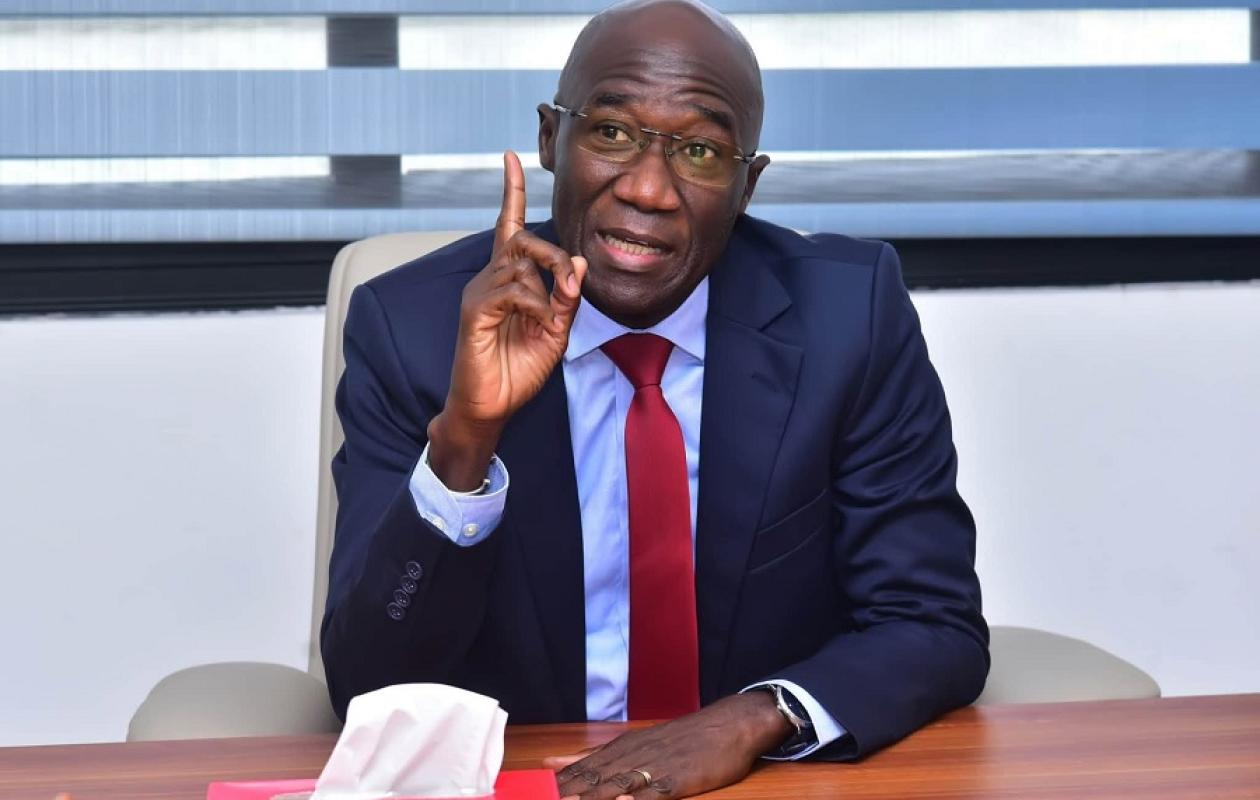
« Punir sans exclure » : Le Garde des Sceaux Me Moussa Sarr dévoile sa stratégie de réinsertion carcérale
At the opening of the Regional Conference on Social Reintegration and Support Before and After Release from Prison, on October 29, 2026, the Minister of Justice, Moussa Sarr, emphasized that the purpose of prison is not limited to incarceration. Through new recruitment, university-level training within the prison system, and calls for collective awareness, the government is laying the groundwork for a new model of restorative justice.
“What do we want to happen to a man or a woman at the end of their detention?” It was with this fundamental question that the Minister of Justice, Keeper of the Seals, Moussa Sarr, opened the Regional Conference on Social Reintegration and Support Before and After Release from Prison, in Dakar. Before an audience of national and international experts from countries including Germany, Morocco, Tunisia, and Algeria, the message resonated powerfully: while punishment is unavoidable to meet the requirements of the law and public safety, it must in no way definitively close the doors to the future.
Following the directives of the President of the Republic, Bassirou Diomaye Faye, who has made respect for human dignity an absolute requirement, the minister recalled that prison must also become a stepping stone for preparing for the return to civilian life.
To meet this structural challenge, the administration is first tackling the crux of the matter: the working conditions of prison staff. The Prime Minister has therefore authorized the recruitment of 418 new officers for 2026 (including 2 inspectors, 6 controllers, 10 administrative staff, and 400 prison officers). This substantial increase is intended to alleviate the workload of existing teams and to better reconcile prison security with individualized support for inmates.
The Senegalese prison system is also diversifying its training programs to equip incarcerated individuals with real-world skills. Beyond existing workshops (bakeries, a dairy production unit, an industrial training center, a mechanics garage, a sewing workshop, and an art gallery), new educational and professional pathways are emerging. Upcoming discussions with the Ministry of Higher Education will allow incarcerated high school graduates to enroll at the Cheikh Hamidou Kane Digital University, while a partnership with the Ministry of National Education will strengthen academic support for exams. Furthermore, land in the north of the country has been allocated to the Prison Administration for the development of large-scale rice-growing projects, offering participants training and sustainable employment prospects upon their release.
Stressing that prison overcrowding and reintegration require comprehensive responses, Maître Moussa Sarr invited magistrates to fully utilize the sentence adjustment and probation mechanisms provided for in the Code of Criminal Procedure (suspended sentence, community service, placement under electronic surveillance) for less serious offenses.
However, he insists, "reintegration is a chain of solidarity that extends beyond the prison walls." Local authorities, businesses, civil society, and families are all called upon to build these essential bridges. Because while the prison gates open in a second, rebuilding a life requires the effort of an entire community.
















Commentaires (3)
Participer à la Discussion
Règles de la communauté
💡 Astuce : Utilisez des emojis depuis votre téléphone ou le module emoji ci-dessous. Cliquez sur GIF pour ajouter un GIF animé. Collez un lien X/Twitter, TikTok ou Instagram pour l'afficher automatiquement.
Se connecter
Commentez avec votre profil, votre photo, et soyez averti des réponses.