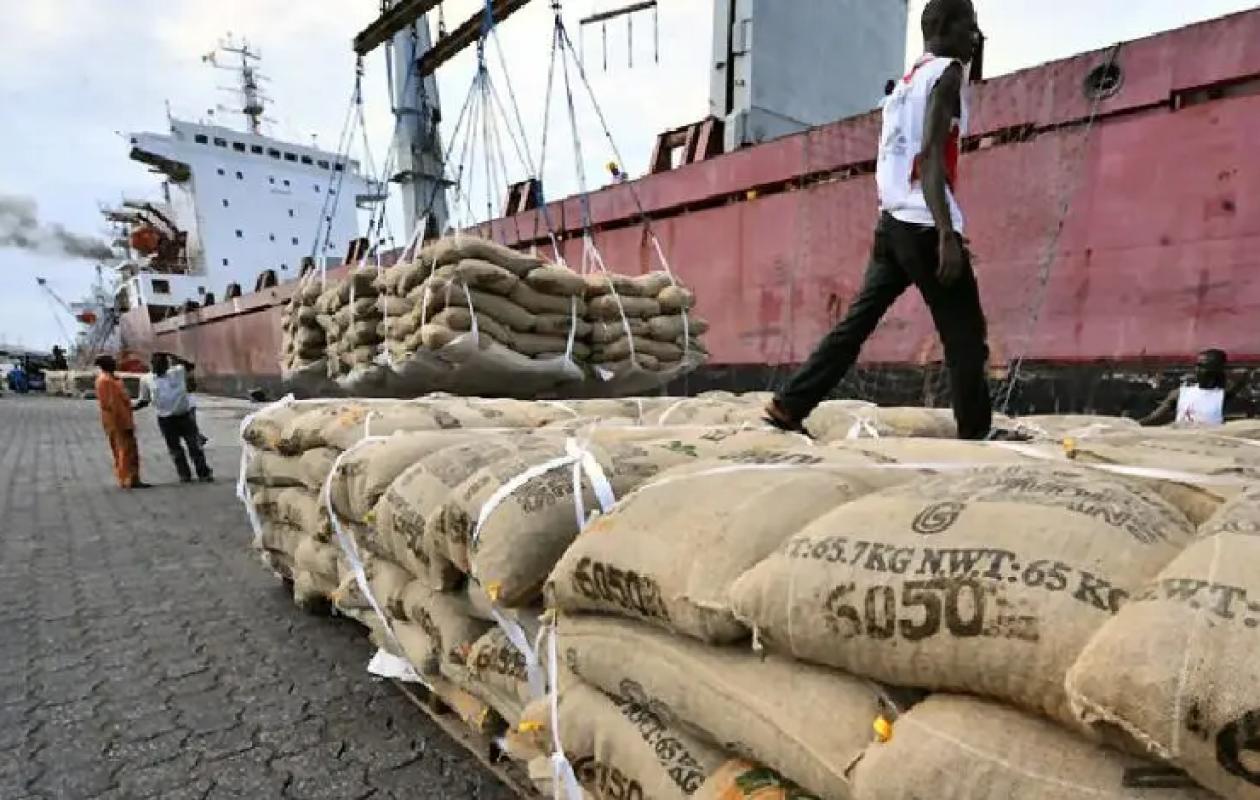
Afrique de l'Ouest : La nouvelle autoroute mondiale de la cocaïne
West Africa has ceased to be a mere transit corridor. It has now established itself as a strategic hub for global drug trafficking. By 2025, nearly 30% of the cocaine destined for Europe will have transited through the region, compared to a marginal share just ten years ago.
A road undergoing a complete geographical transformation
The geographical logic remains the same: the region is located halfway between South American production areas and the European market, with an Atlantic coastline that is almost impossible to monitor in its entirety. What has changed, however, are the points of origin and destination.
On the production side, shipments have been shifting from Brazil to Suriname and Guyana since 2023. On the receiving side, drop zones are now concentrated between Ghana and Senegal, with Sierra Leone seeing a significant increase since 2025. The most emblematic case remains the record seizure on May 1, 2026, off the coast of Western Sahara, near Dakhla: a bulk carrier flying the Comorian flag, loaded in Freetown, Sierra Leone, and destined to deliver its cargo to Benghazi, Libya. This demonstrates that the route now extends to the Eastern Mediterranean, via North Africa.
"Legitimate" ports also serve as entry points. West African container traffic jumped by 57% between 2010 and 2022, without customs control capacities keeping pace; an imbalance that allows networks to disguise drugs as legitimate trade.
The Sahelian land corridor, however, remains fully active. Dakar remains a strategic entry point to serve landlocked countries such as Mali, Burkina Faso and Niger, as evidenced by record seizures: 1,137 kg intercepted in 2024 at the Malian border, and nearly 3 tonnes seized at sea in 2023.
Hybrid networks embedded at the highest levels of government
Drug trafficking is no longer the domain of a few isolated South American cartels. We are witnessing a hybridization of networks: Balkan organized crime exploiting loopholes in maritime freight, the Brazilian Communist Party, European mafias, and above all, firmly established local figures. The most striking case involves a Dutch trafficker based in Sierra Leone, photographed in 2025 alongside the daughter of the Sierra Leonean president, revealing the porous boundaries between international organized crime and the highest levels of government.
This is where the problem lies. According to the Global Initiative Against Organized Crime (GI-TOC), drug trafficking fuels corruption at the highest levels of government in the region. It is therefore impossible to understand the recurring political instability in West Africa—coups, weakening institutions, and the financing of armed groups in the Sahel—without considering this criminal economy as a structural factor, and not simply as an isolated incident.
Another significant shift: the emergence of local synthetic drug laboratories. The region is no longer simply a transit point for the merchandise; it is beginning to produce it itself.
Kush , a symptom of a major health crisis
This is undoubtedly the blind spot in the debate, too often reduced to the sole narrative of "transit to Europe". West Africa itself has become a rapidly expanding consumer market, with kush as the most violent symptom of this reality.
Appearing between 2016 and 2022, this mixture of synthetic cannabinoids and nitazenes—opioids up to 25 times more potent than fentanyl—spread in Sierra Leone, Liberia, Guinea, Gambia, Guinea-Bissau, and Senegal. More than half of the samples analyzed contained nitazenes, imported primarily from China, the Netherlands, and likely the United Kingdom: proof that even the “poor man’s drug” depends on a globalized supply chain.
The health consequences prompted the presidents of Sierra Leone and Liberia to declare a state of health emergency as early as April 2024, an unprecedented measure on the continent.
The institutional response, meanwhile, remains fragile and undermined by corruption. In Liberia, President Boakai recently dismissed three senior anti-drug officials after a recording leaked in which one of them demanded the release of his daughter, who had been arrested for drug use.
Beyond kush, the UNODC 2025 report notes a prevalence of cannabis of around 10% among 15-64 year olds in West and Central Africa, a particularly marked misuse of pharmaceutical opioids, as well as a general increase in cocaine seizures on the continent.
Three unvarnished truths
Geography does not excuse governance. Dakar, Freetown or Abidjan are natural transit points, but it is the weakness of port controls, the corruption of the security apparatus and sometimes the complicity at the top of the State that transform this geographical position into a highway for the cartels.
Europe is no longer the sole recipient, nor solely responsible. Local demand is exploding, driven by a youth without economic prospects. Drug trafficking is therefore no longer just an export problem: it is an issue of development and social justice within the continent.
A security response alone will not suffice. Record seizures are multiplying without reducing the volumes in circulation. As long as the networks of state corruption and the socio-economic roots of demand are not addressed at their source, the region will remain a structural weak link in the global drug trade, and not simply a victim of its location on the map.





















Commentaires (2)
Et pendant ce temps, nos politiques continueront de perfectionner leur discipline favorite...
Vous serez bientot les bienvenue dans le nouvel eldorado du crime organisé. Ce n’est franchement pas le reve qu’on nous avait vendu… mais visiblement, on met le turbo pour y arriver
Participer à la Discussion
Règles de la communauté
💡 Astuce : Utilisez des emojis depuis votre téléphone ou le module emoji ci-dessous. Cliquez sur GIF pour ajouter un GIF animé. Collez un lien X/Twitter, TikTok ou Instagram pour l'afficher automatiquement.
Se connecter
Commentez avec votre profil, votre photo, et soyez averti des réponses.