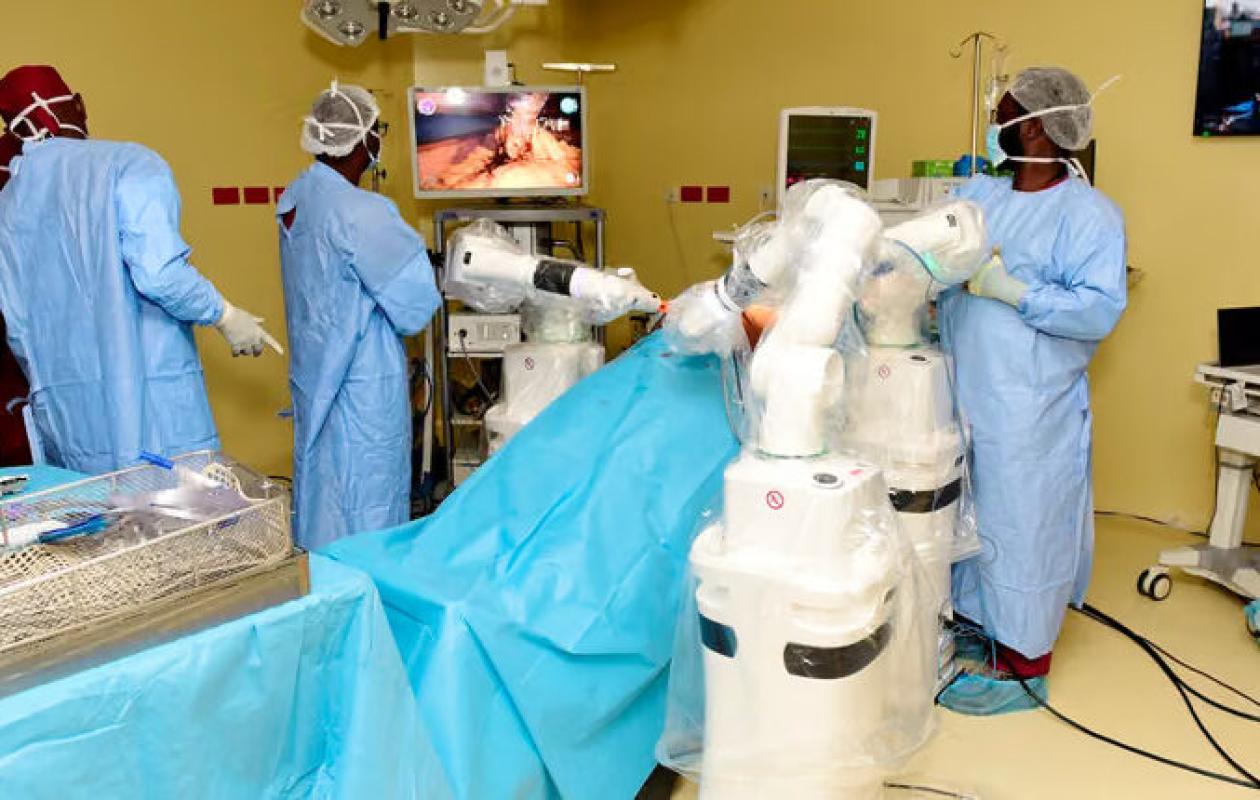
Ce pays africain entre dans l’histoire de la médecine : un robot participe à une intervention chirurgicale majeure
The Aga Khan Teaching Hospital in Nairobi (AKUH,N) has achieved a significant milestone in the health sector in East Africa following the successful completion of what is believed to be the region's first robot-assisted gallbladder removal procedure.
Officially called robot-assisted laparoscopic cholecystectomy, this procedure uses advanced robotic technology to help surgeons perform minimally invasive interventions.
This procedure allows the medical team to perform delicate surgical interventions with more control, better visibility and greater precision, without replacing the doctor.
"Robotic surgery builds on the advantages of conventional minimally invasive surgery by offering surgeons a three-dimensional view of the surgical field, greater flexibility of movement, and better access to areas difficult to visualize with traditional techniques," said Dr. Abdulkarim Abdalla, head of the hospital's surgery department.
The robotic surgery method
The surgeon retains total control over the procedure, even with the assistance of a robotic device.
Throughout the procedure, the surgeon remains in the operating room and uses a specialized console to control the camera and surgical equipment.
This technology allows for greater freedom of movement of equipment and offers better visibility on the operating site.
This can be particularly useful when surgeons need to perform precise procedures, such as suturing, in confined spaces.
Surgeons could also benefit from the ability to perform complex procedures while seated at the console, which could reduce physical fatigue and help them stay focused during difficult operations.
“Robotic instruments offer a greater range of motion and closely mimic the movements of the human hand, allowing for greater precision and better control during the procedure. This allows us to perform operations safely,” added Dr. Abdalla.
The proven benefits of less invasive treatments are amplified by robotic surgery.
Robot-assisted procedures generally require fewer incisions than the larger incisions made during open surgery.
For eligible individuals, this can translate into less discomfort after the operation, shorter hospital stays, and a faster recovery.
Furthermore, this technology increases the number of treatments that can be performed using minimally invasive methods, particularly in situations where greater flexibility and precision of instruments are required.
Commenting on this important milestone, as can be seen on the hospital's official website, CEO Rashid Khalani stated:
“Since its inception, the Aga Khan University Hospital has built a tradition of innovation in healthcare, introducing numerous firsts in Kenya and the region. This new step is a continuation of that tradition. We invest in innovation because it enables us to provide our patients with safer, more precise, and evidence-based care.”
This achievement underlines the increasing use of technology-based medical treatment methods across the continent and reinforces Nairobi's position as a hub for advanced healthcare services in East Africa.






















Commentaires (1)
Participer à la Discussion
Règles de la communauté
💡 Astuce : Utilisez des emojis depuis votre téléphone ou le module emoji ci-dessous. Cliquez sur GIF pour ajouter un GIF animé. Collez un lien X/Twitter, TikTok ou Instagram pour l'afficher automatiquement.
Se connecter
Commentez avec votre profil, votre photo, et soyez averti des réponses.