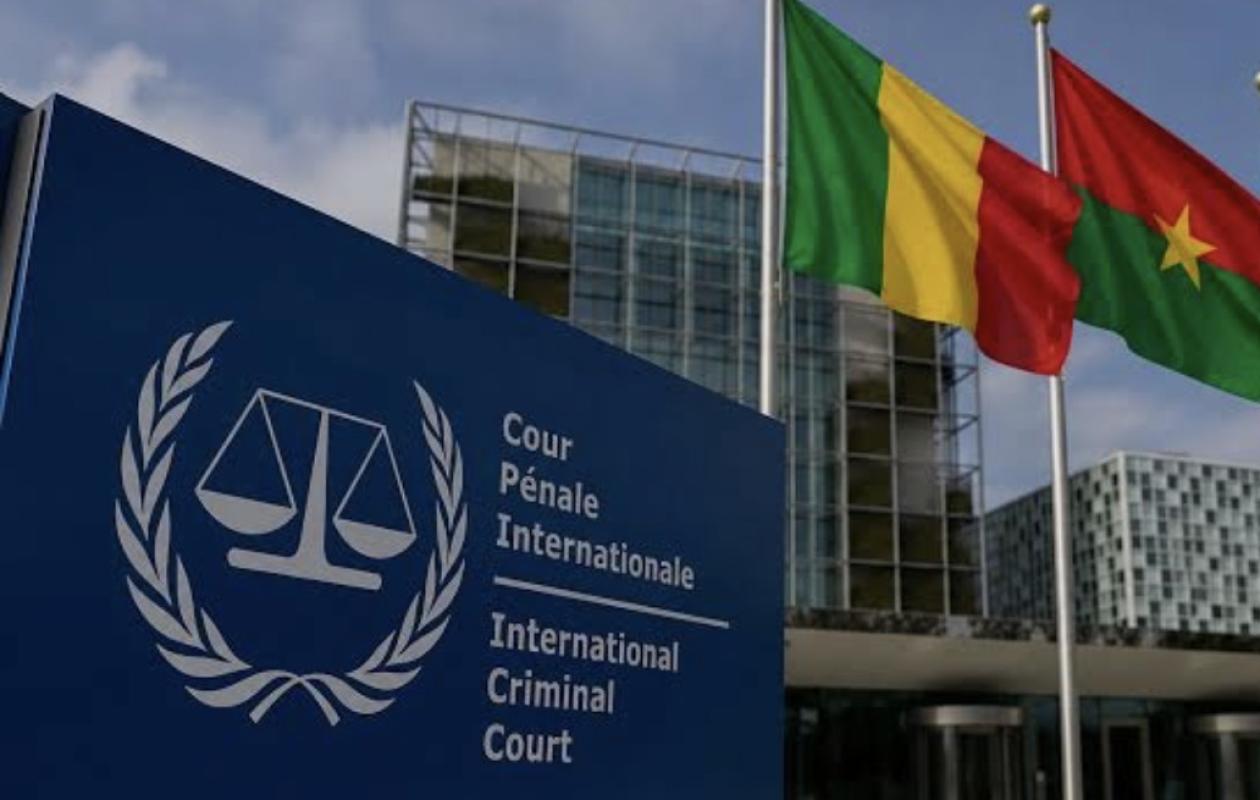
La CPI en perte de vitesse en Afrique : Le défi de la souveraineté judiciaire et l’alternative continentale
The International Criminal Court (ICC) no longer enjoys the image it once held in Africa: that of an international institution dedicated to ending impunity and protecting victims of the most serious crimes. Over the years, it has become one of the most controversial international institutions on the continent. It is therefore no coincidence that several African states have begun, in recent years, to take steps toward withdrawing from it, even though the majority of African countries remain parties to the Rome Statute. Burkina Faso, Mali, and Niger announced withdrawal procedures in June 2026, followed by Chad the following month, amid recurring African criticism accusing the Court of selectivity and politicization, and arguing that the application of international justice has not been balanced between Africa and the major powers.
The problem lies not in the principle of prosecuting perpetrators of international crimes, but in a far more sensitive question: who has the power to decide who is accountable, and who, in practice, has the ability to evade that responsibility? When international justice appears particularly harsh on weaker states but more hesitant when it comes to major powers or their allies—as in the attempts to prosecute Israeli Prime Minister Benjamin Netanyahu, accused of war crimes, and certain US government officials implicated in war crimes allegations in Iraq and Afghanistan—the problem is no longer simply justice itself, but the system within which it is administered. This is why African criticism of the ICC should not be dismissed as a mere political reaction by certain governments. They should also be seen as part of a broader debate on the independence of African decision-making and on the continent's right to build its own judicial institutions, capable of handling its cases outside of a logic of international tutelage.
Even more remarkably, Africa does not suffer from a lack of alternatives. The continent already has the African Court on Human and Peoples' Rights, headquartered in Arusha, Tanzania. This institution was established by African states themselves to protect the rights enshrined in the African Charter on Human and Peoples' Rights. Its protocol entered into force in 2004 and has, to date, been ratified by 34 African states. Yet, the Court remains far less well-known and far less frequently used than the European Court of Human Rights and the Inter-American Court of Human Rights.
In an interview published by Justice Info in July 2026, Alice Banens, Amnesty International's legal advisor for Africa, reflects on the African Court's twenty years of existence. She emphasizes that during this period, the Court has examined more than 150 cases and issued important rulings, particularly concerning freedom of the press, the rights of indigenous peoples, the environment, health, and the fight against impunity. Among the most significant cases are that of journalist Norbert Zongo in Burkina Faso, in which the Court found that the authorities had failed to guarantee his family's right to justice; the case concerning the Ogiek people in Kenya, relating to the rights of indigenous populations; and the case of the toxic waste dumped by the Probo Koala ship in Côte d'Ivoire. In addition, there is its 2025 ruling concerning the protection of people with albinism in Tanzania.
Alice Banens also points out that the Court's jurisprudence is beginning to influence other African jurisdictions, notably the Court of Justice of the Economic Community of West African States (ECOWAS).
But Alice Banens also highlights a fundamental paradox: the problem lies not in the absence of an African judicial institution, but in the weak support it receives from African states. Of the continent's 55 states, 34 have ratified the Court's protocol, while only seven currently allow individuals and non-governmental organizations direct access. The enforcement of its judgments also remains limited, and the Court often does not receive the requested information from states on the implementation of its decisions. Even more revealing, some states that had previously agreed to direct access to the Court have subsequently reneged on this commitment, notably Rwanda, Tanzania, Benin, Côte d'Ivoire, and Tunisia. Thus, the continent already has the foundations of its own judicial system, but has not yet provided it with the necessary political and legal instruments to enable it to become truly effective and widely accessible.
The question then becomes more pressing: if some African states believe that the ICC suffers from selectivity or that it does not always reflect the continent's interests, why not strengthen African justice itself rather than allow a judicial vacuum to develop? Expanding access for individuals and organizations to the African Court, guaranteeing the enforcement of its judgments, and providing it with the necessary resources and independence could gradually make it a true pillar of an African judicial system. As Alice Banens' testimony demonstrates, the Court already exists and has a significant body of case law; what it lacks most is for African states to grant it the space and support it needs. Therefore, seeking an alternative to the ICC should not simply mean withdrawing from it: it also means building a stronger African justice system, capable of protecting African citizens and holding accountable those who violate their rights on the continent.
The strengthening of this alternative, however, raises another question for African states that remain bound to the ICC: is the time right to consider withdrawal and join the momentum initiated by Chad and several Sahelian states, and when is it appropriate to open a broader debate on the independence of African judicial decision-making? In this context, countries like Senegal and Benin occupy a special place in the debate, as they have experienced increasing discussions in recent years regarding political and strategic independence from external influences. It is therefore natural that this reflection should also extend, on political and intellectual levels, to the judicial sphere: can the pursuit of greater autonomy in the political and security domains be accompanied by a reflection on the role of African judicial institutions in relation to international institutions?
While this debate raises questions for African states about their future relationship with international judicial institutions, it also poses a far more embarrassing question for Western states, which remain among the main defenders of the ICC, international law, and the human rights system: do they apply to themselves the same standards they demand others respect? When Africa is called upon to trust the institutions of international justice, it is also legitimate to examine the consistency between Western rhetoric and the internal practices of these states. France provides a recent example: in October 2026, French authorities faced criticism from human rights organizations for their handling of student protests. Amnesty International, in particular, denounced the disproportionate use of force, reporting the use of tear gas, batons, and restraint techniques, while the demonstrations resulted in numerous injuries and arrests.
This situation reveals a broader political and moral contradiction: how can states present themselves abroad as guardians of human rights and international law while themselves facing serious criticism regarding respect for rights and freedoms within their own territory? If human rights are truly universal, it becomes difficult to convince people of their universality when their application appears to vary depending on the state concerned, the circumstances, or the political interests at stake.
The credibility crisis takes on a new dimension when it concerns the institution itself. On July 24, 2026, the Assembly of States Parties to the Rome Statute concluded, by a vote of 82, that Karim Khan had committed “serious misconduct” and a “serious breach of his duties,” and decided to remove him from office under Article 46 of the Statute of the Court. While it is true that disciplinary proceedings do not concern cases or judicial investigations conducted by the Court, the existence of such a case at the highest level of an institution that demands the highest standards of responsibility and integrity from others constitutes a serious image problem and reopens questions about the credibility of the system it embodies.
It is therefore time for Africa to move from being a mere recipient of international justice to an actor capable of fully participating in defining its own rules and institutions. Withdrawal from the ICC should not be an end in itself. The essential issue is that the continent has genuine alternatives: independent national judicial systems, a strong African Court, effective continental mechanisms, judicial cooperation between states, and institutions capable of holding perpetrators of human rights violations accountable without justice becoming a political tool.
In this context, Alice Banens' message in her interview with Justice Info takes on particular importance: in twenty years, the African Court has demonstrated its ability to make important decisions, but the support it receives from African states remains insufficient, while direct access for individuals to this jurisdiction remains limited.
Strengthening this institution should therefore not be a mere slogan brandished after each crisis with the ICC, but a genuine institutional project giving the continent greater capacity to address human rights violations within its own judicial framework. The challenge is not simply to withdraw from an international institution; it is to build, in parallel, an African justice system strong enough to allow Africa to have its own mechanisms for accountability, rights protection, and justice.





















Commentaires (2)
Participer à la Discussion
Règles de la communauté
💡 Astuce : Utilisez des emojis depuis votre téléphone ou le module emoji ci-dessous. Cliquez sur GIF pour ajouter un GIF animé. Collez un lien X/Twitter, TikTok ou Instagram pour l'afficher automatiquement.
Se connecter
Commentez avec votre profil, votre photo, et soyez averti des réponses.