"Nous sommes profondément inquiets" : un virus mortel menace les sardines d'Afrique du Sud
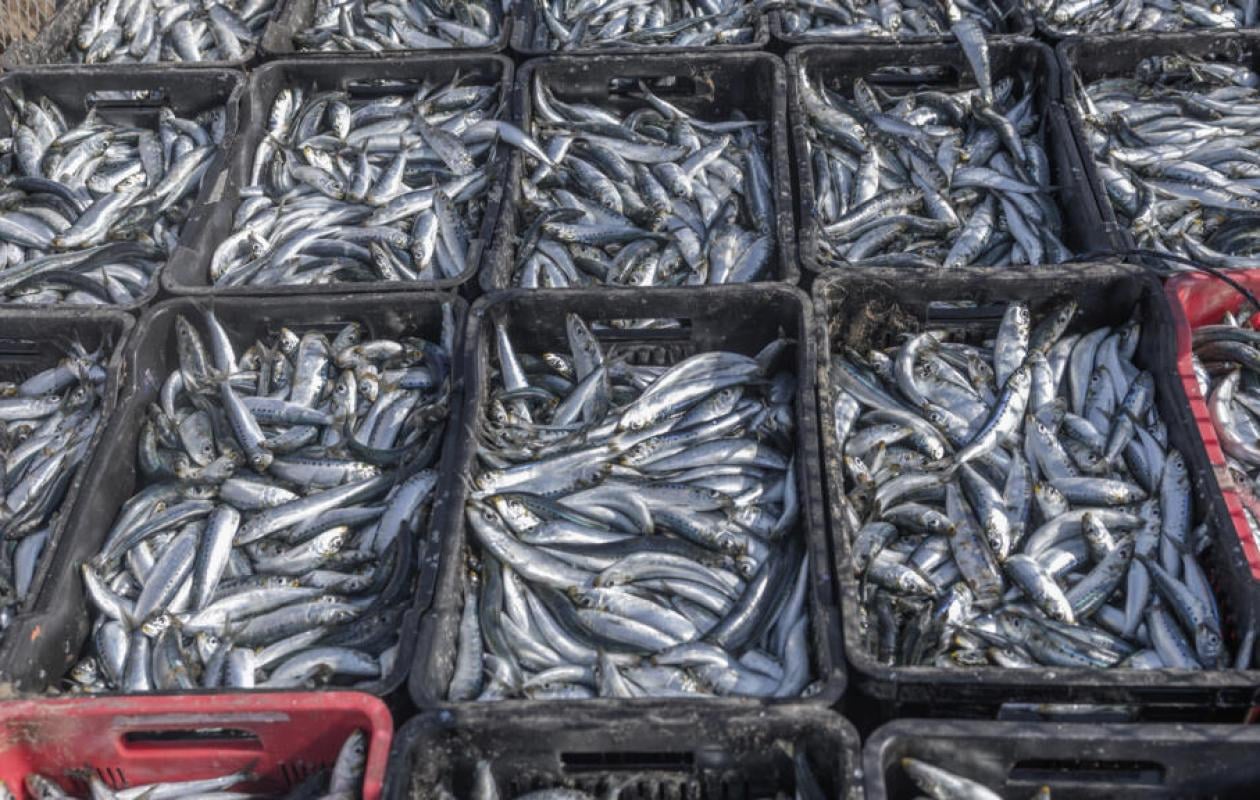
The tide deposited thousands of dead sardines on the southern coast of South Africa last week. At dawn, the Gqeberha coastline was dotted with silvery reflections.
Along Hobie and Pollock beaches, stunned locals then saw waves throwing more fish onto the sand, raising fears that a virus that has already caused mass die-offs of sardines abroad may be to blame.
"It was a heartbreaking sight," according to the local environmental group Algoa Bay Conservation.
In the aftermath, "we received numerous calls," recalls Nadine Strydom, a professor in the zoology department at Nelson Mandela University in Port Elizabeth (South Africa).
Most of the dead fish were sardines and pilchards, she explained, adding that the true extent of the mortality could be much greater than just the fish that washed ashore. "What we see on the beach is only a fraction of the total, as some fish could be resting on the seabed," said Ms. Strydom.
The mass stranding occurred just weeks after a similar mass die-off on the coast of the Western Cape, also in South Africa but hundreds of kilometers away.
These strandings reinforce fears that sardine herpesvirus (PHV), a disease that decimated sardine populations in Australia and New Zealand in the 1990s, is ravaging South African waters.
The Department of Forestry, Fisheries and Environment (DFFE) said on Sunday that there was probably a link between the events in Gqeberha and those in the Western Cape, although it still needed to be confirmed.
"PHV remains the most likely explanation for the mortality episode that occurred in the Western Cape," according to the DFFE, although other causes and environmental factors will also be investigated.
The presence of the virus in South African waters was first confirmed in July, when sardines taken off Saldanha Bay, Cape Canyon, Elands Bay and Gansbaai tested positive, the DFFE explained.
Genetic sequencing revealed a similarity of more than 99% with the strain associated with the outbreak in Australia.
"This is a first in the history of South Africa," says Ms. Strydom.
Genetic material from PHV was detected in both dead and apparently healthy sardines taken off Saldanha Bay, with the highest viral loads found in the dead fish.
However, this discovery does not prove that PHV killed these fish, notes Zolile Nqayi, spokesperson for the DFFE.
Scientists are therefore trying to determine whether the virus is the main cause of this excess mortality or whether it is affecting fish already weakened by environmental stress.
South African sardine stocks are already low, and oxygen-depleted waters, along with the proliferation of harmful algae, can make the fish more vulnerable to disease.
Analyses carried out by the authorities revealed no traces of paralyzing toxins from shellfish and only low concentrations of other marine toxins, suggesting that algal poisoning was probably not the primary cause.
The investigation is now expanding, following reports of new strandings of dead sardines in Namibia.
PHV does not pose any known risk to human health, but the wider repercussions of its proliferation are already being felt.
At the Koeberg nuclear power station near Cape Town, dead sardines have clogged a cooling water supply basin, forcing the national electricity company to reduce production.
Scientists and environmental organizations fear that the consequences will extend far beyond the fishing sector.
"We are deeply concerned," says Craig Smith, technical specialist for the World Wildlife Fund (WWF) in South Africa. "In Australia, the virus has decimated 70% of the (sardine) population. We fear this is only the first wave, with the possibility of a second, more deadly wave."
Sardines occupy a crucial place in the marine food chain, serving as prey for dolphins, seals, seabirds and critically endangered African penguins.
The consequences of the current mass mortality "are considerable" because a large number of fish have perished, which can affect the entire environment, explains Nadine Strydom.
In Algoa Bay, home to one of the world's largest colonies of African penguins, "the penguins are already struggling to feed themselves due to uncontrolled fishing, and the situation will only get worse with this virus that is killing the sardines," laments Ronelle Friend, an environmental chemist at Algoa Bay Conservation.
Fishermen are also concerned.
Bonny Adams, a seasoned fisherman from Durban, had already noticed that sardine catches were lower than usual this year. "Now, with this virus, we don't know what to expect. We're really worried," he said.
An intergovernmental working group is coordinating the monitoring, analysis, removal of dead fish, and assessment of the impact on sardine stocks. It is scheduled to meet this week to consider whether further measures are warranted.
The extent of the mortality, which is still uncertain, should become clearer later this year when the DFFE carries out its annual hydroacoustic survey of sardine stocks.






















Commentaires (0)
Participer à la Discussion
Règles de la communauté
💡 Astuce : Utilisez des emojis depuis votre téléphone ou le module emoji ci-dessous. Cliquez sur GIF pour ajouter un GIF animé. Collez un lien X/Twitter, TikTok ou Instagram pour l'afficher automatiquement.
Se connecter
Commentez avec votre profil, votre photo, et soyez averti des réponses.